
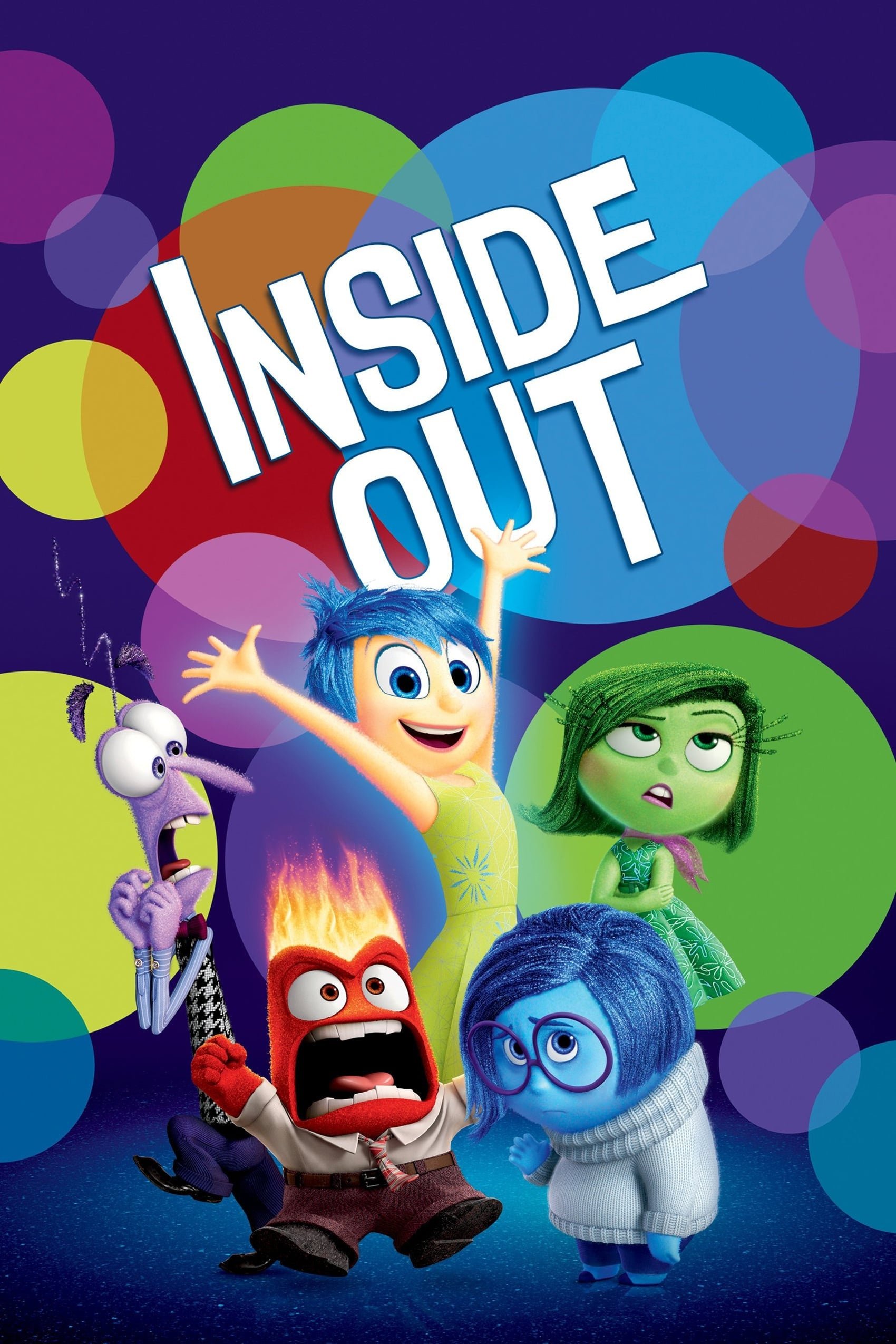
An Uncannily Familiar Landscape: The Interior World That Mirrors My Own
Long before the opening credits faded, I found myself staring straight into Riley’s mind and, uncannily, it stared right back. “Inside Out” isn’t just about a child’s emotional upheaval, or a clever way to illustrate moods; it’s a brave, whispering confession that the vastest journeys often unfold within the tightest spaces—our own heads. I didn’t need to be an eleven-year-old girl experiencing a cross-country move to see my own interior drama reflected in the candy-colored control room of Riley’s consciousness. Those five unruly emotions—Joy, Sadness, Anger, Fear, and Disgust—aren’t cartoons. They’re naked truths. They argue, compete, and compromise just as the voices in my mind do when the world shifts out from under me. This film wants me to recognize that the deepest parts of me aren’t always rational or tidy; they’re fractious, wild, and often at odds, yet that’s what makes me whole. Pixar animates not just Riley’s struggle, but my own.
The Myth of Uncomplicated Joy
Growing up, I learned fast that joy was currency. Adults told me to cheer up, that smiling made life easier, that sadness was best kept hidden. I watched “Inside Out” with the expectation—conditioned by years of children’s movies—that Joy would win. Instead, I was startled to see Joy’s desperation become nearly tragic. Here, Joy is not merely delighted; she’s relentless, anxious, almost tyrannical in her pursuit of happiness at all costs. I realized that my own compulsion to “stay positive” can be toxic, not only to myself but to the intricate network of feelings that make me sensitive, empathetic, and responsive. The film exposes the lie that happiness is a permanent or even desirable default. It invites me to see joy not as an isolated peak but as a tone within a symphony of experience—dependent, at times, on the notes of melancholy and reflection.
When Sadness Isn’t the Villain
Of all the film’s revelations, none struck me deeper than the slow, awkward heroism of Sadness. I saw her excluded and underappreciated—mirroring how I, and perhaps everyone, have pushed away uncomfortable feelings, convinced they’re obstacles to overcome. But “Inside Out” doubles back, challenging me to acknowledge that Sadness isn’t a nemesis but a connector—a force that draws empathy, prompts comfort, and signals change. I found it almost radical: a children’s film that doesn’t banish sorrow, but champions it. When Riley crumbles and confesses her pain, Sadness is the first to reach out, drawing her parents’ love to the surface. Sadness transforms from background noise into the engine of healing, and I found myself grateful for my own moments of vulnerability, which have often led to the most important connections in my life.
Islands That Crumble: The Risk of Growing Up
The “islands of personality” motif is more than a clever device—it quietly devastated me. Each island falls as Riley’s identity is shaken, and I couldn’t help but remember my own lost pillar-moments: the day I realized childhood friends drift, or when I left my hometown for the unknown. “Inside Out” visualizes the terrifying truth that parts of us will inevitably collapse when life shifts, and in their place, new foundations must take root. The film dares to depict growth as a form of loss—not simply a journey of gain, but of necessary and painful transformation. As I watched the final “Family Island” light up, I understood: the structures that make me “myself” are never fixed, and their collapse is not only inevitable, but essential for growth. There’s both grief and promise in that realization.
Memory, Rewritten
Few films have so elegantly shown how memory is mutable, not static. When Joy learns that Riley’s happiest memory was tinged with sadness, something in me clicked. “Inside Out” gently unmasks the myth of pure, untainted recollections, revealing instead that even the brightest moments are streaked with grief, disappointment, or longing—and that’s what renders them meaningful. I often chase nostalgia, yearning to recapture some unalloyed happiness, but this film reminds me that memory is not a museum. My recollections shift as I do, colored by what I’ve lost and what I now understand. Bittersweetness is not a flaw in memory but its defining feature. The film’s marbles, swirling with color, are as honest as any diary entry I’ve ever written, testifying that to grow is to reinterpret the past, again and again.
Imagination and the Fragile Power of Play
In the depths of Riley’s mind, the “Imagination Land” sequence made me ache for the worlds I once conjured out of boredom or loneliness. The demolition of Riley’s imaginary friend Bing Bong is not played for easy tears; it’s a gentle, necessary heartbreak. I saw in his sacrifice the truth that not all the parts of me can survive the passage to adulthood. My childish wonders, my imaginary escapes—they fade or are left behind, sometimes abruptly. Yet, the film doesn’t mourn this loss as an unqualified tragedy. It insists that imagination is not destroyed but transformed, rechanneled into new pursuits, relationships, and identities. The playful anarchy of Riley’s mind is not erased—it finds new forms, sometimes less visible, but no less vital. I left the film wanting to reclaim just a bit of that wild inventiveness, to let parts of my inner child linger, even as I grow older.
That Uncomfortable Middle: The Necessity of Emotional Ambiguity
If there’s a moment that lingers with me most, it’s not a grand climax but the subtle, uncertain blend of feelings that closes the film. Riley’s emotions learn to share the console, crafting memories that are no longer single-colored, but multi-hued. The film articulates what I often can’t: that I am rarely just happy or sad, but some strange, unfinished mixture of both—excitement tinged with fear, joy undercut by nostalgia, grief softened by hope. There is no “cure” for sadness here, only a deepening, a richer emotional complexity. In championing emotional ambiguity, “Inside Out” argues that to be fully human is to accept contradiction, to live inside the questions, and to let feelings overlap and inform one another. I am permitted—at last—to be complicated, to hold conflicting emotions without shame. This, I think, is the film’s quietest, bravest truth.
Recommending Two Kindred Spirits
If the layered textures of “Inside Out” resonated with me, it’s because they echo films where inner lives are rendered with courage and imagination. These films traverse similar emotional terrain:
- Wild Strawberries (1957) – Ingmar Bergman’s meditation on memory, regret, and reconciliation across a lifetime.
- The Red Balloon (1956) – Albert Lamorisse’s near-wordless journey through childhood longing, friendship, and bittersweet liberation.
If you’re curious about how this film was originally perceived or how it compares to similar works of its era, these resources may be helpful.
🎬 Check out today's best-selling movies on Amazon!
View Deals on Amazon