
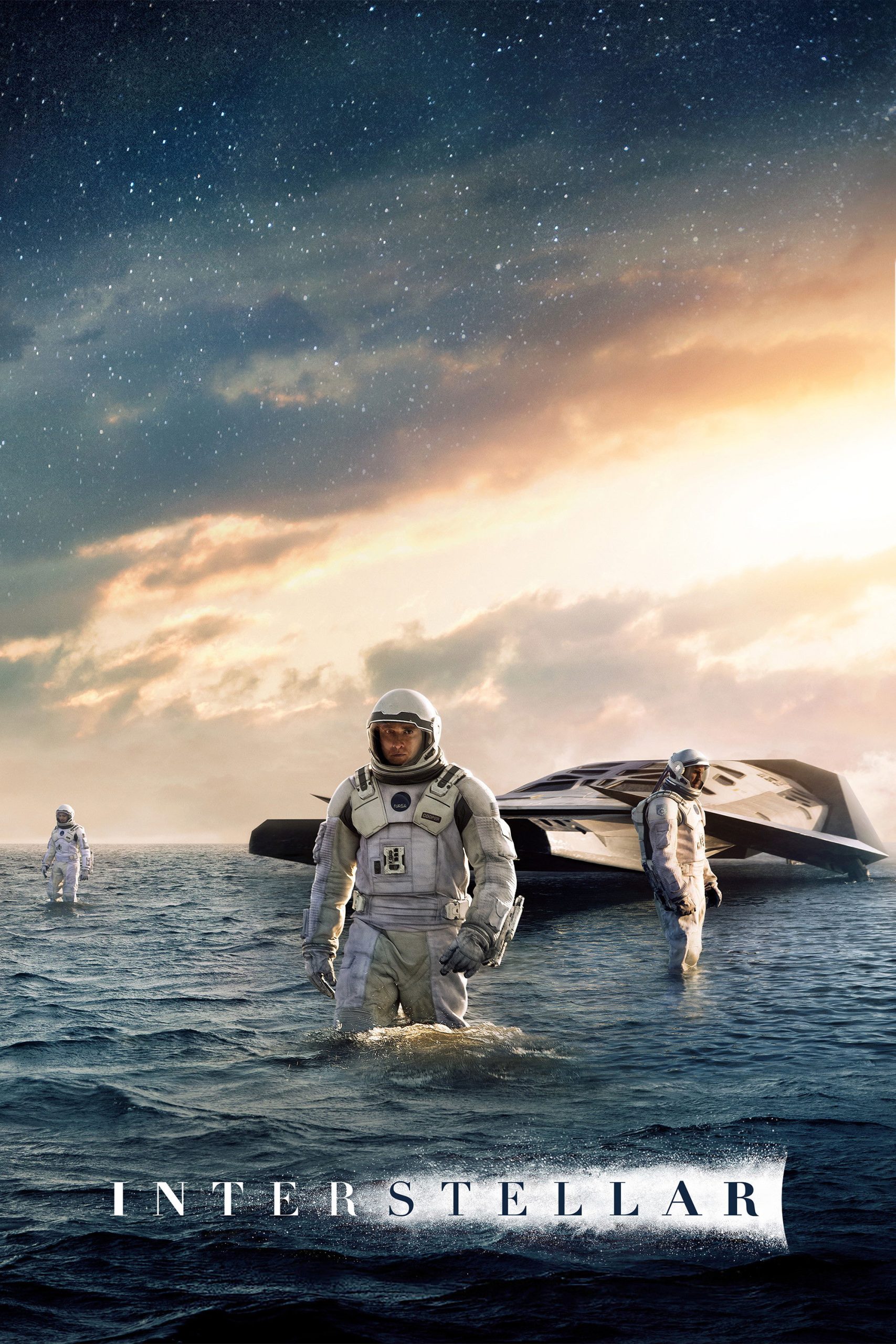
On my first encounter with “Interstellar,” I recall feeling submerged in something far vaster than just a technical spectacle—more like the cinematic equivalent of stepping into a cathedral where the ceilings are stitched with galaxies, and the pews are made of dust and yearning. I wasn’t simply intrigued by Nolan’s grand gestures toward space exploration; what drew me in most was a very intimate terror—the unsettling idea of looking up at the stars not out of curiosity, but because there’s nowhere else to look. This conflict between limitless outer possibility and the stark, closing reality of home has niggled at me during every subsequent viewing. “Interstellar,” for me, isn’t just a space odyssey. It’s a desperate, personal letter to the future written in the language of physics and grief.
What the Film Is About
At its nucleus, “Interstellar” is not a story about venturing into the unknown for glory, but about clinging to what remains when everything familiar threatens to vanish. The film orbits around Cooper, an engineer and pilot turned farmer in a world suffocating under ecological disaster and inertia. The urgency isn’t to conquer new worlds, but rather to preserve the core of human continuity: the connection between a father and daughter, and the persistence of hope even when all solutions look indistinguishable from surrender.
Through Cooper’s strained relationship with his daughter Murphy, the emotional architecture of the film unfolds. The universe is not laid out as a marvel so much as a void that gapes wider every time science and survival challenge the sentimental tethers of love. The central conflict, as I see it, is not “Will humanity survive?” but “What does survival mean if it comes at the price of what we cherish most deeply?” “Interstellar” tries reckoning with the possibility that the greatest danger is not the apocalypse itself, but our inability to carry empathy across unimaginable distances—whether through wormholes or decades lost to relativity.
Core Themes
The twin pillars that stand out to me in “Interstellar” are love as a guiding force amidst chaos and the ever-widening chasm between science and faith. In a decade obsessed with hard realism and dystopia-fatigue, Nolan’s decision to frame love as a quantifiable phenomenon—something scientifically valid—struck a profound note. At a more cynical time, the film’s insistence that intimacy and affection can warp reality with the same authority as black holes was polarizing. For me, this was less a case of emotional sentimentalism and more a radical proposal: that humanity’s progress cannot be untethered from its capacity to feel.
Equally pressing, especially in the context of 2014, was the grappling with climate anxiety and so-called “solutionism”—the hope that science alone can offer redemption if only we follow the right equations. The Dust Bowl world of “Interstellar” relays a sharp warning: even with infinite knowledge, without ethical and emotional stewardship, our civilization is nothing but a dry husk. This message seems more prescient each year as our own planet continues its drift toward instability.
Symbolism & Motifs
Nolan weaves repeated symbols throughout the film—dust, time, and books—that resonate almost like chorus lines. The ever-present dust storms are more than apocalyptic scenery; to me, they represent the sediment of human carelessness and the thin line between memory and oblivion. Every moted shaft of light in Cooper’s house is a eulogy for things lost, both ecological and emotional.
Time acts as an omnipresent antagonist, never more so than in the sequences where hours spent on distant planets cost the characters entire decades back home. This relentless ticking—punctuated by Hans Zimmer’s organ score, itself a kind of metronome or cosmic heartbeat—is less about death and more about the pain of separation, and the irreversibility of missed choices. Even the books lining Murphy’s shelves are coded with double meaning: every volume both contains and withholds knowledge, and in one memorable twist, the translated language of the future itself is hidden among them.
Key Scenes
The Farewell on the Farm
If there is a scene that haunts me, it’s the agonizing farewell between Cooper and young Murphy. The emotional pitch of this departure—neither of them understanding the magnitude of loss they’re about to endure—is as devastating as any astrophysical obstacle in the film. Murphy’s rage isn’t childish; it’s the scream of someone who senses the universe isn’t just big, it’s indifferent to the small lives inside it. Watching this moment, I find the rest of the film suspended in that single heartbreak.
The Relativity of Sacrifice: The Water Planet Sequence
The famous planet of shallow waters is another locus of terror and awe for me. Every tick of Zimmer’s score represents entire years lost back home, so when Cooper and Brand return to find their teammate aged into isolation, the horror isn’t in what’s seen, but in what’s lost. This clinical demonstration of relativity translates not just physics, but the existential anguish of parental guilt and the impossibility of mending every wound distance carves.
“Don’t Go Gentle”: The Fifth Dimension Revelation
The so-called “tesseract” sequence, where Cooper finds himself in a cosmic Escher room able to communicate with Murphy through time, is the sort of risky, bravura flourish that puts Nolan’s divisive reputation on the line. Many distill this down to an act of narrative audacity or sentimentality, but to me, it’s a visual metaphor for the struggle to be heard across the unreachable distances of generational experience. It cements the film not as a cold voyage into entropy, but as a desperate plea: to be remembered, to leave a message that survives time’s harvest.
Common Interpretations
Many critics at release saw “Interstellar” as a marriage of grand spectacle and overreaching ambition—sometimes faulting Nolan for a collision of high-concept astrophysics with Hallmark-card emotions. The consensus usually divides the film between those awed by its technical wizardry (the black hole simulation famously used by physicists for real-world research) and those fatigued by what they see as sentimental overindulgence.
Personally, I find these criticisms both fair and too limited. While some moments court melodrama, this willingness to blend intellect with unguarded human feeling seems like the film’s primary strength. After all, even the grandest cosmic mysteries eventually narrow down to the domestic—how we talk, how we fail, how we forgive. Where critics may scoff at the dialogue between Cooper and Brand regarding love’s physics, I see a daring attempt to forge a new connection between genres, a refusal to keep science and emotion in their traditional silos.
Films with Similar Themes
- 2001: A Space Odyssey – Both films address humanity’s insignificance in a vast cosmos and the tension between evolution and agency.
- Contact – Explores the intersection of scientific discovery and faith, and the challenge of communicating across boundless distances—both literal and emotional.
- Solaris (1972) – Deals with grief, memory, and the unknowability of the universe, approaching the cosmic as a mirror for inner psychological states.
- The Tree of Life – Malick’s film, like “Interstellar,” contrasts planetary timescales with domestic tragedy, asking how love and loss echo through generations.
Conclusion
“Interstellar” continues to provoke and confound, and I believe it rewards those who approach it as more than a visual tech demo or a tidy allegory. For modern viewers, its relevance only grows as our society teeters on ecological brinkmanship and seeks technological panaceas for deeply human wounds. Understanding the film’s messy, even contradictory, conversation between intellect and emotion gives it a lingering resonance. The greatest gift “Interstellar” offers is the reminder that even as stars collapse and futures falter, our longing to connect can still bend the axis of the impossible.
Related Reviews
If you found value in my perspective, you might also enjoy exploring my thoughts on other cinematic landmarks such as “Solaris” and “2001: A Space Odyssey.”
To broaden this interpretation, you may also explore how critics and audiences responded over time.
🎬 Check out today's best-selling movies on Amazon!
View Deals on Amazon