
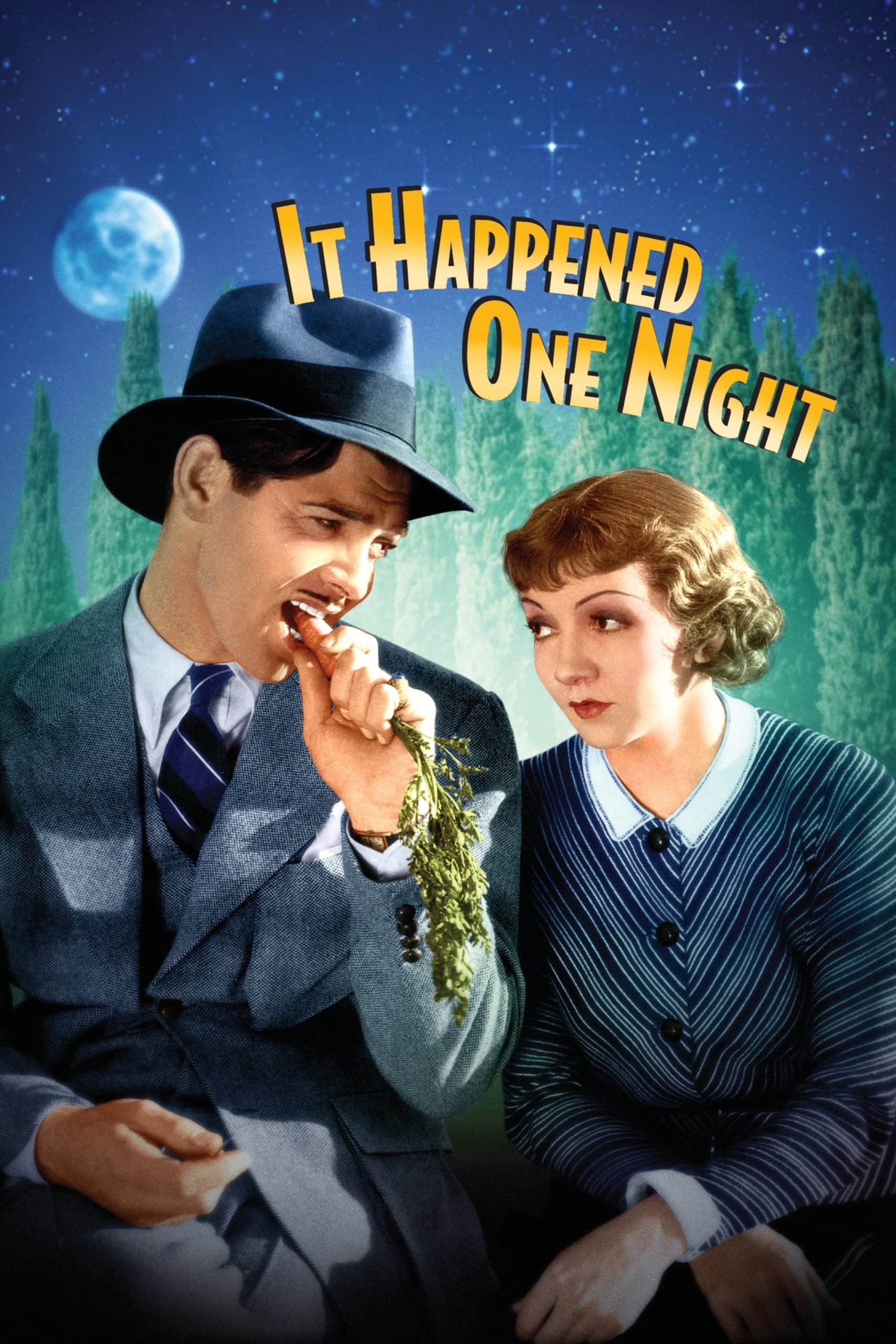
Some movies conceal their brilliance beneath their era’s dust, waiting for the patient eye to brush away the years. For me, “It Happened One Night” was not a film I embraced on first viewing as a technical marvel or for its apex position in Hollywood history. Rather, it was an unexpected delight at a time when I thought I’d become too jaded for early romantic comedies. I recall a rainy afternoon when the sound of a distant train outside echoed the bus journeys of Claudette Colbert and Clark Gable—I watched, expecting nothing, and instead found myself swept up in a film that seemed to hum with secrets beneath its comedic patina. The film’s heart beats not just with laughter but with a peculiar sense of vulnerability—something I’ve continued to revisit, chase, and re-evaluate each time I see it.
What the Film Is About
At its surface, “It Happened One Night” could be mapped as a cross-country escapade—part screwball romance, part Depression-era road movie. But beneath the brisk dialogue and fast footwork lies a journey of emotional stripping-down, where bravado collapses into honesty, and social masks are dropped in favor of human connection. Peter Warne, Clark Gable’s hungry journalist, and Ellie Andrews, Claudette Colbert’s runaway heiress, move from suspicion to begrudging camaraderie, and finally to a precarious trust forged by shared adversity.
The core tension isn’t simply whether these two will declare their love, but whether they can risk vulnerability in front of one another. Every setback on the road—missed ferries, threadbare motels, hungry nights—forces them to shed a layer of societal armor. My fascination rests on how the film, with its deceptively breezy rhythm, insists that love is not the inevitable product of circumstance. Instead, love in “It Happened One Night” is labor: hard-won and never guaranteed. The movie is less about the destination and more about the choice to be seen, flaws and all.
This, to me, is what the film is truly about: a plea for emotional authenticity, set against a world that rewards pretense. Capra’s bite cuts deeper each time as I reflect on how seldom modern films trust the audience with this delicate balance between cynicism and hope.
Core Themes
The central themes swirl around class divide, the myth of self-reliance, and the transformative power of empathy. The Depression-era backdrop is no mere decoration; it is the engine of the entire journey, placing privilege and poverty in direct, continuous negotiation. I am always struck by how Ellie’s idealistic impulses and naiveté are exposed as both privilege and prison; she is wealthy yet helpless, taught to wield money as a shield. Peter, for all his showy independence, is trapped by his own pride, quick to judge and slow to trust. The film renders the American Dream as a double bind—freedom and self-making are only possible through mutual aid and honesty.
When I consider the relevance of these themes today, I’m struck by their persistence. The skepticism around wealth, the pressure to appear invincible, and the difficulty of admitting need—these anxieties remain, perhaps amplified in the age of curated digital selves and widening inequality. In 1934, these themes would have stung as both social satire and aspirational wish-fulfillment, promising that love could bridge both economic and emotional gulfs.
Identity is carved out through negotiation, not assertion. Neither Ellie nor Peter achieve self-knowledge alone. Instead, they must confront (and shed) the facades imposed by their class, profession, and the expectations of others. It’s this insistence on transformation through genuine encounter that I find endlessly compelling. The film, for all its lightness, shouts that liberation comes only when we let down our guard—not just in romance, but in life.
Symbolism & Motifs
Few images are as iconic or as quietly profound as the “Walls of Jericho” blanket that separates Peter and Ellie in their roadside cabins. Ostensibly a practical joke, this makeshift barrier is, in my eyes, a masterstroke of visual storytelling: a symbol of sexual restraint, yes, but far more a testament to the real anxieties swirling between the characters. The blanket moves from comic prop to charged symbol—a testament to boundaries both self-imposed and socially constructed. Each time I watch the film, I’m fascinated by how the blanket’s presence renders vulnerability visible—holding the uncertain promise that it will inevitably fall, but only when trust outpaces desire.
Similarly, the motif of journeys and modes of transport—trains, buses, hitchhiking, and walking—reminds me that love in Capra’s universe is always a shared exercise in motion. Their vehicles break down, get delayed, or force unexpected interactions. There’s a chaotic, egalitarian energy here: misfortune treats heiresses and down-on-their-luck journalists alike with democratic indifference. The journey motif strengthens Capra’s conviction that life’s most meaningful lessons arise in transit, in the moments when we are forced to adapt, cooperate, or improvise outside of comfort zones.
Even hunger and scarcity are more than background color; they are omnipresent reminders of a world in economic pain. Their shared struggles—an apple, a meal, a safe bed—strip away the artificial markers of class and draw out the bare, desperate truth of their emotional state. What survives, and ultimately matters, is the unadorned self.
Key Scenes
The Blanket’s Divide: The “Walls of Jericho” Scene
This is not just the film’s comic centerpiece, but its ethical one. The moment Peter hangs the blanket between their beds plays out with dazzling wit, but beneath the patter is a mutual act of trust. The blanket is improvised chivalry—acknowledgment that boundaries exist, and that their fall, when it comes, will be a choice of equals. I am always struck by how much tension and humor Capra wrings out of this simple curtain—its ultimate collapse in the final moments signaling not just sexual union, but the dissolution of fear and suspicion.
Hitchhiking as Revolutionary Theater
Few scenes in screwball history are as subversively charged as Ellie’s hitchhiking demonstration. Here, Colbert’s character reclaims agency in a world determined to infantilize her. When she lifts her skirt to reveal a shapely leg, thumbing a ride where Peter’s bravado has failed, the power balance shifts instantly. For me, the scene is not simply funny, but quietly radical: it punctures gender norms and highlights how, in their odd partnership, both need the other’s skill at improvisation and risk-taking.
The Misconnections of the Final Minutes
I never fail to be moved—in that almost painful, expectant way—by the film’s last acts of self-sabotage, when both Peter and Ellie misinterpret one another’s motives, pushing themselves apart. Here, Capra stretches out the tension by letting each character sit with their own emotional risk. What makes the final reunion so powerful isn’t just the satisfaction of a romantic arc, but the earned quality of their union. They have seen the best, worst, and most frightened parts of each other—love, when it arrives, feels not like wish fulfillment, but a victory against cynicism.
Common Interpretations
Most critical readings I encounter focus tightly on the film as a prototype for the screwball comedy genre—emphasizing its fast-paced dialogue, egalitarian romance, and reversal of gender norms. Critics hail it as a social commentary dressed in comedy, seeing the journey as an allegory for the American experience during the Great Depression, with its stubborn individualism ultimately tempered by collective struggle.
While these interpretations are persuasive, I find them too prone to flattening the movie into either an artifact of its era or a simple genre exercise. I feel a deeper sadness and hopefulness in its bones. For me, the transformative energy of “It Happened One Night” grows less from its genre conventions and more from its willingness to embrace the complexity of longing—and the fear that intimacy might never arrive. It is a comedy of surfaces that dares to make sincerity look brave, not naïve, and in that balance I see its true legacy.
Films with Similar Themes
- The Philadelphia Story (1940): Another witty, class-conscious romantic comedy that explores remarriage, emotional transparency, and breaking social boundaries.
- Sullivan’s Travels (1941): Blends class critique and cross-country journeying in a sharp satire, making humor a tool for surviving hardship, much as in Capra’s film.
- Roman Holiday (1953): Revisits the theme of a sheltered woman learning about the world—and herself—through an unpredictable partnership with a compassionate but flawed man.
- His Girl Friday (1940): Sparks fly in a newspaper office between powerfully matched leads, with snappy repartee masking deeper needs for love and understanding.
Conclusion
Modern audiences sometimes resist films of another era, but I would urge viewers to approach “It Happened One Night” not merely as an artifact but as a timeless challenge to let down their own emotional barriers. Beneath the jokes and the black-and-white frames lies a plea for candor—with oneself, with others, and with the daunting unpredictability of love. In unpicking its symbols and surrendering to its rhythm, we emerge a little less armored, perhaps a little more willing to be surprised by tenderness. This, for me, is the enduring value of Capra’s unexpected fable.
Related Reviews
If you found value in my perspective, you might also enjoy exploring my thoughts on other cinematic landmarks such as The Philadelphia Story and Roman Holiday.
To broaden this interpretation, you may also explore how critics and audiences responded over time.
🎬 Check out today's best-selling movies on Amazon!
View Deals on Amazon