
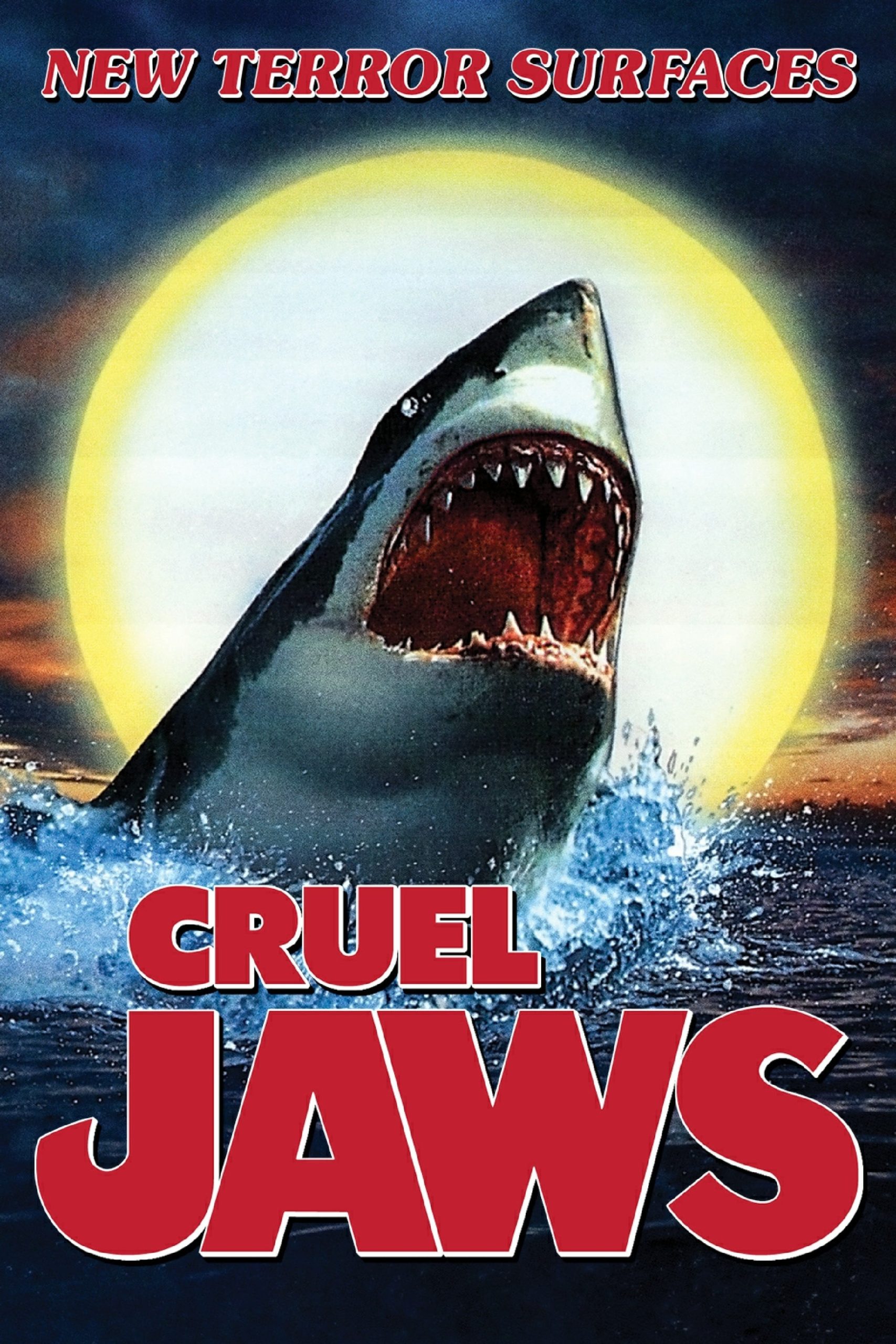
I remember vividly the first time I saw “Jaws” on an old, flickering VHS tape. I wasn’t even near the ocean, but I felt as if the film dragged me into its merciless tides. It wasn’t the shark—at least not entirely—that haunted me; it was the gnawing anxiety that seemed to ripple from every mundane corner of the town, transforming a placid beach into a battleground for survival. For me, “Jaws” remains fascinating because of what it awakens in people: deep, irrational fear of the unseen and the unexplainable ways that fear can infect an entire community. Even today, the mere bars of John Williams’ theme can cause my pulse to double. This film taught me how cinema could galvanize public imagination, instilling universal dread without ever showing the threat head-on. It forced me to ask—what are we really afraid of?
What the Film Is About
While the ostensible conflict of “Jaws” revolves around a great white shark terrorizing the fictional Amity Island, the real journey is internal and communal—a transformation of ordinary people as they confront mounting hysteria, personal denial, and the cost of courage. My attention was always drawn to Chief Brody, played with an understated gravity by Roy Scheider. He is the outsider in a tight-knit town, a man at war with his own fear of water, forced by his conscience to defy political pressure and face the impossible. Through Brody, I find the portrait of vulnerability turned into reluctant heroism, driven not by bravado but by sheer necessity.
“Jaws” is equally about how fear metastasizes. The townspeople’s hope that the menace can be downplayed for the sake of commerce feels, to me, like a condemnation of collective denialism—an allegory for how societies ignore or rationalize threats until forced to confront them. Spielberg plays on the dynamic between public order and latent chaos, asking: What happens when personal interests clash with public safety? The emotional centerpiece isn’t the shark itself, but the mounting dread that simmers until it explodes in collective panic.
Core Themes
One of the most resonant themes in “Jaws” for me is the conflict between economic ambition and moral responsibility. Even as the shark’s threat becomes undeniable, the town’s leaders—motivated by tourism dollars—attempt to suppress the truth. That tension feels as urgent today as it did in 1975, especially in an era where communities must grapple with environmental crises, public health, and the blurred lines between truth and expediency. The parallels to modern debates about risk and the cost of transparency are uncanny.
Another central theme is the very nature of fear—both rational and irrational. “Jaws” manipulates our primal anxieties, hinting at dangers lurking just out of sight. But the film’s deeper commentary, I believe, targets the nature of leadership during crisis. Watching Brody, Quint, and Hooper work at cross-purposes before rallying together is a powerful meditation on community. They are an unlikely trio, representing distinct approaches: authority, experience, and scientific inquiry. Only by merging those strengths can they confront what the shark represents—a force of nature that cannot be bargained or reasoned with, only faced.
When I view “Jaws” through a contemporary lens, I see a film deeply concerned with how collective action is prompted by fear, and how that action can just as easily lead to mob panic as it can to real heroism. The film’s relevance is revived whenever societies must coalesce—whether against pandemics, threats to public safety, or the existential unknown. Spielberg’s film refuses easy answers, instead laying bare the messiness of communal response.
Symbolism & Motifs
Perhaps most famously, the shark itself becomes a stand-in for any number of invisible threats. Spielberg’s creative decision to withhold showing the shark for nearly half of the film was, as is well-known, due to technical limitations, but it had the effect of making the predator a vessel for all manner of audience anxiety. To me, the shark’s absence is its greatest presence; it is less an animal than a metaphor for the amorphous, unspoken terrors that stalk our subconscious.
The recurring motif of the ocean—especially as rendered in Spielberg’s lingering, predatory camera movements—reinforces a sense of omnipresent danger. Water in “Jaws” is simultaneously beautiful and deadly, a surface concealing chaos. For me, the shoreline becomes a border between safety and exposure, where every swimmer is a potential victim and every wave a harbinger of doom. The yellow barrels, too, serve as a symbol of futility—the desperate attempts of humans to mark and control the uncontrollable. Each time the barrels bob upright, they remind me that nature’s threats cannot be so easily managed or contained.
The persistent, minimalist theme by John Williams acts as another motif—a reminder of danger that lurks just beneath everyday experience. It is the perfect companion to the film’s visual language, thrumming with a relentless inevitability that gets under my skin and refuses to leave.
Key Scenes
The Quiet Terror of the Opening Attack
The film’s opening scene—Chrissie Watkins’ midnight swim—is more than just a prologue to carnage; it’s a thesis statement. In a few brief, harrowing minutes, Spielberg establishes that danger comes without warning, logic, or mercy. The helpless flailing of Chrissie, the indifferent beauty of the moonlit water, and the utter silence of her companion on the beach—these choices roil together into a primal, almost mythic tableau. It’s a moment that crystallizes my understanding of the film: “Jaws” is not about fighting monsters, but about the terror of being truly alone when faced with the unknown.
Brody’s Moment of Realization on the Beach
Equally striking to me is the sequence in which Chief Brody, nervously monitoring beachgoers, becomes increasingly convinced that disaster is imminent. Spielberg’s use of competing layers—foreground distractions, bustling bodies, and Brody’s anxious gaze—ratchets up the tension. The famous “dolly zoom” shot, as the camera closes in on Brody’s face while the background warps around him, is a cinematic expression of mounting panic. This isn’t the attack itself, but the anticipation—the transformation of a familiar place into hostile territory. It’s the encapsulation of the elemental truth that awareness alone can be a source of paralyzing dread.
Quint’s Haunting Indianapolis Monologue
I am always mesmerized by Robert Shaw’s delivery of Quint’s monologue about the sinking of the USS Indianapolis. It is, for me, the emotional anchor of the film. Here, the mythic terror of the shark is given historical grounding—a real horror from America’s past. The speech transforms Quint from mere caricature to tragic survivor, embodying the film’s strongest argument: the most dangerous threats are those we cannot see, those which history tries and fails to forget. This monologue lingers with me long after the credits, a chilling meditation on the price of survival and the persistence of trauma.
Common Interpretations
Many critics seize on “Jaws” as a parable of Cold War paranoia, or as an allegory for Watergate-era mistrust of authority. Some interpret the shark as a symbol of nature’s retribution, or a Freudian manifestation of human anxiety—primal fear reawakened in the post-1960s malaise. There are readings that focus on capitalist critique, the film’s indictment of small-town greed and institutional denial. These interpretations undoubtedly have merit; the film’s ambiguity is its greatest gift.
Where I diverge is in my insistence that “Jaws” works best on a visceral, emotional level. I’ve never found the Cold War or Watergate parallels as persuasive as the film’s more universal truths. For me, it’s a mosaic of anxieties—personal, communal, existential—rather than a code to be cracked. Its real brilliance lies in its elasticity; every era can project its own terrors onto the shadow beneath the water. That is why, each time I revisit the film, it feels newly urgent and newly terrifying.
Films with Similar Themes
- Alien (1979): Like “Jaws,” Ridley Scott’s “Alien” weaponizes the unseen threat, binding fear to a confined, isolated setting. Both films dwell on the terror of the unknown and the resilience required to survive it.
- The Birds (1963): Hitchcock’s film articulates panic as a communal disease, pitting ordinary people against inexplicable violence from nature, echoing the way “Jaws” turns serene locations into arenas of survival.
- Close Encounters of the Third Kind (1977): Another Spielberg work, this film explores mankind’s reaction to an incomprehensible presence, sharing DNA with “Jaws” in its depiction of obsession and the limits of human control.
- Jurassic Park (1993): Spielberg again examines man’s fragile control over nature, with themes of hubris and chaos mirroring the moral lessons at the core of “Jaws.”
Conclusion
For those approaching “Jaws” for the first or fiftieth time, I believe it remains a masterclass in the mechanics of suspense—and, more importantly, a lesson in how communal fear can shape identity and action. The film’s ability to stitch personal anxiety into the fabric of public life is a testament to its staying power. To understand “Jaws” is to understand the human need for order in a world of uncertainty, and the sacrifices required to maintain it. Every new viewing confronts us with the difference between danger itself and our response to it; that distinction, I find, is what gives the film its enduring relevance.
Related Reviews
If you found value in my perspective, you might also enjoy exploring my thoughts on other cinematic landmarks such as Psycho and The Exorcist.
To broaden this interpretation, you may also explore how critics and audiences responded over time.
🎬 Check out today's best-selling movies on Amazon!
View Deals on Amazon