
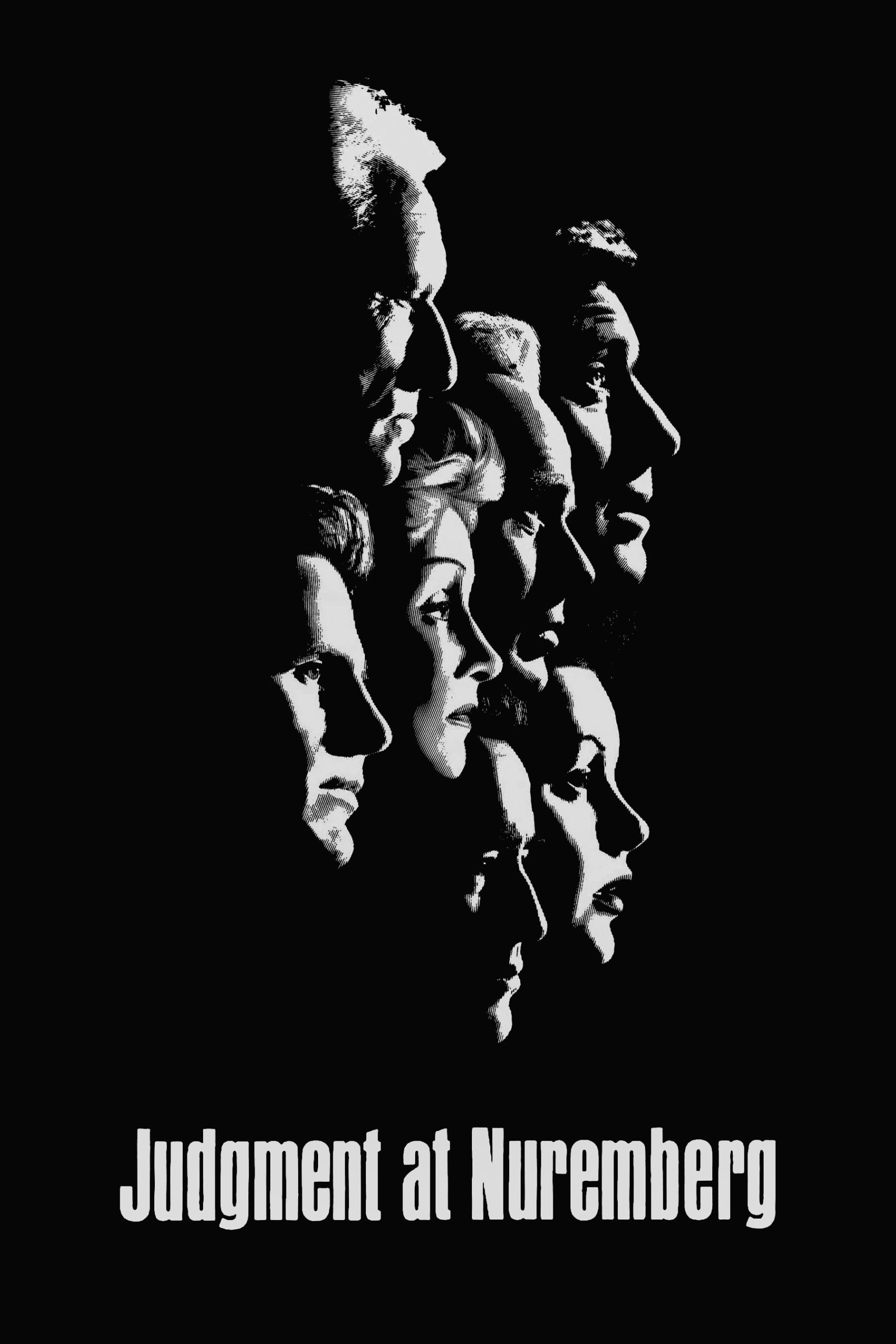
I’ve always had a fraught relationship with courtroom dramas, finding most of them too tethered to procedure and moral simplicity. Yet, a late-night viewing of Judgment at Nuremberg years ago shattered any expectation of easy answers. The heavy, almost funereal atmosphere pulled me in—not with the promise of legal fireworks, but the haunting sense that I was being asked, personally, where I would have stood when morality and obedience collided. I remember sitting there as the credits rolled, feeling indicted, implicated. What makes this film a compelling touchstone for me isn’t just its historical gravity or star-studded cast, but its insistence that no one, not even a passive observer like myself, remains neutral in the reckoning of right and wrong.
Examining the Emotional Faultlines: The Film’s Deep Dilemma
From my vantage, Judgment at Nuremberg is not simply a recounting of the postwar tribunal for Nazi judges; it’s a merciless, yet deeply humane, investigation into complicity and conscience. The film unfolds as an emotional crucible where every participant—perpetrator, judge, and bystander—grapples with truths they’d rather not admit. Rather than simply tallying up guilt, the story explores how good intentions and national loyalty so easily buckle under the weight of expedience and terror.
The central conflict, to me, lies in the collision between personal morality and collective duty. Spencer Tracy’s Judge Haywood stands as an avatar for the bruised conscience of a world trying to stitch itself back together after unimaginable trauma. The courtroom becomes a pressure cooker not only for the accused, but for anyone wrestling with whether silence amounts to endorsement. The pain of this question, the steady unpeeling of alibis and rationalizations, makes the film so much more than a historical artifact—it’s a feverish, uncomfortable mirror held up to my own sense of ethical limits.
The film’s emotional journey is relentless; it refuses catharsis. Every time I’m tempted to make a tidy distinction between monster and man, it yanks that certainty away. As the trial progresses, I find myself trapped between pity and fury, forced to recognize that evil infiltrates ordinary life not with a parade, but with a shuffling descent into apathy and compromise.
Themes That Refuse to Age
Few films have the courage to interrogate their own audience the way this one does. The main thematic engine, in my view, is the seductive power of authority and the rationalizations ordinary people invent to avoid moral responsibility. Underneath the testimony and legal wrangling, it asks: Who gets to be innocent? Is there such a thing after atrocity on this scale?
When the movie premiered in 1961, the world was still tallying the cost of the war and living in a Cold War era that made the cost of obedience versus resistance urgently relevant once more. The resonance today is, if anything, even sharper—witnessing new generations confront inherited guilt, systemic injustice, and the ever-present temptation to look away. This ongoing relevance is what keeps the film sharply contemporary for me: its skepticism toward easy exoneration, its obsession with the small steps that lead to catastrophe, and the anxiety that history can repeat itself if memory lapses into amnesia.
I’m continually struck by how the film’s most significant theme is its existential doubt about law itself. Can law ever truly deliver justice, or does it merely codify the blind spots of those who write it? Here, justice isn’t healing—it’s an imperfect, necessary reckoning. Watching the defendants appeal to culture, tradition, and duty, I see the timeless struggle of the law striving (and often failing) to measure up to moral accountability.
Symbols and Visions: Layers of Meaning in the Visuals
The repeated framing of courtroom windows and doorways serves as a persistent motif throughout the film. I see these not just as architectural features, but as visual reminders of boundaries—between inside and outside, guilt and innocence, action and passivity. Every pan to the window suggests a world watching, or perhaps refusing to look, driving home that the judgments rendered here will echo far beyond the courtroom walls.
The motif of silence—moments when characters are rendered mute, either by shock or shame—echoes with uncomfortable potency for me. That silence is deafening, meant to remind viewers like myself that complicity often has no words. The sparse, almost clinical set design and shadowy lighting seem to be a conscious choice by director Stanley Kramer: each harsh overhead bulb evokes the stark, inescapable clarity of the truth seeking to surface from decades of denial.
Costume and gesture are also laden with meaning. Judicial robes, military uniforms, even civilian attire become symbols of both authority and ordinariness—forcing me to see the perpetrators as neither demons nor caricatures, but as people terrifyingly like myself. The juxtaposition of the courtroom’s rigid order with the chaotic, haunted memories spilling forth in testimony visually captures the theme of control versus moral unraveling. Every motif seems to conspire toward the realization that history can be made mundane until it snaps back with a vengeance.
Moments Etched in Memory: Three Defining Scenes
The Testimony That Breaks the Silence
One scene that still leaves me stunned is the testimony of Irene Wallner, played by Judy Garland. Her anguished description of being accused under the Nazi eugenics laws is stripped of grandstanding; it’s raw, halting, painfully honest. What makes this moment shattering isn’t just Garland’s performance, but how the scene exposes the arbitrary yet devastating cruelty of totalitarianism. For me, this testimony does more than put a human face on an abstract evil—it implicates every viewer in the aching vulnerability of those failed by justice.
Ernst Janning’s Shattering Confession
Maximilian Schell dominates so much of the film that Burt Lancaster’s more reserved portrayal of Ernst Janning almost sneaks up on me. But when Janning finally speaks—confessing not with bombast, but with tears how he eroded his conscience over time—the defense of “following orders” collapses in a moment of agonizing reckoning. It’s a scene that, to my mind, crystallizes the entire film’s message: complicity is not the result of monsters, but ordinary people abdicating their judgment, one day at a time. That moment forces me to reckon with how easily reason can be bent to monstrous ends.
The Uncomfortable Verdict
Even the verdict, often the moment of expected closure, is delivered with little triumph. The gravity of punishment barely punctures the persistent unease. Haywood’s decision, devoid of facile satisfaction, is so ambiguous that it left me gnawing on questions long after the credits. For me, this scene underscores the film’s refusal to provide a redemptive arc; it acknowledges that no sentence restores the dead or redeems the witnesses. The aftermath lingers like a wound—one I can’t quite bandage with legalisms or platitudes.
Contrasting the Usual Readings: Critics and My Take
When I trace the legacy of Judgment at Nuremberg in critical circles, I find it often lauded as a clarion call for international justice and a monument to postwar reckoning. Many celebrate its courage in putting Nazi atrocities on cinematic trial, or praise Stanley Kramer’s willingness to probe uncomfortable ideas about human rights and state power.
Yet, I remain skeptical of readings that treat the film merely as a historical lesson or moral warning. For me, its most provocative element is its enduring skepticism toward judgment itself, and the ease with which ordinary people rationalize evil. Where some interpret the film as a defense of American legalism, I see a meditation on the ultimate inadequacy of legal instruments to heal or make sense of mass atrocity.
It’s a film that, in my opinion, invites us into discomfort rather than closure. While many critics admire its didactic intent, I am more haunted by its ambiguity and by the realization that judgment itself is always shadowed by doubt and regret. This tension is not a flaw but its core strength—a rare refusal to allow the viewer escape into easy answers.
Other Films That Echo Judgment at Nuremberg’s Deep Questions
- The Pawnbroker – Explores post-Holocaust trauma and the struggle for personal accountability amid the ruins of atrocity, echoing similar themes of survivor’s guilt and ethical paralysis.
- The Conformist – Bernardo Bertolucci’s meditation on complicity and the allure of authoritarian order, making it an ideal thematic companion in its depiction of the seductive pull of collective ideology.
- 12 Angry Men – Another courtroom drama where the burden of moral judgment and the limits of justice are laid bare, connecting with the claustrophobic sense of responsibility and doubt that permeates Nuremberg.
- Hotel Rwanda – Confronts the world’s ongoing failure to intervene in genocide, echoing the same core question: who bears moral responsibility when law and humanity clash?
Looking Forward: The Film’s Relevance for Us Today
I find that approaching Judgment at Nuremberg as more than historical fiction—seeing it as an invitation to interrogate my own comfort and complicity—yields its greatest rewards. It asks viewers to examine the gray spaces of their own lives, to resist the reflex for easy answers, and to understand how each generation is challenged anew to withstand the sirens of authority and conformity. The film is a haunting reckoning with the uncomfortable truth that justice can only be partial, but that seeking it, imperfectly, is nevertheless essential. That, for me, is why it deserves ongoing study—not as a closed case, but as an open wound.
Related Reviews
If you found value in my perspective, you might also enjoy exploring my thoughts on other cinematic landmarks such as The Conformist and 12 Angry Men.
To broaden this interpretation, you may also explore how critics and audiences responded over time.
🎬 Check out today's best-selling movies on Amazon!
View Deals on Amazon