
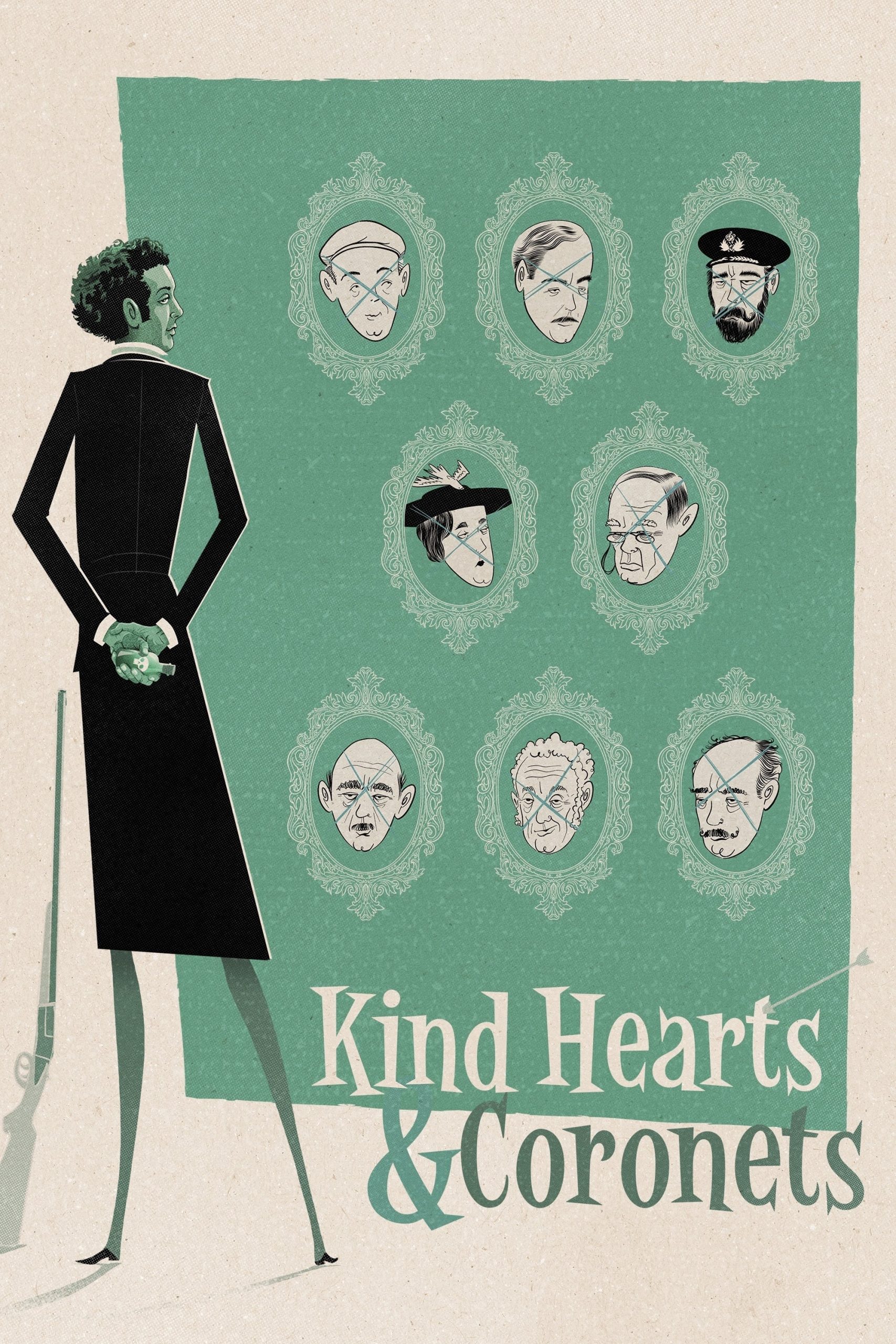
I can still remember the first time I watched “Kind Hearts and Coronets.” It was a late-night screening on a worn DVD borrowed from a friend who insisted I would be “utterly bewitched” – a phrase that, at the time, struck me as grandiose. Yet mere minutes in, I felt myself drawn into a world of wit so dry and murder so polite that I couldn’t help but laugh — and squirm. I became enchanted by the film’s understated rebellion against both social order and cinematic convention. There is something uniquely exhilarating about watching a film that wants you to delight in transgression, then dares you to consider whether the murmurs of your conscience follow you home.
What the Film Is About
At its core, “Kind Hearts and Coronets” is built on the exquisite tension between ambition and morality. Louis Mazzini’s odyssey, narrated with icy precision by Dennis Price, is not just about a quest for a dukedom – it’s a darkly comic study of what happens when logic eclipses compassion. The emotional journey is perversely charming: we watch Louis maintain composure and even refinement as he coolly dispatches his aristocratic relatives one by one, yet the audience is left wondering if the pleasure in watching each demise is a moral failure or the film’s sharpest joke.
What lingered with me long after the final frame was the way the film transforms ruthless social climbing into artistry. I found myself complicit, chuckling at murder, yet never able to fully dissociate from the genuine loneliness Louis exudes. The central conflict becomes painfully clear: is belonging — or vengeance — worth the annihilation of conscience? The film’s wit provides relief, but the underlying chill is unmistakable: the world Louis inhabits is as cold as his heart, and as absurdly constructed as his social pretensions.
Core Themes
For me, the most tantalizing theme is the fluidity of identity and the arbitrary nature of power. The D’Ascoyne family, played in all incarnations (male and female) by Alec Guinness, becomes an emblem of not just hereditary privilege, but also the ridiculousness of class distinction. I am fascinated by how the film elevates social mobility to both villainy and heroism; there is a modernity to Louis’s self-reinvention, even as his means are medieval.
In 1949, Britain was grappling with the shattering effects of war and the slow crumble of its rigid class system. Watching “Kind Hearts and Coronets” today, I see echoes of our own era’s restless negotiation between earned identity and inherited advantage. The film recognizes (and skewers) how institutions manufacture their own demise by refusing to confront their obsolescence. Questions about legacy, justice, and legitimacy feel as fresh directing my gaze now as they must have to a post-war audience, hungry to redraw boundaries and rewrite success.
Symbolism & Motifs
The film’s economy of symbolism fascinates me. The repeated portraiture of the D’Ascoyne ancestors — all resembling Alec Guinness — is far more than an in-joke; it’s a visual motif underlining the interchangability and hollowness of privilege. Each time Louis surveys these paintings, I sense not just his longing but the film’s sly commentary: behind each title is a body, and beneath each portrait, a web of accidents, betrayals, and opportunity.
The motif of the garden — both literal (the fatal rose garden) and figurative — recurs as a site of civility masking violence. Every act of murder takes place in a setting designed for leisure or beauty: tea rooms, boats on the river, stately homes. This juxtaposition reinforces the film’s satirical heart. In my reading, the garden is not merely a stage for social ritual but a reminder that civilization is little more than a thin veneer over natural (and sometimes criminal) urge.
Key Scenes
The Icy Elegance of the Rose Garden
The murder of Lady Agatha by means of sabotaged hot-air balloon is perhaps the moment the film’s tone crystallized for me. The absurdist staging — a genteel garden party collapsing into disaster — perfectly encapsulates the film’s blend of elegance and savagery. It’s a scene I return to because of how it lays bare the comic artifice: death is just another quirk of upper-crust routine.
Confession in the Prison Cell
Near the film’s end, Louis’s calm narration gives way to a tense, almost hallucinatory solitude as he faces execution for a murder he did not commit. Here, the boundaries between justice and fate blur so thoroughly that the viewer (like Louis) is left gasping for moral purchase. It’s a key scene for me because it asks: does justice matter, or is it just as arbitrary as inheritance?
That Unforgettable Final Twist
The closing seconds — the manuscript left behind — deliver a sting I never tire of. This moment is a devastating reminder that ambition and storytelling are intricately linked: Louis’s fate may hinge not only on what he has done, but on how he chooses to narrate his own life to the world. For me, it’s not simply a clever plot device but a meditation on the power (and peril) of narrative control.
Common Interpretations
Many critics, particularly those writing shortly after the film’s release, have focused on its supposedly amoral wit. “A triumph of English black comedy,” they often say, lauding Alec Guinness’s tour-de-force performance and the lightness with which murder is rendered palatable. Others have interpreted it as an anti-aristocratic rebuke — a satire so withering that it leaves nothing standing, not even the murderer’s moral compass.
While I appreciate these readings, my view is that there is an undercurrent of melancholy and empathy that complicates the narrative. Louis is not simply a villain or a satirical device, but a man haunted by the void left by exclusion and the intoxicating bitterness of revenge. Where critics see icy detachment, I see a cry for recognition that is all the more tragic for being so understated. The pleasure I derive from watching the film is entangled with an unease I cannot easily dismiss.
Films with Similar Themes
- The Rules of the Game (1939) – Like “Kind Hearts and Coronets,” Renoir’s film uses social comedy to dissect the hypocrisies of the upper class and the deadly consequences hidden in manners.
- Barry Lyndon (1975) – Kubrick’s epic also follows an ambitious outsider clawing his way through aristocratic ranks, equally concerned with the arbitrariness of fate and the loneliness of social striving.
- Dr. Strangelove (1964) – Though broader in satire, it shares a taste for dark comedy as a vehicle for unmasking insanity nested at the core of powerful institutions.
- The Servant (1963) – Joseph Losey’s psychological drama explores manipulation, inversion of power, and the corrosion of upper-middle-class facades, resonating with the moral anxieties of “Kind Hearts and Coronets.”
Conclusion
For contemporary viewers, coming to “Kind Hearts and Coronets” without context is itself a revelation. The film’s blend of tonal precision, narrative daring, and glinting social critique holds up not merely as period-piece charm, but as a mirror for ongoing debates about privilege, mobility, and the shape of justice. I find that understanding its themes doesn’t diminish its pleasures — rather, it deepens them, making every sly glance and clipped phrase echo long after the credits roll. To watch it now is to discover that the questions it raises are still entirely our own.
Related Reviews
If you found value in my perspective, you might also enjoy exploring my thoughts on other cinematic landmarks such as The Ladykillers and The Man in the White Suit.
To broaden this interpretation, you may also explore how critics and audiences responded over time.
🎬 Check out today's best-selling movies on Amazon!
View Deals on Amazon