
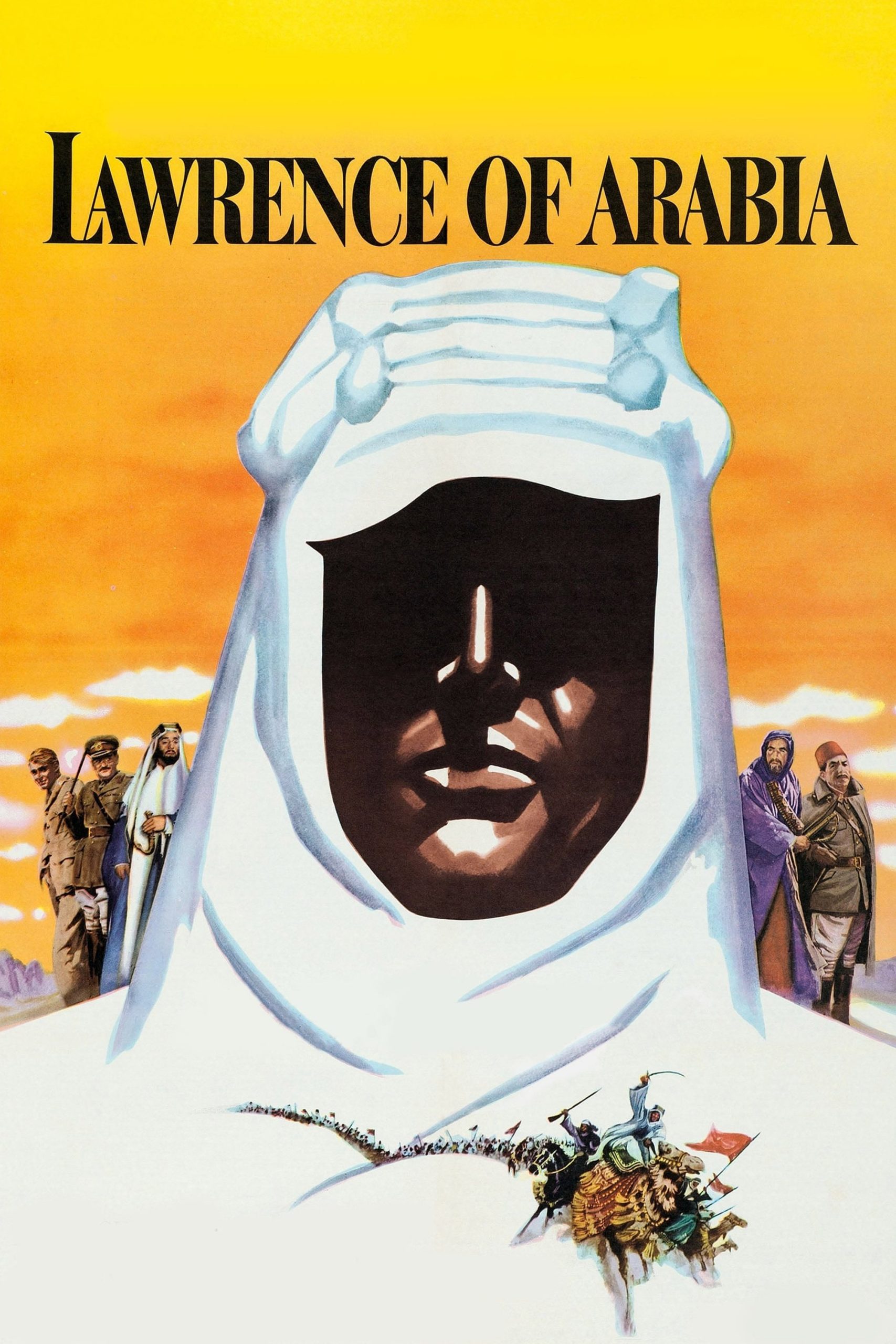
There is a dry, impossible desert within each of us, I sometimes think. The very first time I watched Lawrence of Arabia, I was overwhelmed not so much by the spectacle (though that is considerable), but by the sensation of being unmoored — a spectator thrust into an endless horizon. I still recall the way the sun bled white onto Peter O’Toole’s luminous face, the silence stretching just long enough to force me into introspection. The landscape seemed less a backdrop and more a psychological landscape for Lawrence himself — and, by extension, for me. Every return to this film feels strangely akin to being lost and found all over again.
The Emotional Drift and Dissonance at the Film’s Core
At its beating heart, Lawrence of Arabia is, for me, less a war epic and more an aching meditation on a fractured soul searching for purpose in the chaos of historical magnitude. The film follows T.E. Lawrence, a British intelligence officer tasked with uniting warring Arabian tribes against the Ottoman Empire, but to reduce its narrative to this linearity is to miss the true scope of the journey. The real odyssey is internal: Lawrence’s transformation from an eccentric, idealistic misfit into a mythic, tormented figure shaped and ultimately undone by his own legend. I find the emotional journey devastatingly honest — the film’s refusal to provide easy answers about Lawrence’s motives, his ambiguities, his displays of cruelty and self-doubt.
What lingers most deeply is the central conflict not between men or armies, but between identity and image, aspiration and reality. Lawrence—brilliant, reckless, adrift—oscillates between craving belonging and shunning it the moment he achieves it. There is a line near the end of the film: “Who are you?” A question addressed as much to Lawrence as it is to the viewer. Lean seems to suggest that the real battleground is within, where every triumph comes with the price of self-alienation. The film is unflinching in depicting the alienation that comes from greatness achieved in unfamiliar terrain—both literal and psychological.
Themes: Power, Identity, and the Seduction of Myth
At its core, the film interrogates the nature of power and its corrosive potential. I see Lawrence’s trajectory as one marked by an initial wish to do good—complicated by the seductions, contradictions, and inevitable moral compromises of command and hero worship. In the ravishing emptiness of the desert, power is mutable: one instant, it’s unity against oppression; the next, it’s savagery and betrayal, justified in the name of a higher cause. The lines blur. Lawrence’s early idealism gives way to a messianic self-image, and we witness the cost of that mythic burden on his psyche.
Equally compelling is the theme of identity, both personal and imperial. The film’s release in 1962 is not insignificant: the world was wrestling with decolonization, the end of European empires, and the question of what came next. For contemporary audiences then, Lawrence’s self-invention in foreign lands became a pointed metaphor for Britain’s own fading self-image — a story about the uncertain boundaries between helper and conqueror, ally and manipulator. Yet, in every era, the notion of self-invention and its risks resonates. Who do we become when we step outside the worlds we know? When are we saviors, and when are we simply meddlers?
The Desert as Mindscape: Symbols and Visual Patterns
The imagery of Lawrence of Arabia is never merely ornamental. The desert, to me, is a living, breathing symbol: merciless, cleansing, monumental in its indifference. The often-remarked upon visual vastness, captured in Freddie Young’s Oscar-winning cinematography, operates on two levels. On the physical plane, it emphasizes scale, smallness, and the sublime. Symbolically, it mirrors the interior emptiness and yearning that drive Lawrence deeper into his own psyche. The rising sun, the endless dunes shifting from gold to blood-red, relentless wind — each visual motif feels like a line of poetry composed for the subconscious.
Water, or more truthfully its absence, is another recurring motif. It is never merely a plot device, but a marker of both survival and the cost of ambition. Think of Lawrence’s coming-of-age moment, when he risks his life to rescue a man lost in the desert — the value of a single drop accentuated by the eternity of sand. The white scarf of Lawrence becomes another layered symbol: a badge of belonging, yet never enough to complete the transformation from outsider to insider. I always see in these motifs a tension between self-effacement and self-glorification, between humility and hubris.
The Moments That Shaped My View
An Entrance Shrouded in Myth
Omar Sharif’s entrance — a shimmering mirage resolving into a man — is cinema at its most hypnotic. This moment captures not just the allure of the unknown, but the film’s commitment to letting silence and scale do the storytelling. Here, the desert withholds its secrets, and every figure approaches fully formed from the haze of legend. The abstraction of landscape, our inability to fully read it or the people it brings forth, crystallizes for me the film’s central mystery.
The Well, Brotherhood, and Betrayal
The scene in which Lawrence enforces harsh Bedouin justice by executing a friend is, for me, the emotional fulcrum of the entire narrative. The cost of leadership—the shattering loss of innocence and the descent into moral compromise—pulses through this sequence. Lean spares us nothing: the look on O’Toole’s face, wounded and numb; the sound of the shot echoing off the silent sand. Here, I recognized for the first time the paradox of command: to be obeyed is to be ultimately alone.
The Feat at Aqaba — Triumph and Its Shadow
The taking of Aqaba, orchestrated with impossible bravado, is the film’s adrenaline high—yet immediately undercut by what follows. This turning point is less about victory over the Ottomans than about Lawrence crossing a threshold, becoming less a man and more a symbol, a construct for others to project upon. In the jubilation and shock, I see Lawrence’s pride metastasizing into something much darker. Triumph, the film tells me, is never unalloyed: every boundary crossed has a cost.
How Others See It — And Where I Differ
Most critics have read Lawrence of Arabia as a grand historical epic about the sweep of nations and the making (and unmaking) of heroes. Among cinephiles, it is revered for its immaculate craft—David Lean’s directorial bravura, O’Toole’s magnetic presence, the monumental Lawrence of the desert as a touchstone in cinematic ambition. The prevailing interpretation is that the film is a portrait of flawed genius, a cautionary tale about the dangers of idealism warped by ego.
While I see the evidence for these views, my reaction remains more intimate and psychological. I am less compelled by Lawrence as a historical actor and more by the film’s refusal to explain him. Its greatness, for me, resides in its ambiguity, the moments it withholds, the way it drags the viewer into self-questioning. The loneliness, the trauma, the hunger for transcendence — Lean and O’Toole never let me forget it is a human being beneath the myth. The epic scale is seductive, yes, but the film’s true power is that it finally leaves us alone with ourselves — our own vast, uncharted interior deserts.
Echoes of the Desert: Cinematic Relatives
- The Bridge on the River Kwai — Another David Lean classic, this film explores the ambiguous morality and destructive potential of leadership within the context of war, much like Lawrence’s journey with power and purpose.
- Aguirre, the Wrath of God — Werner Herzog’s examination of obsession, madness, and hubris against an indifferent landscape deeply echoes the themes of psychological desolation and myth-making found in Lawrence of Arabia.
- Apocalypse Now — Like Lawrence, Coppola’s film is immersed in the psyche of a man undone by the seductions and horrors of war, set in a landscape that becomes an extension of its protagonist’s unraveling mind.
- The Last Emperor — Bernardo Bertolucci’s epic traces the loss of identity and the burdens of rule, with its protagonist similarly adrift between cultures and power structures larger than any one life.
Looking Back, Looking Inward
Approaching Lawrence of Arabia today requires a patient, reflective mindset—one willing to be displaced, visually and emotionally, from the rhythms of modern storytelling. The film’s themes of identity, power, and the cost of self-invention are as urgent now as they were during the twilight years of empires. For me, deeper engagement with these themes transforms the experience from mere historical spectacle to a timeless meditation: to watch Lawrence of Arabia is to confront both the allure and devastation of pursuing greatness at any cost.
Related Reviews
If you found value in my perspective, you might also enjoy exploring my thoughts on other cinematic landmarks such as Doctor Zhivago and Aguirre, the Wrath of God.
To broaden this interpretation, you may also explore how critics and audiences responded over time.
🎬 Check out today's best-selling movies on Amazon!
View Deals on Amazon