
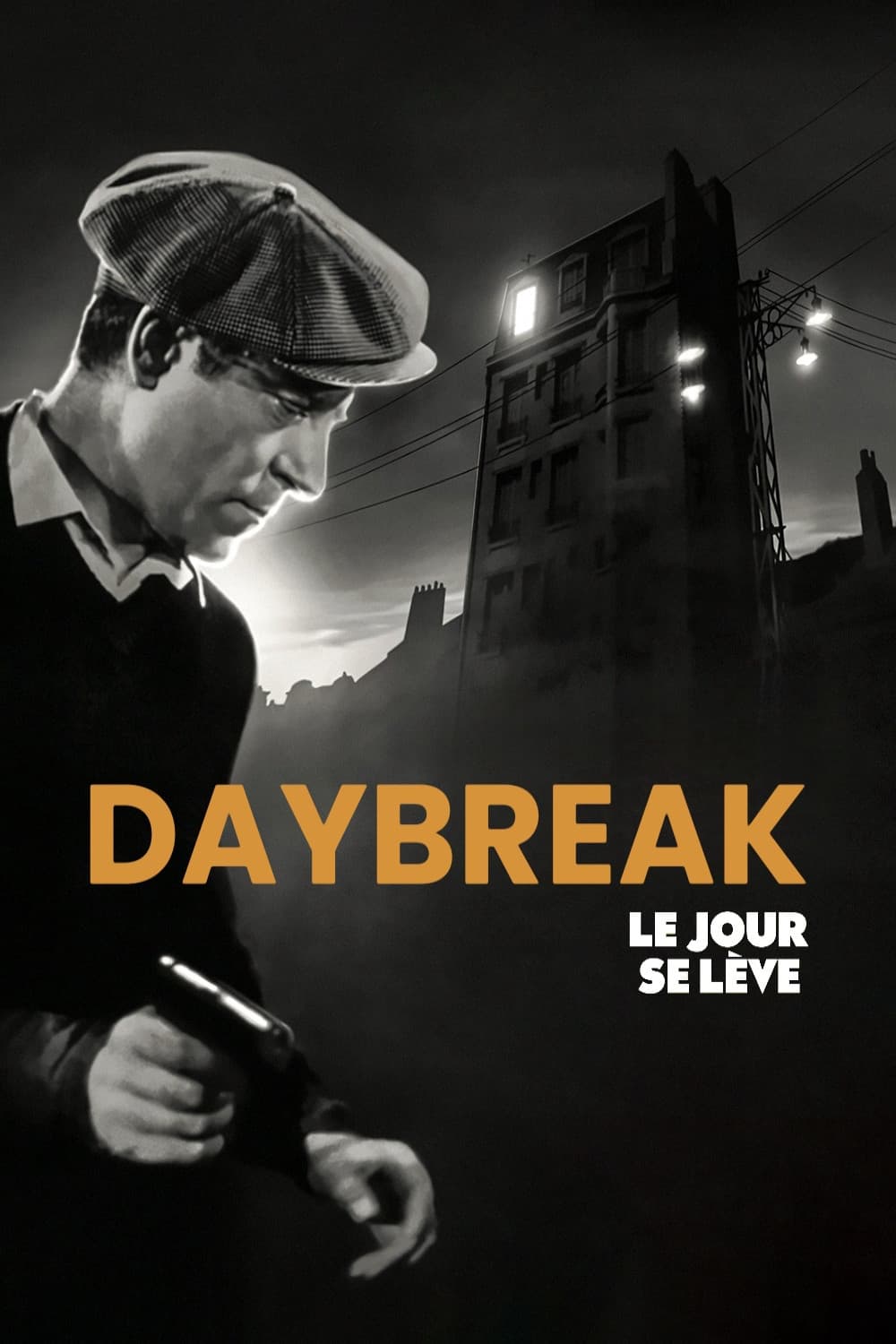
The Walls Keep Closing In: My First Encounter with Fatalism
I still remember the suffocating sense of inevitability that washed over me the first time I watched “Le Jour Se Lève”. It was as if the film itself was trying to trap me in that cramped, airless apartment with François, its protagonist, as dawn loomed outside the frosted windows. What struck me most was the way director Marcel Carné, along with screenwriter Jacques Prévert, sculpted this atmosphere of claustrophobia—not just through the literal walls, but through the moral and social confines hemming in every character. The film does not just present a story; it physically embodies the sensation of being unable to escape one’s past or one’s class, closing off every exit except the most final.
Shadows on the Wallpaper: The Visual Manifestation of Despair
The room is more than a setting. I found myself almost counting the stains on the wallpaper, the way the light cut across François’s face, and the persistent shadow that clung to each corner. Every time the camera lingered on the peeling paint or that battered bed, I felt the weight of accumulated disappointment, of a life slowly boxed in by invisible forces. The cinematography by Curt Courant isn’t simply noir style for the sake of mood—it’s a deliberate mirror for a world where hope is choked by poverty and fate. The relentless shadows are not just technical brilliance; they are the silent antagonists, reminders that night always wins the battle against day in this universe.
Love as Both Salvation and Sin
I’m always drawn to films that treat romantic longing with complexity, and here the entangled relationships between François, Françoise, Clara, and Valentin become a kind of tragic ballet. Love, in “Le Jour Se Lève,” is neither pure nor redemptive—it’s tainted, transactional, and ultimately destructive. Watching François’s tenderness unravel into violence, I sensed that Carné and Prévert saw love as a desperate grasp for something to alleviate existential dread, a flicker of warmth in a cold world. Yet, every tender gesture is shadowed by past betrayals and manipulations. The film indicts not just the cruelty of individual men (like Valentin, the manipulator) but the impossible weight placed on love in a society where no one is truly free to choose or trust.
The Clock Ticks: Time as Enemy
Time is always moving in this film, but never forward into anything hopeful. From the opening gunshot to the ticking clock that haunts François’s final hours, I realized time is a curse here, not a healer. Each flashback is less a reprieve than a tightening of the narrative noose. We are forced to confront not just what François has done, but the years of erosion and disappointment that led him there. The structure itself—circular, looping, and obsessive—echoes the inescapability of consequences in a society that doles out punishment without mercy or context. I saw time not as possibility, but as the slow erosion of agency, until dawn breaks and nothing is left but judgment.
Class and the Architecture of Hopelessness
What lingers with me most profoundly is the way “Le Jour Se Lève” captures a sense of economic entrapment. This is a film utterly haunted by class: the factory, the cheap boarding house, the endless grind of unrecognized labor. François, like so many working-class figures in the poetic realist films of the era, is hobbled not just by personal failings but by the inescapable machinery of society. Every choice he makes, from anger to affection, is channeled through the narrow corridors allowed by his poverty. There’s a particularly bitter poetry in the way Carné focuses on ordinary objects—the alarm clock, the dog, the cheap trinkets of Clara’s affection—imbuing them with the melancholy of lives lived without hope for transcendence.
The Police Outside, the Monsters Within
As dawn approaches and the authorities close in, I found myself thinking less about law and justice, and more about the monstrousness that each character carries. The police, faceless and implacable, are less individual villains than extensions of a society intolerant of deviation or despair. But the real threat isn’t uniformed men; it’s the internalized shame, the constant pressure to conform, the gnawing certainty that one’s life cannot matter. François’s final stand is not heroic, but it is deeply human: a refusal to be quietly erased, a desperate assertion of dignity in the face of annihilation.
The Language of Poetic Realism
The script, as I experienced it, moves with the rhythm of a poem, not just a narrative. Prévert’s dialogue feels at once colloquial and mythic, ordinary and tragic. I noticed how every line, every glance, is soaked in longing and defeat. I also felt how the film’s visual approach—its rain-slicked streets and fogged windows—embodies the poetic realism movement’s obsession with the beauty found in broken things. This is not just a style; it’s the film’s soul—a commitment to seeing the marginalized, the doomed, and the forgotten as worthy of lyricism.
What Remains After the Smoke Clears
When the credits rolled, I sat in silence, haunted not by the story, but by the film’s unflinching refusal to grant easy catharsis. “Le Jour Se Lève” is not about redemption or transformation—it’s about what happens when the forces around us, social and psychological, become walls we cannot breach. The dawn that breaks is not symbolic of hope, but of exposure: the brutal clarity of daylight revealing all the damage done in darkness. I was left with a profound sense of sorrow, but also a strange kinship with François—the sense that, for all his failings, his refusal to surrender quietly gives the film its lingering, tragic dignity.
If You Felt the Weight, These Films Will Speak to You
If “Le Jour Se Lève” left you breathless with its existential gloom and social critique, I urge you to seek out “La Bête Humaine” (1938) and “The Asphalt Jungle” (1950). These films, like Carné’s masterpiece, interrogate the limits of free will and the grinding mechanisms of class, while offering their own unique textures of desperation and longing.
If you’re curious about how this film was originally perceived or how it compares to similar works of its era, these resources may be helpful.
🎬 Check out today's best-selling movies on Amazon!
View Deals on Amazon