
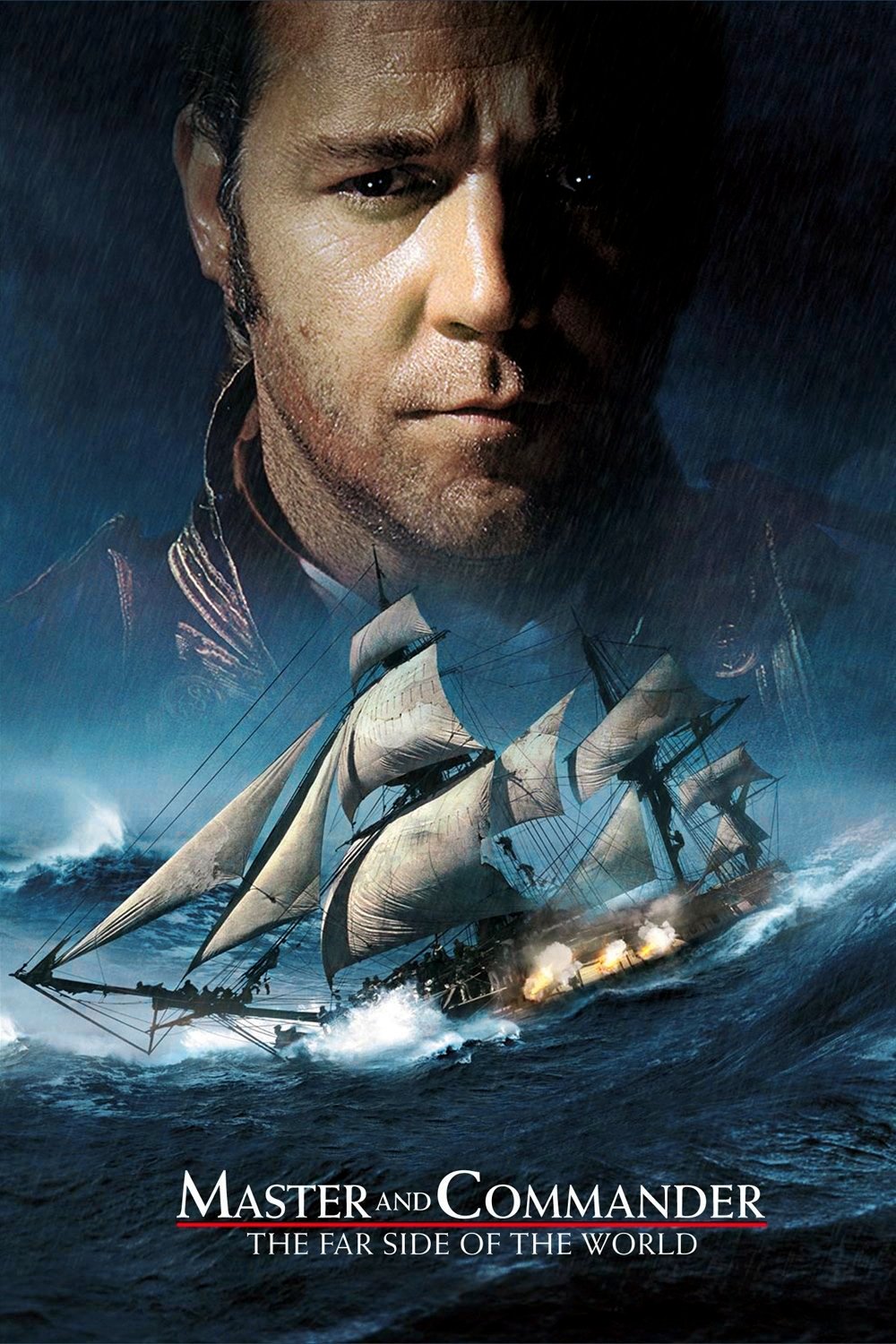
The first time I saw “Master and Commander: The Far Side of the World,” I remember the exact sensation: the ship’s timbers creaked and the sea shuddered with every cannon blast—yet what truly astonished me wasn’t the spectacle but the palpable intimacy of life at sea. I grew up captivated by stories of exploration; here was a film that didn’t just recount such tales, but conjured them with lived-in detail and a raw, almost tactile sense of camaraderie and peril. It was less about victory and more about the resilience demanded by isolation, unpredictability, and the thin line between leadership and loneliness. Watching Russell Crowe’s Captain Aubrey weigh every decision as if the soul of the ship itself depended on him, I found myself reckoning not just with the drama, but with the act of navigating one’s own convictions amid rolling uncertainty.
What the Film Is About
At its core, “Master and Commander” plunges the viewer into the extended chase between HMS Surprise and the French privateer Acheron during the Napoleonic Wars, but any reduction to mere pursuit misses what truly animates the narrative. For me, the film’s emotional engine is the tension between personal morality and communal duty; it’s about the burden and isolation inherent in command, embodied by Captain Aubrey’s responsibility for every soul aboard. I continually return to the subtle interplay between Aubrey and his close friend, Dr. Maturin—a dynamic grounding the action in philosophical and ethical conversation, revealing the *cost* of each decision in human terms.
Through salt-streaked intimacy and moments of profound silence, the film sketches a community forced into existential proximity. While Aubrey’s pursuit of the Acheron grows into obsession, the crew’s sacrifices, doubts, and tiny joys illustrate the emotional core: leadership is a crucible. The weight of command—the willingness to risk men’s lives or admit fallibility—serves as both curse and calling. I see the central conflict not simply as British versus French, but as man versus self, a test of integrity and rigor in the face of chaos.
Core Themes
Authority and Leadership loom over every exchange and echoed order. What makes this theme absorbing to me is the lack of easy answers—the way Aubrey agonizes over whether to press onward or turn back, and the gap between resolve and ruthlessness. This film resists the simplistic heroics of many war epics; instead, it explores how leadership is forged in compromise, self-doubt, and unexpected acts of mercy. I think this theme is highly resonant today, in a world grappling with crises of leadership and the fallout of inflexible certainty.
Science and Humanism Versus Tradition weaves quietly but insistently through the narrative, especially in the conversations between Aubrey and Maturin. The push-and-pull of reason against dogma, curiosity against doctrine, underscores how progress is never seamless but made in fits and starts—an idea no less relevant in 2003 amidst post-9/11 anxieties about change and certainty. But now, decades later, the tension between empirical discovery and hierarchical structure remains indicative of broader societal dilemmas, just as it does within the wooden confines of the Surprise.
Perhaps most enduring is the exploration of resilience—the determination to endure not only external threats but the roil of one’s internal world. The men, as individuals and as a group, navigate trauma and hope, bracing against the tempests of fate and fear. This insistence on communal endurance feels to me a profound antidote to our atomized age.
Symbolism & Motifs
Few nautical films lend themselves to such rich symbolic terrain. The ship herself operates as both a literal and figurative organism. She is the microcosm: an entire society adrift on an indifferent sea, subject to unseen pressures and reliant on cohesion. I see every creaking spar and battered hull as a metaphor for the fragile unity binding any group together. When damage mounts, the question isn’t simply about structural integrity but about the fraying of these social threads.
The sea is ever-present, more adversary than backdrop. Its vastness embodies the unknown, acting as both a testbed and a mirror for internal struggle. The crew’s battle against the storm, or their navigation through murky waters, are not only narrative necessities but visualizations of uncontainable anxiety and the limits of control—both external and personal.
Recurring images—musicians playing in the shadow of threat, the weeping willow motif, the albatross sighting—mark points of transition or reprieve. I remember how music becomes a language of respite and shared identity, a counterpoint to violence. That such moments are given time to breathe amid war underscores the film’s investment in the interior lives of its characters. Every attempted scientific exploration or moment of levity works to remind me: humanity persists, even at the edge of peril.
Key Scenes
“The Decision After the Storm”
In the aftermath of a devastating tempest that cripples the Surprise, the crew faces the impossible choice of sacrificing a wounded comrade or losing the whole ship. This moment—raw, hushed, and nearly unbearable—lays bare the essence of leadership. Crowe’s performance here, equal parts anguish and resolve, crystallizes the film’s indictment of romantic heroism. For me, this is where the concept of command reveals its true moral burden: the realization that sometimes even the right decision hurts everyone, including the leader.
“The Naturalist’s Obsession”
The Galápagos Islands interlude brings with it a breath of wonder. Dr. Maturin’s pursuit of scientific discovery is repeatedly thwarted by the demands of war, culminating in a disquietingly beautiful sequence where he finally observes evolution firsthand. The sight of strange creatures, the hush of untouched nature, and his childlike awe anchor the film’s battle between curiosity and violence. I find this scene essential because it inserts into the narrative the question of legacy and legacy not just of conquest but of knowledge—a rare, luminous contradiction.
“Aubrey’s Deception”
The final ruse—disguising the Surprise as a whaler to lure in the Acheron—demands ingenuity and a willingness to risk everything. As the plan unfolds, what stirs me isn’t just suspense, but the realization that triumph here is predicated on adaptability and collective trust. The sequence is a lyrical culmination of motifs: courage not as brute force, but as intelligence and unity in the face of overwhelming odds.
Common Interpretations
Many critics, especially on initial release, interpreted “Master and Commander” as a throwback to classic adventure—praising its immersive realism, technical prowess, and the dynamic between Crowe and Bettany. There was frequent comparison to cinematic epics of earlier decades, and some lamented its lack of a clear villain or rousing, crowd-pleasing redemption.
While I understand the appreciation for its craftsmanship—indeed, the film’s practical effects and sound design are worthy of all acclaim—I don’t quite accept the notion that it’s “just” a grand adventure. The film’s refusal to simplify, to neat heroics or easy catharsis, is precisely what makes it so resonant for me. Where some saw narrative distance or coolness, I saw a refusal to pander: a respect for the audience’s capacity to live with ambiguity, which is far rarer and more courageous.
Films with Similar Themes
- The Duellists – Like “Master and Commander,” it investigates the nature of honor, obsession, and the consuming cost of duty, set against the backdrop of the Napoleonic era.
- The Thin Red Line – Terrence Malick’s war film likewise eschews battle choreography in favor of meditations on leadership, mortality, and identity within communal conflict.
- Das Boot – Life aboard a submarine, with its own claustrophobic tensions and realities of command under extreme pressure, forms a spiritual sibling to Aubrey’s journey.
- Mutiny on the Bounty (1935/1962) – Another high seas drama wrestling with authority, rebellion, and the thin line between order and oppression.
Conclusion
For today’s viewers, “Master and Commander” rewards patience and attention—not just to its technical splendor, but to the emotional subtleties rippling beneath its surface. To truly appreciate its richness is to sit with uneasy questions about leadership, loyalty, and the nature of resilience. What lingers after each viewing is not the spectacle but the complexity—the film’s invitation to wrestle, as its characters must, with uncertainty and responsibility. In searching its depths, audiences can discover not only a transportive adventure but a mirror for ethical contemplation, no less pressing now than twenty years ago.
Related Reviews
If you found value in my perspective, you might also enjoy exploring my thoughts on other cinematic landmarks such as The Thin Red Line and Das Boot.
To broaden this interpretation, you may also explore how critics and audiences responded over time.
🎬 Check out today's best-selling movies on Amazon!
View Deals on Amazon