
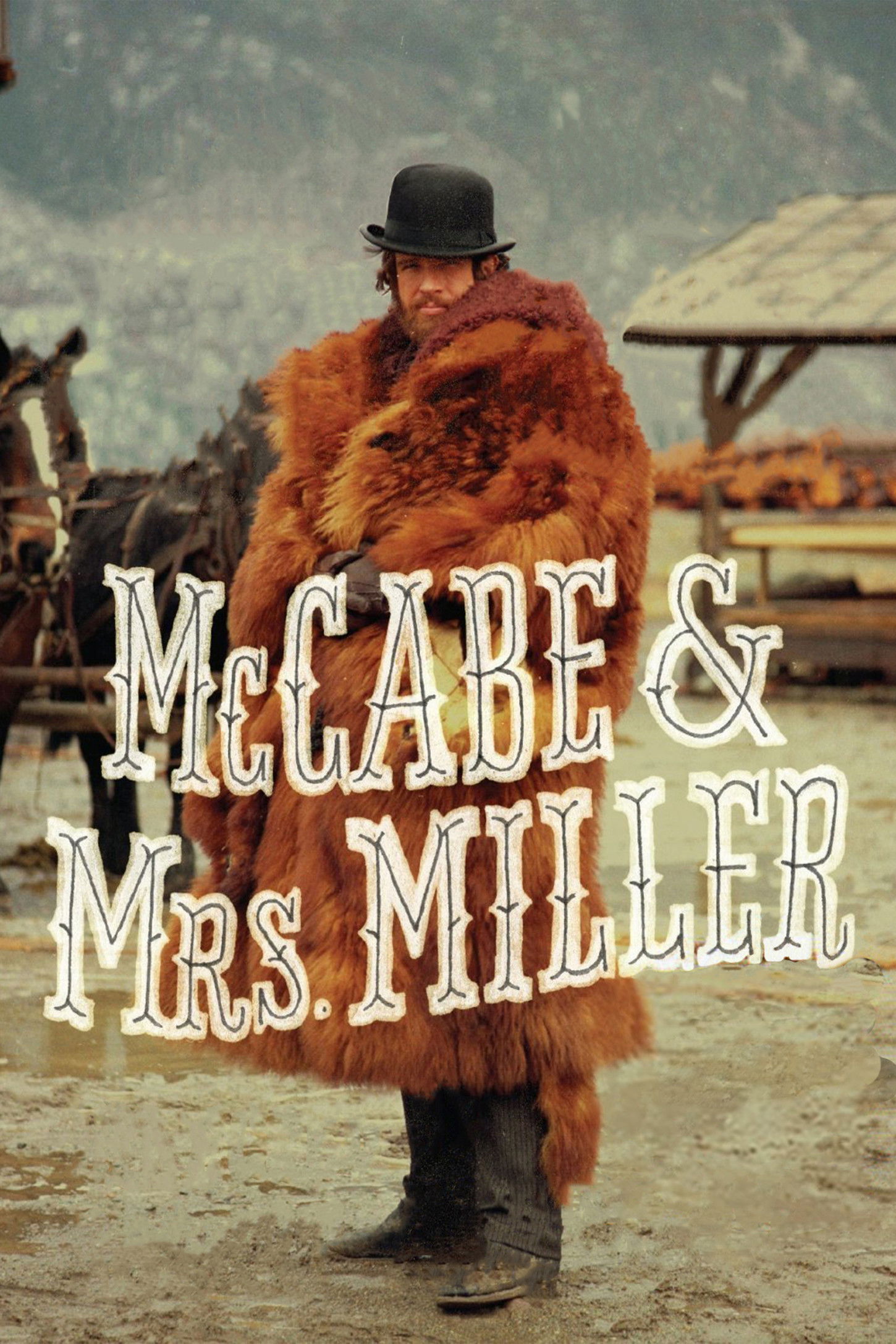
Winter Settles in My Bones: The Mood of Unforgiving Places
From the opening moments of McCabe & Mrs. Miller, I feel Alan Rudolph’s guitar twang and the slanting snow settle in my bones. I’m not simply witnessing a story unfold; I’m being dropped right into a space where optimism is muffled by weather and isolation. The Pacific Northwest outpost—muddy, half-built, and sodden—doesn’t just set a scene; it weighs down every hope the characters might nurture. What most Westerns dress in sunlight and myth, this film soaks in cold rain and uncertainty. The town, Presbyterian Church, grows by inches with each wooden plank and every flawed person who stumbles in, but the sense is always of being on the edge—of wilderness, of civilization, of failure. In this world, every human ambition feels like a candle guttering in the wind.
Love as a Transaction, Survival as a Philosophy
I can’t shake the sense that in McCabe’s world, nothing pure survives without first being bought and sold. When Warren Beatty’s John McCabe swaggers into town, there’s a promise of new beginnings, but even romance is tinged with negotiation. Julie Christie’s Mrs. Miller arrives as a shrewd business partner, not a love interest. Their relationship, teetering between connection and commerce, is the soul of the film. Altman seems to whisper that in America, especially on its fringes, intimacy and economy are locked in a desperate dance. When love does flicker between the two leads, it’s hesitant, fraught, and always under threat—not by grand gestures of villainy, but by the slow, grinding logic of survival. I find this insight unbearable and moving: the cost of warmth is always reckoned in cold coin.
The American Dream in the Key of Minor
Every time I revisit the film, I see Altman inverting that rugged American optimism. McCabe is a gambler and a dreamer, but his dream is fuzzy, half-formed, rarely articulated. Here, the American Dream is not a bright horizon but a fog-shrouded proposition, always receding just out of reach. Presbyterian Church, with its makeshift brothel and ramshackle saloon, is a testament to what happens when ambition meets reality not with triumph, but with compromise and entropy. The mining town grows, but so do the shadows—of violence, of corporate greed, of personal disappointment.
Altman’s Soundscape: Overlapping Voices and the Murmurs of Fate
The cacophony in Altman’s direction always strikes me. No other Western drowns dialogue in so much background noise. This sonic mess is not accidental—it mirrors the film’s moral confusion and emotional messiness. People murmur, laugh, and argue past each other, creating a sense of constant negotiation, where clarity is rare and certainty almost never achieved. Even the lyrics of Leonard Cohen, woven through the film, offer no release. His songs haunt the landscape, blending with the wind, reinforcing that sense that the rules of the civilized world are always being rewritten, always out of one’s control.
The Allure and Futility of the Outsider
I always see McCabe as the quintessential outsider—a man whose talents are ambiguous but whose bravado is unmistakable. What makes him so tragic is the gulf between how he sees himself and how the world grinds him down. His myth is self-spun, and Altman’s camera seems almost embarrassed for him as it lingers on McCabe’s bluffs and failures. Mrs. Miller, too, is an outsider but of a different sort; she is realistic, experienced, and unromantic, her clarity sharpened by hardship. The two are drawn to each other not because they complete each other, but because they recognize the loneliness in the other’s improvisation.
The Church as a Ghostly Specter
It’s impossible for me to ignore the presence of the almost-finished church in the background of so many scenes. Its white frame glows eerily against the bleak winter, promising order and community but never quite delivering. The church’s construction is slow and halting, an emblem of the town’s—and by extension, America’s—struggle to erect structures of meaning in a landscape that resists them. By the end, the church is present, but its sanctity feels hollow, a symbol more of lost faith than found salvation. The film refuses to grant closure; the church stands, but at what cost to those who built it?
Snow as Judgment and Shroud
The final shootout, muffled by falling snow, lingers with me long after the credits roll. I don’t see it as a conventional climax or a shootout for heroics; it’s a quiet, almost accidental violence. The snow doesn’t simply hide McCabe; it buries the mythic dimensions of Western heroism. The whiteness is not cleansing, but suffocating—a shroud for the old myths, and a reminder that nature remains indifferent to human striving. Even as lives end and futures evaporate, the world goes on, indifferent and unheeding.
False Legends and the Company Men
There’s a sly bitterness in how the film treats the mining company’s representatives. They are faceless, implacable, and perfectly comfortable with violence done at a distance. McCabe’s belief in his own legend is precisely what dooms him; he cannot believe he could be swept aside by men who don’t care about the rules of the West, or about legends at all. The company men are harbingers of a colder, more corporate future, a world where individuality is no match for capital. Altman’s message is sharp: the West was not won by rugged cowboys, but by the slow, impersonal machinery of profit.
Yearning and Opium Dreams: Mrs. Miller’s Escape
I’m always haunted by the contrast between McCabe’s violent, desperate end and Mrs. Miller’s retreat into an opium haze. Her escape is not simply an addiction narrative—it’s an act of resignation, a surrender to dreams because reality offers so little. While McCabe dies fighting for a myth, Mrs. Miller slips away into fantasy, her yearning both understandable and tragic. The film’s closing moments suggest that in such a world, reverie is as necessary as grit, and maybe just as doomed.
Altman’s Western: De-mythologizing with Compassion
The genius of McCabe & Mrs. Miller is how gently, yet relentlessly, it dismantles the mythic structure of the Western. Altman isn’t sneering at the genre, but mourning it. He fills every frame with longing—for connection, for meaning, for a home in a world that doesn’t permit it. Even the film’s visual palette—blurry edges, muted tones, the constant presence of unfinished buildings—feels like a lament for something irretrievable. I don’t watch this film for catharsis or triumph, but for the aching beauty of its failures and the humanity of its characters, stumbling toward grace in a landscape that offers none.
Two Kindred Spirits of Bleak Beauty
If you’re drawn to the uncertain terrain and emotional honesty of McCabe & Mrs. Miller, I’d recommend seeking out The Shooting (1966) and Days of Heaven (1978). Each, in its way, interrogates the myths of the American frontier and the fragile hopes of people shaped by indifferent landscapes.
If you’re curious about how this film was originally perceived or how it compares to similar works of its era, these resources may be helpful.
🎬 Check out today's best-selling movies on Amazon!
View Deals on Amazon