
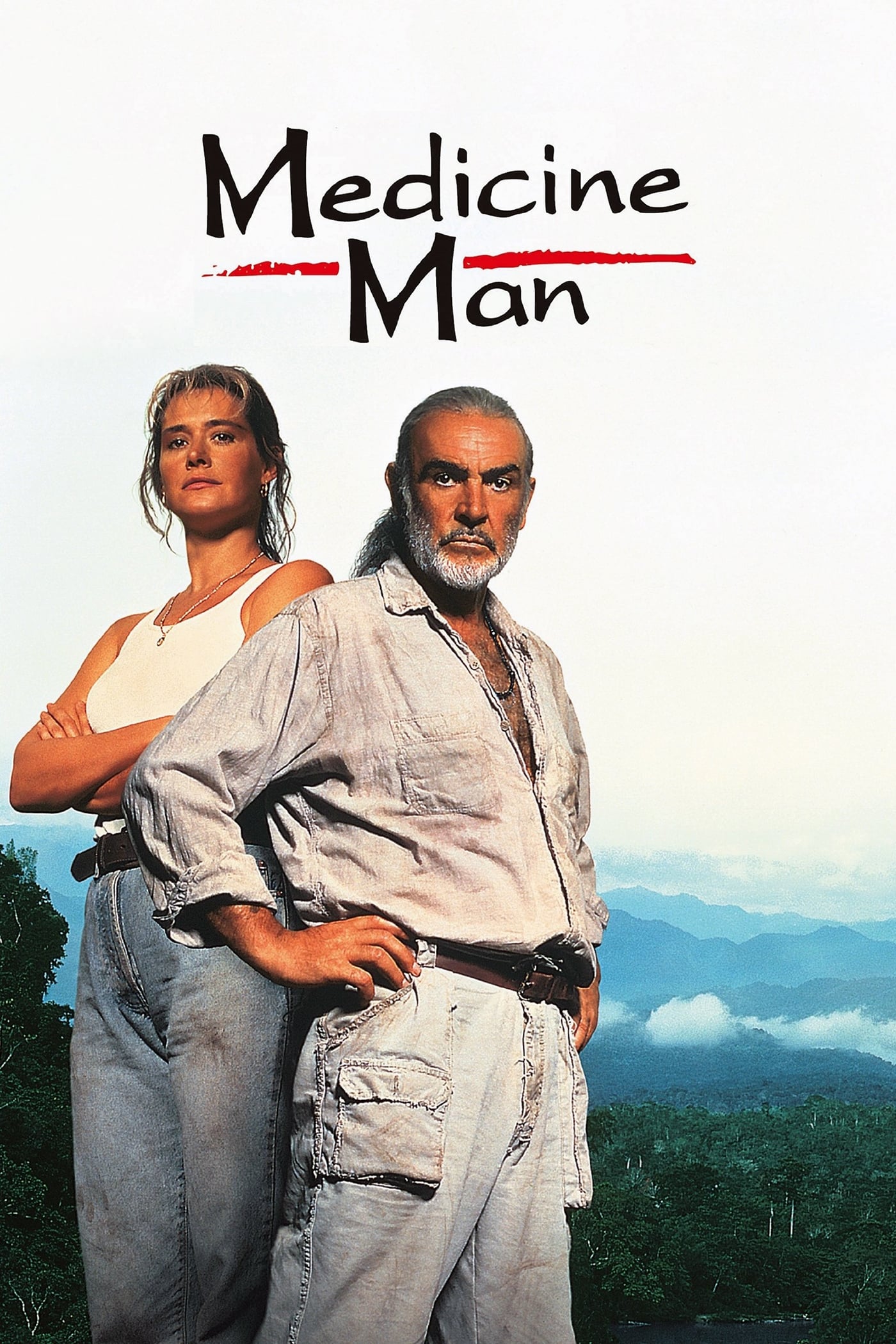
I remember the first time I encountered “Medicine Man”, not on the silver screen, but flipping through a dog-eared VHS cover in a small-town video store. I was too young to grasp its layered inquiry into progress and preservation, but the image of Sean Connery standing resolutely in the jungle—white lab coat against viridian wilderness—seared itself into my mind. Years later, upon revisiting John McTiernan’s impassioned, sometimes clumsy, always earnest jungle drama, I realized just how much the film became a provocation for my own questions about what scientific discovery really costs. My obsession wasn’t born from nostalgia, but from a drive to find meaning in its contradictions: is “Medicine Man” a hymn to discovery, or a requiem for what we’ve left behind?
What the Film Is About
While so many adventure tales feign a surface-level reverence for the exotic, “Medicine Man” immerses itself in the spiritual and ethical quagmire of scientific exploration. The journey it carves is less a jungle trek and more a collision—the overconfident compassion of Dr. Robert Campbell (Connery) versus the calculated pragmatism of Dr. Rae Crane (Lorraine Bracco), unfolded amid the threatened Amazon rainforest. Their clash reverberates beyond personal differences, landing squarely on the precipice between saving lives and saving worlds. As I watch, I’m consistently struck by the rawness of Campbell’s desperation: he’s found a possible cure for cancer, but the cure is frustratingly elusive, slipping out of reach as the forest itself faces rapid annihilation.
Every frame pulses with urgency, but what entrenches me most is the emotional seesaw—the sense that neither character is entirely right nor wholly wrong. The drama tests boundaries: of ego, of culture, of human responsibility. The science is less about cold equations than about reckoning with the limits of control. By the end, I’m left pondering whether the true conflict is external (progress versus preservation) or the internal turmoil of people attempting to reconcile ambition with humility. The film’s emotional current feels timeless, yet it erupts from the particular anxieties of the early 1990s, where environmental alarm and globalized science were just beginning to collide in public consciousness.
Core Themes
The most palpable heartbeat in “Medicine Man” is the question: at what cost do we chase progress? For me, the theme of man’s hubris clashing with the sacredness of nature resonates fiercely; when the world rushes to patent and commodify, the Amazon becomes the last stand for both indigenous knowledge and untamed biology. If the 1990s were a turning point for environmentalism—marked by the Rio Earth Summit, deepening climate fears, and rising political rhetoric—this film is a cinematic fossil of those hopes and dreads.
But there’s more at stake than environmental didacticism. The film plumbs the tension between the rational and the mystical. Campbell’s scientific quest, blind to the jungle’s spiritual landscape, is regularly unsettled by the wisdom of the indigenous people and his own dawning humility. These are not merely “noble savage” tropes, but illustrations of how Western empiricism is often impoverished without cultural context. Watching this today, I feel an increased relevance—the ongoing arrogance of developed nations, facing the realities of climate change, could do well to revisit such humility.
Throughout, the movie interrogates what it means to be a savior—whether for a single patient, or for an entire ecosystem. The film never lands on easy answers, but its invitation to wrestle with moral ambiguity is, to me, its most enduring theme.
Symbolism & Motifs
One of the most powerful motifs, for my taste, is the recurring image of smoke: plumes curling from burning trees, from Campbell’s own cigarettes, or rising from ritual fires. Smoke is omnipresent—a harbinger of destruction, transformation, but also a bridge between worlds. In one of the most poignant moments, it conveys the transience of both knowledge and life: here, something is always slipping away, half-seen, hard to grasp.
The dense, chaotic labyrinth of the jungle itself emerges as a living symbol: at once an ally and an adversary, it embodies the inscrutable logic of nature. I see the forest not just as a location but as a character—resisting, ever watchful, sheltering both secrets and dangers. McTiernan frames the verdant skyline with a sense of reverence, using wide shots to make the human presence seem transient and almost apologetic. To me, it’s a reminder of human smallness—a perspective that’s difficult to maintain in the modern world.
Perhaps most quietly unnerving is the motif of loss and preservation: be it Campbell’s personal grief, the diminishing culture of the indigenous people, or the threatened plant whose secret could save millions. Objects and rituals—petri dishes against ceremonial masks, computers beside indigenous totems—are juxtaposed to expose the impossibility of separating scientific progress from cultural context. Each is fragile; each is at risk of vanishing. I find this interplay poetic and disturbingly prescient.
Key Scenes
The Moment of Discovery
The fevered night when Campbell realizes the source of the cure lies within a tiny, overlooked ant is, for me, the film’s emotional nucleus. The scientific and the mystical converge; the “ant cure” becomes both metaphor and literal breakthrough. His exhausted joy, tinged with horror at what might be lost, transforms the eureka moment into a painful meditation. Watching this, I feel the push-pull between triumph and tragedy—the realization that so much must be sacrificed for a single breakthrough.
The Forest in Flames
Another scene that remains seared in my mind is the destruction wrought by bulldozers and fire. The violence isn’t aestheticized; it’s an environmental scream. Bracco’s Dr. Crane is both horrified and galvanized, and I experience her fury as deeply personal. The unstoppable machinery, the cracking trees, the fleeing animals—these visuals aren’t subtle, but their bluntness is the point. The film’s ecological warning, filtered through close-ups and chaos, feels almost like a prophecy realized two decades later.
The Bridge Between Worlds
An overlooked but critical sequence is the deepening connection between Campbell and the indigenous children. When he participates, awkwardly, in a local ritual, the film shuffles its power dynamics. What I take from this scene is not just cross-cultural trust, but Campbell’s recognition that his science is incomplete—dependent on the realities, myths, and permissions of those who call the jungle home. This is the film’s heart: knowledge is never extracted in a vacuum.
Common Interpretations
Many critics of the era saw “Medicine Man” as clumsy white-savior cinema, and not without reason. Reviews typically fixate on its sometimes stilted dialogue, Bracco’s mismatched performance, and the questionable optics of a lone Western scientist “saving” the jungle. While I agree these criticisms hold water—McTiernan’s outsider gaze is at times tone-deaf—such readings miss the ragged sincerity that breathes through Connery’s performance. For me, the film’s anxiety doesn’t rest on heroic hubris, but on a deep sense of loss and accountability.
Frequently interpreted as overly earnest or even naïve in its environmental messaging, the film has often been dismissed for lacking subtlety. Yet, I find its bluntness effective. Cinema, especially in the commercial mainstream, rarely allows itself to grieve in such a messy, conflicted way. “Medicine Man” is not content with giving its audience a pat on the back; it forces us, at times uncomfortably, to sit with the things we cannot fix. I find more value in this unresolved messiness than in perfectly executed polemic.
Films with Similar Themes
- “The Emerald Forest” – Also delves into Western incursion into Amazonian life, exploring familial and environmental loss.
- “Gorillas in the Mist” – Examines the ethics of scientific study versus native culture and landscape preservation.
- “The Constant Gardener” – Reframes pharmaceutical ambition and personal responsibility against a backdrop of exploitation and suffering.
- “Fitzcarraldo” – Herzog’s fever dream likewise confronts human ambition and the inscrutable, overwhelming power of untouched nature.
Conclusion
For contemporary viewers, “Medicine Man” offers more than just a relic of ’90s ecological anxiety—it’s a living inquiry into the price of discovery and preservation. Approaching it today, I recommend looking beyond its flaws to the earnestness in its questions: Who gets to discover? Who pays the cost? The film’s ambiguous morality, and its haunting visuals of a vanishing world, have the potential to jar modern audiences out of complacency. If you allow yourself to confront both its missteps and its insights, you’ll find a conversation worth having—one that is now more prescient than ever.
Related Reviews
If you found value in my perspective, you might also enjoy exploring my thoughts on other cinematic landmarks such as The Emerald Forest and Gorillas in the Mist.
To broaden this interpretation, you may also explore how critics and audiences responded over time.
🎬 Check out today's best-selling movies on Amazon!
View Deals on Amazon