
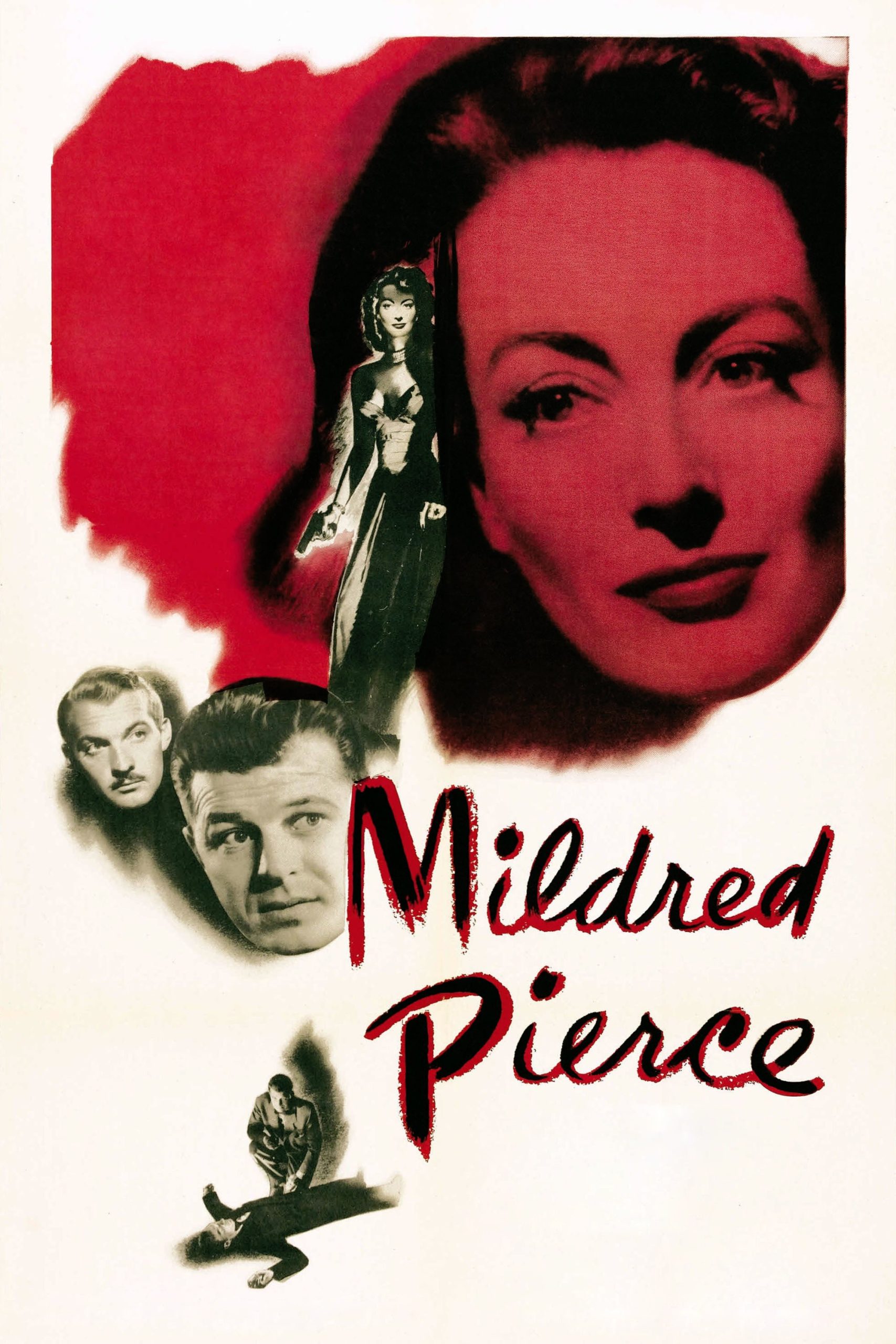
Bittersweet Triumphs: My Journey into Mildred Pierce’s World
Even as the credits unspool and the noir shadows recede, I find myself haunted by the image of Joan Crawford’s Mildred—a woman whose relentless drive never quite outruns the ache of sacrifice. Stepping back into the era where this film first unfurled, I’m struck by how Mildred Pierce is both a product of its time and a devastating commentary on timeless desires: the hunger for love, status, and self-worth. For me, it’s not just a melodrama or a mystery, but a searing confession from the American psyche itself, veiled in the smoke and glass of postwar California. Mildred’s story may be bookended by crime, but what pulses underneath is the tragedy of a woman forced to barter everything—even her soul—for the illusion of control.
Branded by Ambition, Bruised by Love
What captures me, every time I watch this film, is the way Mildred’s ambition is inseparable from her emotional wounds. Her journey from housewife to successful restaurateur isn’t a simple empowerment arc. There’s a cost etched into her every gesture, a yearning that never quite resolves. I see her ambition as a kind of armor, hastily donned after betrayal and poverty strike. She paves her road out of domestic drudgery with the bricks of her own loneliness, constructing an empire—not for herself, but for her daughter, Veda. This is where the film’s brilliance lies for me: Mildred’s professional success is always contaminated by personal despair, as if her very achievements are laced with the poison of the love she tries, desperately, to buy.
Motherhood as Torture Chamber
Few films have ever made the parent-child bond feel as claustrophobic, transactional, and ultimately ruinous as Mildred Pierce. I’m always staggered by the film’s refusal to sentimentalize motherhood. Mildred doesn’t just love Veda—she worships her, but it’s a worship that curdles into obsession. The boundaries between self-sacrifice and self-destruction feel perilously thin. I interpret Mildred’s compulsion to spoil Veda as an indictment of the idea that a mother’s love is redemptive or pure. Instead, love here is hunger—insatiable, devouring, and ultimately tragic. Watching Mildred abase herself to grant Veda’s every whim, I realize this film is really asking: What if a mother’s love is the very thing that destroys her?
The Poison in the American Dream
I can’t shake the suspicion that the film uses Mildred’s ascent as a critique of America’s optimism. The 1940s were supposed to be about fresh starts, but Mildred’s rise is shadowed at every turn by anxiety and duplicity. Success doesn’t set her free; it binds her to new forms of servitude. Her restaurants and homes are markers of victory, yet she’s never permitted to enjoy them without fear or remorse. It’s as if Mildred Pierce is whispering that the American Dream, at least for women, may be a mirage that exacts a punishing toll. Every time Mildred gains a rung on the ladder, something inside her slips further out of reach.
Veda: The Beautiful Monster
Whenever I try to explain my fascination with this film to someone who’s never seen it, I start with Veda. Veda is Mildred’s masterpiece and her Frankenstein’s monster. The film’s most chilling moments are not the murder or the police interrogations, but the scenes where Veda mocks, humiliates, and shatters her mother. Veda is class anxiety incarnate—a child who despises the very labor that sustains her. In her, I see the dark flip side of Mildred’s ambition: the creation of entitlement and contempt instead of gratitude. Veda is what happens when love becomes toxic currency exchanged for status and affection. The film dares me to wonder if Veda’s monstrousness is innate, or if it is the logical outcome of a mother’s desperate, unconditional largesse.
Noir Shadows and Emotional Murk
Stylistically, I’m endlessly compelled by how director Michael Curtiz cloaks the story in noir aesthetics. The slatted shadows, the rain-spattered windows, and the suffocating interiors all feel like visual metaphors for Mildred’s psychological landscape. This isn’t noir as genre, but noir as emotional weather: every triumph is haunted, every embrace is etched with menace. The flashbacks and fractured chronology mirror Mildred’s own fractured sense of self. By the time the film circles back to its opening crime, I’m left less interested in who pulled the trigger than in the web of resentment, longing, and regret that made it inevitable.
Gender, Survival, and the Economics of Desire
There’s a raw honesty in how Mildred Pierce confronts the economics of love and power. At its heart, the film is a brutal meditation on what women must do to survive. Every relationship here is an exchange—of money, affection, loyalty, or status. Mildred’s marriages, her friendships, even her most cherished maternal bond, are shot through with negotiation and calculation. For me, the real tragedy is that Mildred’s emotional and financial labor never buys her the security or respect she craves. The world of the film is rigged: women are allowed to succeed, but not to enjoy it; to love, but not to be loved back in equal measure.
The Symbology of Food and Class
I find it impossible to ignore the way food—pies, cakes, and the humble chicken—threads through every key moment. Food is both Mildred’s salvation and her curse. Her culinary talents are her ticket out of poverty, but they also anchor her to the world of service and domesticity. Every meal Mildred serves is both an act of creation and an emblem of her obedience to the demands of others. When Mildred opens her restaurant, she’s breaking barriers, but also reinforcing the idea that women belong in the kitchen, even at the apex of success. The film’s imagery turns food into a symbol of class mobility and an indictment of how that mobility is policed and punished, especially by those closest to us.
After the Shattered Glass: Why Mildred Pierce Endures
Long after the last line is uttered and the final shot fades, I’m left with a ache that feels both personal and universal. Mildred’s story, for me, is the story of how hope curdles under the weight of impossible expectations. At its core, this is a film about the cost of wanting too much, of loving too hard, of believing in a world that will not—cannot—love you back in the way you imagine. Mildred Pierce endures because it refuses to offer comfort. Instead, it presses its characters (and me, the viewer) against the jagged edge of desire, asking what we’re willing to lose for the things we think will complete us.
Kindred Spirits on Celluloid
Whenever I hunger for another cinematic experience that echoes the bruised grandeur of Mildred’s world, two classic films stand out in my mind: Now, Voyager and Stella Dallas. Each, in its own way, peels back the mask of maternal sacrifice and social striving, daring me to look at the price we pay for love and acceptance.
If you’re curious about how this film was originally perceived or how it compares to similar works of its era, these resources may be helpful.
🎬 Check out today's best-selling movies on Amazon!
View Deals on Amazon