
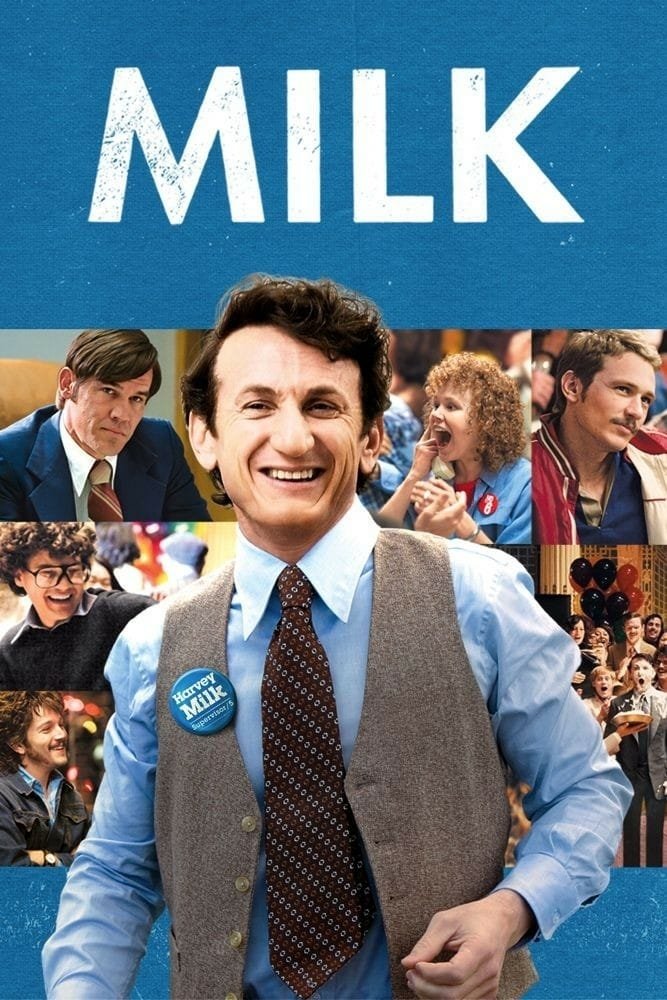
For me, watching “Milk” for the first time was less like encountering a routine biography and more like opening a time capsule sealed with pain, hope, and astonishing relevance. I distinctly remember the chills that ran down my spine during Sean Penn’s opening narration—his voice, uncertain and weathered, echoing the vulnerability of anyone who’s ever risked everything to be seen. What drew me in wasn’t just the historical importance of Harvey Milk, but how the film trickled into my present: the rain-slicked streets of San Francisco on screen looked like memories both distant and urgent, ghostly reminders that the struggle for visibility and dignity never really recedes. That push and pull between public history and private feeling is what has made “Milk” so fascinating to me—every time I revisit it, I find a new layer, hidden beneath the familiar iconography, that feels heartbreakingly personal.
What the Film Is About
At its heart, “Milk” is an intimate and sobering portrayal of Harvey Milk’s journey from withdrawn insurance salesman to impassioned activist, climbing onto the public stage not for glory, but out of sheer necessity. The emotional weight isn’t carried by milestones or legislative victories alone; it’s entwined in the daily courage required merely to exist and be vocal in a world ready to erase you. This isn’t a film that just catalogues events—it internalizes the cost of activism. I felt the persistent ache that shadowed Milk: the constant, gnawing sense that love and loss, euphoria and tragedy, are inextricably linked under the conditions of social struggle.
Crucially, “Milk” isn’t solely about Harvey Milk, the person—it’s about the fight for communal dignity and the messy, vulnerable process of becoming a symbol. Watching Penn’s performance, I found myself less interested in the campaign strategies than in the flickers of indecision, the trembling moments before a speech, or the private exchanges where nothing was certain except the need to go on. The film whispers, again and again, that political action is born of personal agony and accidental heroism. It traces the collision between the desire for normalcy and the demands of history—how sometimes there’s no choice but to step forward, even when it means exposing yourself to unimaginable risk.
Core Themes
For me, the resounding theme of “Milk” is resilience in the face of systemic erasure. It’s not about triumph in the traditional sense, but about refusing to disappear—even when all social forces conspire to make silence an easier path. The film’s urgency, then and now, arises from this insistence on visibility: there is a cathartic, even radical, power in standing up and saying, “I am here.” In 2008, with the aftershocks of California’s Proposition 8 reverberating, this ethos was not a relic but a call to arms—one reason I believe Van Sant’s decision to make the film at that particular moment ignited its reception. That resonance hasn’t faded; in a world still wracked by culture wars and backlash, “Milk” continues to speak to those pushed to the margins.
The film also wrestles with the complexities of political leadership and the isolation inherent in becoming a figurehead. I find this especially affecting: Milk’s journey is not just about gaining the microphone, but about losing the comforts of anonymity and safety. There’s an ethical exhaustion here—what toll does representation exact from those who are first to step forward? Connected to this is the ever-fraught notion of chosen family: the campaign office, Milk’s inner circle, and the web of relationships that form a fragile safety net in the face of state-sponsored hate. “Milk” doesn’t glamorize activism; it exposes every bruised knuckle and mourned friendship along the way.
Symbolism & Motifs
One of the most distinctive motifs for me is the glass storefront window of Castro Camera. Over and over, it functions as a literal and figurative threshold—the boundary between private pain and public action. As passersby peer in, as Milk gestures out into the neighborhood, the shop becomes a microcosm for the larger struggle: intimacy exposed, vulnerability on display. The window is simultaneously a shield and a target, a space of connection that can never quite keep the world out. Every time Van Sant’s camera lingers on the storefront, I feel the risk and the optimism, coexisting as uncomfortably as they do in any real act of coming out.
Photographs, too, operate on several levels—the campaign posters, personal snapshots, and even the news clippings that flood the screen. These images are not just documentation; they are armor and testimony. The recurring use of newsprint and photography drives home the theme of visibility as survival: to be photographed, to have one’s name in print, is to confirm existence against the threat of annihilation. The tension between private truth and public narrative is embodied in each photo: what is preserved and what is distorted?
Finally, there’s a persistent motif of light and shadow—the fog of San Francisco rolling in, the harsh illumination of neon and campaign spots, the fleeting warmth of home. This chiaroscuro is more than atmosphere; it echoes the film’s dialectic of hope and dread, the perpetual negotiation between exposure and safety. In these patterns, I always sense a deeper question lingering: what does it cost to step out of the shadows, and what do you gain, if only for a moment, by basking in the light?
Key Scenes
The Phone Tree: Mobilizing Against Proposition 6
There is a sequence late in the film—Milk and his allies launching a phone tree, feverishly calling closeted people across California—that encapsulates everything I find remarkable about “Milk.” It’s not a grand, cinematic set-piece but a quiet revolution: the realization that changing minds sometimes demands a single, trembling conversation. When Milk urges people to come out to their families, the stakes become devastatingly clear. This moment is less about oratory, more about the slow tectonic shift of hearts and homes, and I always leave it reminded of how personal courage can stoke collective transformation.
Dan White’s Final Visit: The Cost of Difference
Another haunting scene is White’s last, desperate encounter with Milk in his office—an awkward, bitter clash during which hope and jealousy, admiration and rage, swirl silently beneath the surface. The tension is both political and tragically personal: their conversation, shot through with desperation, unspoken longing, and resigned knowledge that their worlds are irreconcilable. For me, this exchange is a microcosm of the film’s central drama: the staggering costs of refusing to assimilate, the undercurrent of violence that attends any act of self-assertion.
The Candlelight Vigil: Grief and Solidarity
The candlelight march after Milk’s assassination is, for me, the film’s most indelible visual. Thousands of mourners, their faces flickering with loss and resolve, flow down Market Street; the city metamorphoses into a river of memory and defiance. Here, the story slips its historical shackles and becomes a universal elegy—public grief as a force for unity, solemn and strangely beautiful. Every time I watch it, I feel both crushed and uplifted: a reminder that movements are forged in the aftermath of terrible absence, and that every tragedy carries the seeds of new solidarity.
Common Interpretations
Critics often treat “Milk” as a straightforward chronicle of an American civil rights hero—an essential, if conventional, biopic celebrating the triumph of individual charisma and political savvy. There’s widespread acknowledgment of Sean Penn’s transformative performance, Gus Van Sant’s deft direction, and the film’s relevance in the post-Prop 8 context. Writers have praised “Milk” for balancing historical detail with emotional immediacy, creating an accessible narrative that situates Milk within a lineage of progressive icons.
Yet, for me, these readings sometimes miss the most vulnerable, destabilizing aspects of the film. I don’t see “Milk” as pure uplift or even as a roadmap for activism. The film’s true power lies in its refusal to offer easy catharsis—it lingers on the fragility of hope, the devastation of loss, and the sense that victories are always incomplete, always shadowed by new threats. Where some see inevitability, I find contingency: the sense that history turns not on heroes alone, but on the cumulative weight of countless imperfect, often painful choices. This tension—between public inspiration and private cost—is what I continue to wrestle with, long after the credits roll.
Films with Similar Themes
- Philadelphia (1993) – Like “Milk,” this film centers on one man’s battle against institutional discrimination, using the courtroom as a stage for the public reckoning with private prejudice.
- Brokeback Mountain (2005) – The struggle for self-acceptance and the taboo of same-sex love in a hostile world links Ennis and Jack’s tragedy to the personal sacrifices at the heart of “Milk.”
- The Times of Harvey Milk (1984) – The documentary that preceded Van Sant’s take, providing a bracingly direct look at Milk’s impact and the culture of resistance, underscoring the film’s factual and emotional roots.
- Pride (2014) – Chronicling queer solidarity with British miners, this film echoes “Milk” in its depiction of coalition-building and the hard-won joy of visibility amidst daunting opposition.
Conclusion
Modern viewers, I believe, owe it to themselves to watch “Milk” with all its contradictions and unresolved threads—experiencing not only the exhilaration of ground broken, but the heartbreak of lives left unfinished. To truly engage with the film is to confront the ongoing necessity of visibility and the perilous work of hope, especially for those who cannot afford to step back into the shadows. Every time I return to “Milk,” I am reminded that understanding history’s personal and political stakes allows us—at least momentarily—to hold compassion and resolve in equal measure.
If you found value in my perspective, you might also enjoy exploring my thoughts on other cinematic landmarks such as All the President’s Men and Brokeback Mountain.
To broaden this interpretation, you may also explore how critics and audiences responded over time.
🎬 Check out today's best-selling movies on Amazon!
View Deals on Amazon