
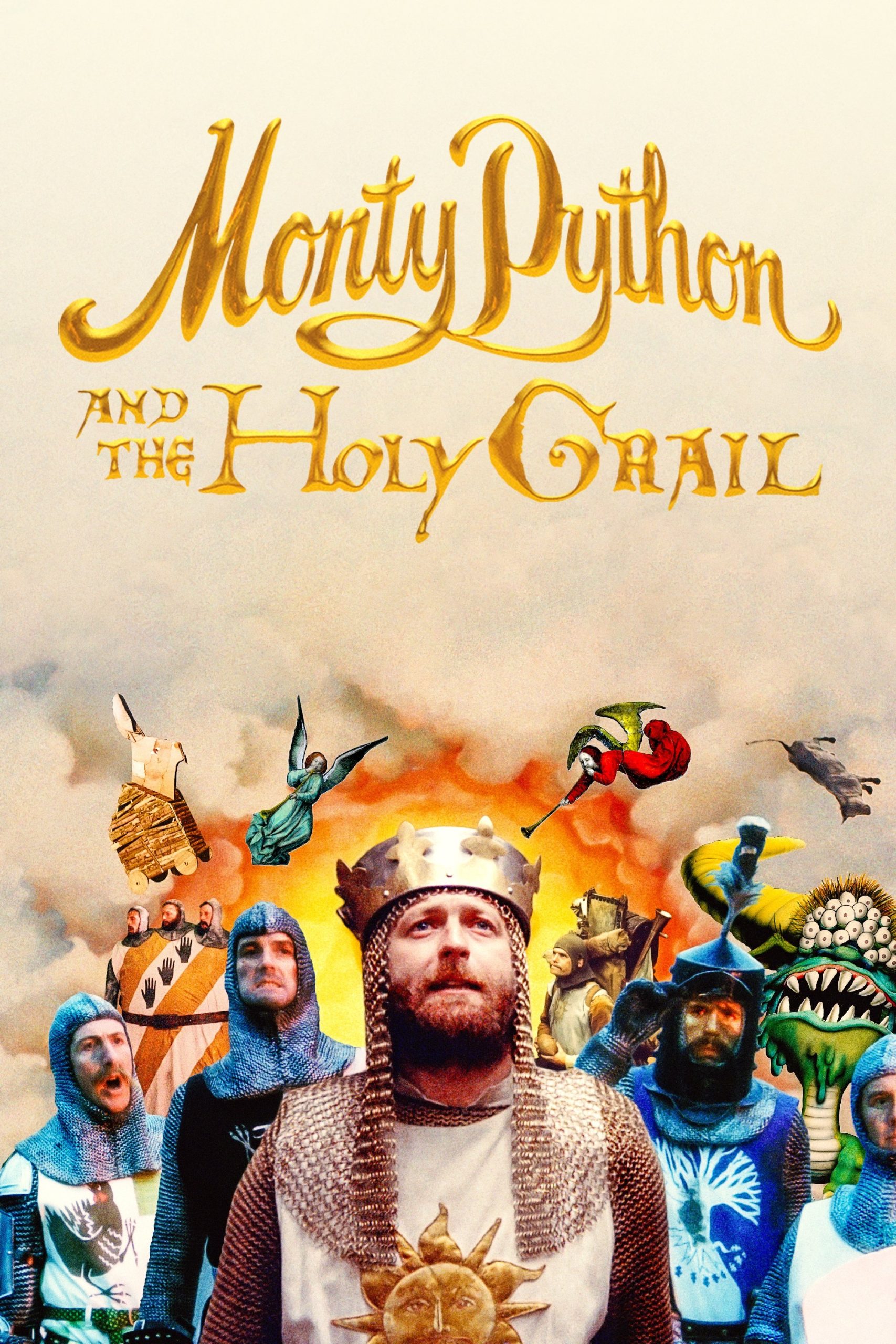
Years ago, I stumbled upon “Monty Python and the Holy Grail” at a midnight screening, surrounded by dedicated fans quoting every line. The screen flickered with absurd knights and coconut clops, but it was in the quiet pockets between their manic antics that I found something so daring beneath the silliness. I wasn’t just watching a comedy; I saw a grand experiment in irreverence and playful subversion—an audacious mosaic cut from the fabric of British history and stitched back together with slapstick and satire. That tension—between the patently ridiculous and the unmistakably sharp—has kept the film alive for me, demanding I return, not simply to laugh, but to be reminded of the freedom that comes with not taking power (and storytelling) too seriously.
Wandering Towards Meaning: An Emotional Map of the Quest
At its core, “Monty Python and the Holy Grail” is a self-aware demolition of authority, myth-making, and heroic narrative. We follow King Arthur’s ragtag band on their doomed quest, but the emotional axis is not their failure or success; it’s the revelation that every sacred quest—especially the grand ones—are as fragile and arbitrary as the stories we invent about ourselves. Rather than inspiring awe, their journey inspires a questioning: What, if anything, gives meaning to this trek?
In unraveling this emotional journey, I find myself less invested in whether Arthur succeeds and more enthralled by the ongoing parade of bewildered, egotistical, or cowardly characters. There’s empathy to be found in King Arthur’s endless struggle for authority—he is both a leader and, ultimately, a man mocked and undermined at every turn. The film parodies the solemnity of the medieval epic but also sympathizes with its characters’ flailing need for significance. Satirical as it is, the film ventures close to existential reflection: What do we cling to when everything—from the divine hand of God to the very fabric of narrative logic—becomes an object of ridicule?
Layered Satire: What’s Beneath the Laughs
On my repeated viewings, I’m always struck that the humor here is just the surface. The quest for the Holy Grail becomes a stand-in for our own quests for meaning, order, and legitimacy: be it moral, political, or personal. To me, the key theme is the exposure of pomposity and the emptiness of inherited traditions. Arthur’s authority is arbitrary; his knights are buffoons; the peasants, more revolutionary than the supposed heroes, suggest that the system is a collective joke.
In 1975, this irreverent skepticism felt subversive, fueled by post-60s disillusionment and anti-authoritarian sentiment. Even today, it resonates because our world is still rife with self-serious institutions and the constant churn of grandiose myths—be it in politics, leadership, or celebrity culture. The film gleefully eviscerates the notion that tradition is sacred by turning even the most profound or violent moments into farce. What’s more, its gleaming delight in its own absurdity serves as a reminder that laughter is a potent weapon for questioning dogma.
Icons with a Payoff: Repeating Imagery and Hidden Clues
On the surface, “Holy Grail” looks crude. But the film is littered with recurring motifs that both satirize and enrich the narrative. The obvious example is the coconut-clopping, which turns the grand medieval saga on its ear. Horses, which traditionally symbolize chivalric might, are conspicuously absent, but their absence is the real point: the “epic” is stripped bare. All that pomp has always been just theater—why bother upholding the charade?
Another recurring thread is the presence of the Holy Hand Grenade of Antioch. In my view, this object sums up the Pythons’ approach to sacred objects and rituals. The intricate, nonsensical reading from the “Book of Armaments” pokes fun at the ways we mystify and ritualize violence and power. The Grail itself is never seen as a transformative object of power; it is a MacGuffin, elusive and ever out of reach.
Even the film’s abrupt and infamous ending, where police storm the medieval tableau and stop the narrative, underscores the essential arbitrariness of stories—both on screen and in history. The movie becomes a symbol for its own thesis: even the idea of ‘resolution’ is something we impose, not something inherently earned.
Moments that Changed My Understanding
The Dialogue with the Peasant: Dismantling the Divine Right
This early scene where King Arthur debates the “autonomous collective” with dirt-caked peasants never fails to strike me. The sharp subtext here is that authority is revealed as performance, not divine right. The peasants, disinterested in Arthur’s royal proclamations, remind us that power exists only if others acknowledge it. This sent me down the rabbit hole of questioning every leader in every institution I had previously accepted without hesitation.
The Killer Rabbit of Caerbannog: Absurdism as Shock
The infamous killer rabbit scene, on the surface, is a simple reversal gag, but to me, it’s a compact lesson in the dangers of underestimation and the unpredictable violence lurking in banality. By juxtaposing a fluffy creature with sudden, gruesome violence, the film visually embodies the unpredictability and meaninglessness of narrative conventions. It signals that, in this world, expectations are not just subverted—they’re pulverized.
The Final Arrest: Smashing the Fourth Wall
The police intrusion that terminates the quest is not just a punchline; it’s an act of narrative vandalism. To me, this scene demonstrates the film’s ultimate thesis: stories are subject to the whims of their creators and are inherently artificial. Any attempt to find definitive meaning is instantly undercut. I remember being both angry and delighted the first time I saw it—a perfect encapsulation of the film’s capacity to challenge the very structure of cinema itself.
Theories and Thorns: Critic Consensus vs. Personal Resonance
Most critics interpret “Monty Python and the Holy Grail” as a simple genre spoof—a loving roast of Arthurian legend and a showcase for surreal, intelligent comedy. It’s often labeled as a landmark in British humor, dissecting national myths and the foibles of heroism. While I appreciate these takes, I always felt that reducing it to a “parody” sells its disruptive energy short.
For me, this isn’t just a lampoon. The film is a sustained rebellion against structure and meaning itself. It’s a rare example of anti-narrative that is both funny and deeply critical of its own medium. Where consensus tends to reverberate around cleverness and wit, I’m compelled to acknowledge the discomfort and provocation it delivers—a reminder that we, as viewers, often demand order and closure when perhaps there is none. That’s the subversive punch critics sometimes neglect while celebrating the laughter.
Exploring Kindred Spirits: Films that Echo These Themes
- “Life of Brian” – The Pythons’ own follow-up recontextualizes organized religion, probing the same tactic of holy subversion and questioning blind faith.
- “The Princess Bride” – A fairy tale spinning with irony, pulling apart the conventions of epic romance and heroism with self-aware delight.
- “Dr. Strangelove or: How I Learned to Stop Worrying and Love the Bomb” – Kubrick’s black comedy flips the script on military logic and authority, indicting the absurdity of the systems that rule us.
- “Rosencrantz & Guildenstern Are Dead” – Tom Stoppard’s adaptation similarly exposes the emptiness of narrative roles, questioning fate and authorial control through wit and metafiction.
Why This Grail Still Glitters: A Closing Reflection
For new viewers, “Monty Python and the Holy Grail” can be a jarring experience, but that’s also its rarest strength. The invitation is to probe one’s own tolerance for ambiguity and embrace the anarchic pleasure of watching sacred cows topple. Understanding its themes—especially the distrust of power and the arbitrariness of storytelling—transforms a seemingly chaotic romp into a revelatory act. I still find myself amazed at how those coconut halves, that menacing rabbit, and an abrupt, unsatisfying ending dare to remind us that laughter is the kingdom where certainty goes to die.
Related Reviews
If you found value in my perspective, you might also enjoy exploring my thoughts on other cinematic landmarks such as “Life of Brian” and “Dr. Strangelove or: How I Learned to Stop Worrying and Love the Bomb.”
To broaden this interpretation, you may also explore how critics and audiences responded over time.
🎬 Check out today's best-selling movies on Amazon!
View Deals on Amazon