
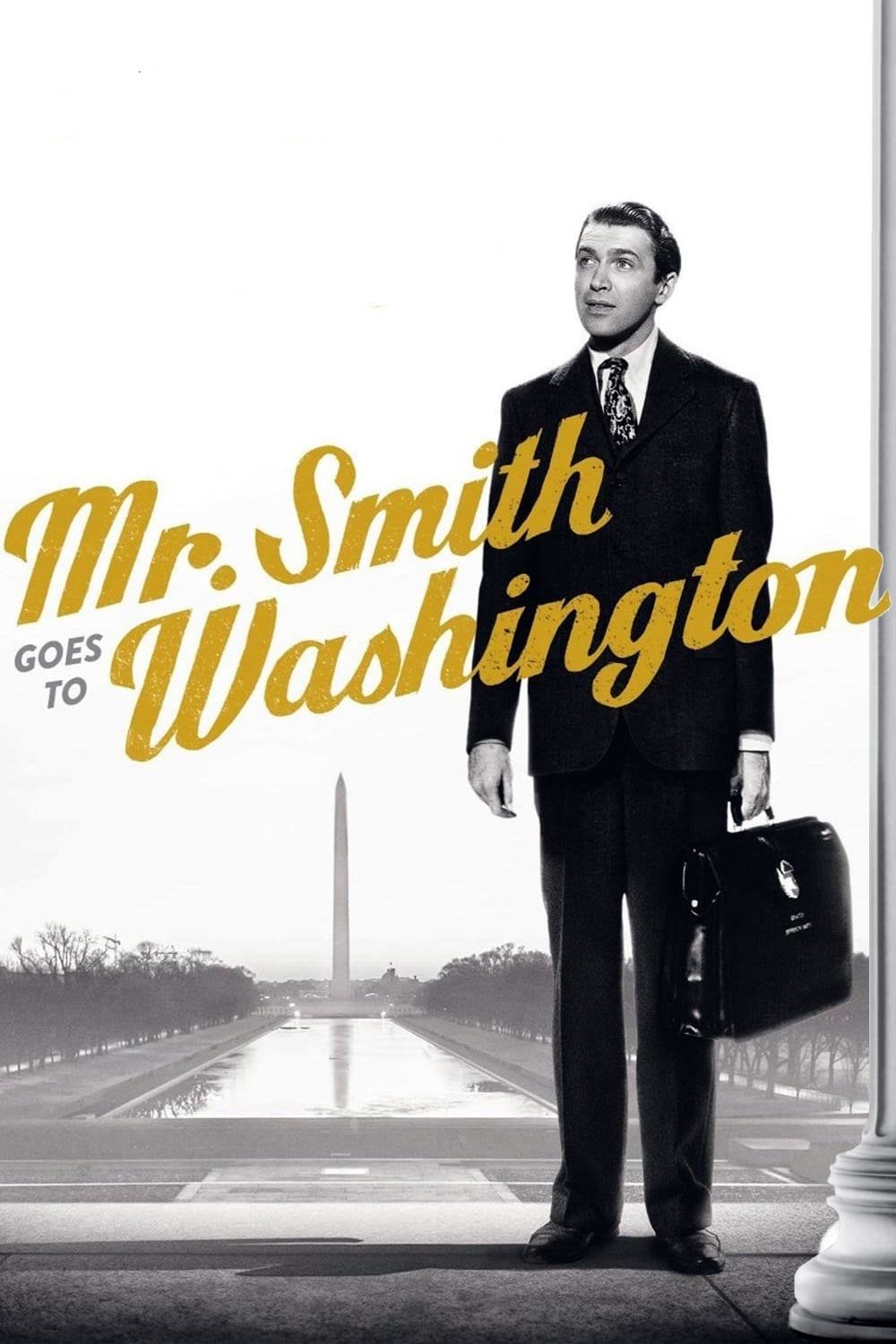
There’s a photograph of my grandfather taken in the 1940s, startlingly young in his ill-fitting suit, clutching a cheap American flag at a small-town parade. Every time I watch Mr. Smith Goes to Washington, I think of his dogged, slightly naïve hope in American democracy—a hope battered by cynicism but never fully erased. This film doesn’t so much rekindle that sense of idealism as interrogate it, often uncomfortably, in the glare of real-world corruption and personal despair. For me, the film isn’t just nostalgic Americana; it’s a kind of litmus test for whatever optimism or skepticism I carry into each new era.
What the Film Is About
At its core, the film follows Jefferson Smith, an ordinary man hurled into the corrupt morass of U.S. Senate politics after an appointment designed to exploit his simplicity. For me, this isn’t just the story of a man stumbling into the lion’s den—it’s an anatomy of faith and disillusionment. The emotional journey is intense and, at times, excruciating. Watching Smith, earnest and apologetically awkward, try to reconcile his patriotism with the vile machinations of the political machine, I’m gripped by the tension between the American dream—as he believes it—and the American reality, as others practice it.
The central conflict goes beyond a David-versus-Goliath struggle. It’s the internal war in Smith’s soul, caught between the temptation to give up and the defiant choice to fight for truth in a system stacked against him. Frank Capra, with a kind of brutal clarity, navigates this emotional minefield without softening its edges. The film argues, with open eyes, that the cost of integrity can be humiliation, isolation, and nearly, defeat. But it also says, just as powerfully, that even in the face of institutional decay, one voice—even when hoarse and weary—can shake the pillars of power.
Core Themes
Several themes breathe through every scene of Mr. Smith Goes to Washington, but the one I always return to is the collision between idealism and institutional cynicism. Smith is the conduit for the audience’s highest hopes, while the entrenched politicians—slick, world-weary, steeped in compromise—represent the decay of those ideals. The enduring question is whether innocence can survive exposure to the real mechanisms of power.
Corruption is never presented as one person’s evil, but as the natural sediment of convenience, silence, and collective weariness. In 1939, with fascism casting shadows over Europe and America struggling with economic anxiety, Capra’s film dared to insist that democracy was worth defending—warts and all. Today, the same themes echo with uncomfortable urgency. My own cynicism, shaped by decades of political spectacle, is always tested by Smith’s stubborn refusal to abandon hope. In that way, the film is less dated artifact than a recurring challenge—a dare to believe, even when the evidence says not to.
It’s also about personal responsibility, and the price of taking a stand. The suggestion that ordinary people can and should challenge corrupt systems—no matter how hopeless that may seem—was radical in its time and remains viscerally relevant now. That’s why watching this film isn’t just a comfort or a nostalgia trip; it’s a confrontation, an almost uncomfortable demand for belief in ethical action.
Symbolism & Motifs
The most striking recurring image throughout the film is the Capitol dome, both as a literal structure and as an emblem of national aspiration and hypocrisy. Capra’s camera lingers on it, sometimes majestic, sometimes distant and unreachable. For me, this architectural grandeur is tinged with irony: it’s a beacon for Jefferson Smith, but also represents the impersonal machinery set against him.
Another resonant motif is the use of childhood innocence and education—the Boy Rangers, the summer camp project, and the schoolroom civic lessons. These become more than plot devices: they’re the visual language Capra uses to contrast the purity of Smith’s beliefs with the adult world’s mud. As these images reappear, they reinforce for me the emotional stakes—the idea that maintaining moral clarity is an act of willful, almost childlike defiance.
Lastly, there’s a visual motif of light and shadow in the Senate chamber. As Smith stands alone, filibustering, the light narrows around him, isolating his fight—while the darkness pressing in hints at both exhaustion and moral peril. These choices aren’t subtle, but I find them deeply effective: the stark contrasts draw out the spiritual isolation of the lone dissenter and the fragility of doing right when nobody else will.
Key Scenes
The Unveiling of Cynicism: Smith’s First Senate Session
Smith’s initial, wide-eyed entrance into the Senate chamber is a masterclass in tonal setup. The moment is drenched in reverence—for history, for process—but quickly sours as he witnesses the mechanical, indifferent routines of seasoned lawmakers. This juxtaposition between naïve awe and harsh reality is essential to my understanding of the film; it sets up a collision that never becomes mere parody or despair. Instead, it underlines the heartbreak of watching genuine belief tested by institutional routine and indifference.
Saunders’ Breakdown and Revelation
Jean Arthur’s performance as Clarissa Saunders delivers crucial gravitas in a scene where, exhausted by the system and by Smith’s unyielding optimism, she finally admits both the ugliness of political compromise and her unwilling admiration for Smith’s bravery. This moment has always felt to me like the emotional hinge of the movie: it’s the point where Saunders, and thus the audience, chooses whether to succumb to fatigue or to join Smith in his lonely but vital struggle. It’s also—thematically—a recognition that even the most hard-boiled skeptic can rediscover conviction.
The Filibuster: A Man Against the Machine
The climactic filibuster sequence is not only the film’s dramatic high point but a towering example of cinematic endurance and agony. Smith’s rambling, trembling stand—marked by sweat, hoarseness, and a desperation so naked it’s nearly embarrassing—transcends theatrics. His collapse is a literal and figurative breaking point—evidence that real change often comes at the cost of immense personal pain. Every time I watch this scene, I’m stunned by the way Capra and Stewart strip away any polished heroics, leaving only this battered, bewildered hope.
Common Interpretations
Most critical readings see Mr. Smith Goes to Washington as a paean to American democracy, exalting the lone dissenter and reaffirming the value of the system—even flawed—as uniquely open to reform. The classic interpretation frames the film as both a civic lesson and a rousing call to arms: an exhortation that “one man can make a difference,” no matter how daunting the odds.
While I understand and even admire this optimism, my own interpretation is less triumphant and more ambivalent. To me, the film is as much a tragedy as an inspiration—a portrait of systems so entrenched, so self-protective, that only extraordinary sacrifice can even temporarily shake them. The ending, while uplifting on the surface, always feels ambiguous: a victory, yes, but one so hard-won, and so dependent on unlikely heroism, that it leaves me questioning the true durability of hope. In that sense, I see the film not only as a celebration, but as both a warning and a dare—insisting that the fight for integrity and decency is necessary, but never guaranteed.
Films with Similar Themes
- All the King’s Men – The dangers of populism, political seduction, and the corruption of idealists are amplified and darkened in this film, offering a more pessimistic mirror to Smith’s ordeal.
- Network – Both films expose the mechanisms of institutional rot and the risks of being an honest voice within cynical systems—media or government.
- 12 Angry Men – Like Smith, the lone juror’s stand embodies the notion that individual conviction, even in the face of collective inertia, can effect profound change.
- The Candidate – The collision of idealism and political compromise, and the commodification of change-makers, echoes the anxieties at the heart of Capra’s film.
Looking at Yesterday Through Today’s Eyes
Each time I return to Mr. Smith Goes to Washington, I find myself wrestling anew with its uneasy mix of hope and heartbreak. For contemporary viewers, the film works best not as a relic but as a provocation—a reminder to scrutinize both the promises and failures of democracy, and to question whether the cost of honesty is one we are still willing to pay. For me, understanding the film’s emotional and moral ambiguity adds tremendous value, preventing the easy embrace of feel-good patriotism and instead demanding a deeper, more demanding kind of engagement with its core questions.
Related Reviews
If you found value in my perspective, you might also enjoy exploring my thoughts on other cinematic landmarks such as All the King’s Men and 12 Angry Men.
To broaden this interpretation, you may also explore how critics and audiences responded over time.
🎬 Check out today's best-selling movies on Amazon!
View Deals on Amazon