
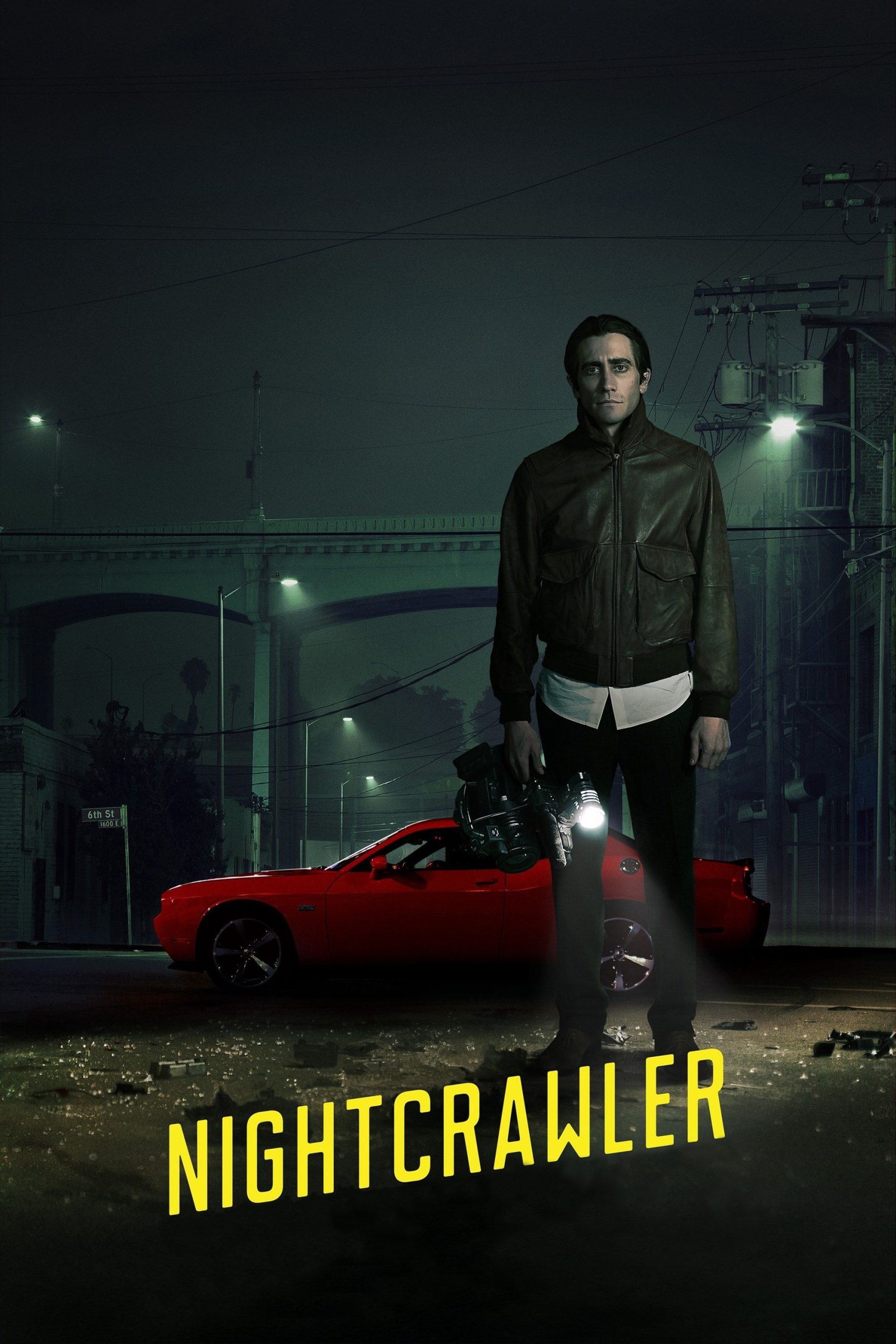
Lurking in the Shadows of Los Angeles
The first time I watched Nightcrawler, something inside me recoiled, almost viscerally, as if I’d just brushed up against something dangerous. I wasn’t reacting to the blood or the violent crime scenes Lou Bloom orchestrates and films; it was the film’s gaze, the way it looked back at me through Lou’s hollow eyes, that got under my skin. When I reflect on what this film is really trying to say, I don’t find an easy answer. That’s exactly why I return to it. Nightcrawler is a film that operates in the empty spaces between ambition and amorality, and it invites me to question how complicit I am—how complicit we all are—in a culture that rewards the unthinkable when it comes packaged as success.
Lou Bloom and the Parable of the Self-Made Monster
There’s something chillingly empty about Lou Bloom, and I see this as the point rather than a flaw. He isn’t a misunderstood genius or an antihero in the classic sense; he’s a Frankenstein’s monster, stitched together from the motivational detritus of self-help articles, online business courses, and the relentless drumbeat of modern hustle culture. When Lou rattles off his mantras about teamwork, persistence, and growth, the film is holding up a funhouse mirror to the American dream—warped, grotesque, but eerily familiar. I didn’t see a character I could dismiss as an outlier. I saw a reflection—of ambition unchecked and empathy surgically removed.
What fascinates me is how the movie never demonizes Lou through the obvious lens of villainy. Instead, it dares me to empathize with him, or at least to recognize the logic of his journey. His rise isn’t fueled by superhuman cunning; it’s the inevitable outcome of a world where success belongs to those willing to cross the line first, and then drag the line behind them. The more I think about it, the more I realize how Nightcrawler exposes the emptiness at the heart of meritocracy, replacing it with something both monstrous and magnetic.
The City That Never Sleeps, But Watches
Los Angeles, in Nightcrawler, is more than a backdrop; it’s a living entity, one that thrives on disaster, fear, and spectacle. What strikes me is how the film’s version of the city is always restless, teeming with potential stories, each more gruesome than the last. The nocturnal landscape pulses with neon and menace, and every empty intersection holds the threat of sudden violence. This is a city addicted to its own reflection, hungrily consuming its tragedies in the hope of feeling something.
I find myself haunted by the film’s use of the city’s geography—the way Lou navigates it with predatory precision, always on the hunt for “the shot.” The city’s anonymity becomes complicit in his actions. Victims are anonymized, reduced to pixels and ratings, while Lou’s van slips through the darkness like a shark in open water. In making Los Angeles simultaneously intimate and alienating, the film suggests that the city isn’t Lou’s playground; it’s a system that rewards the predator and punishes the prey.
Commerce, Complicity, and Watching the Watchers
When I think about what makes Nightcrawler so disturbing, it’s not the violence Lou captures—it’s the eagerness with which the world consumes it. The newsroom, helmed by Rene Russo’s Nina, is just as hungry for carnage as Lou is for opportunity. The film’s most damning idea is that the marketplace doesn’t just tolerate amorality; it demands it, and then disguises it as information, entertainment, or “public interest.”
There’s a sickening thrill in seeing Lou’s footage broadcast, the audience’s gaze mirrored by my own. I can’t escape the fact that I’m part of the system the film critiques. Every click, every moment spent watching the news, is a tiny act of complicity. The ethical lines blur so quickly I barely notice. Nightcrawler doesn’t let me off the hook. It forces me to confront the possibility that, in a media landscape built on tragedy, we are all Nightcrawlers—hungry for sensation, blinkered by the glow of the screen.
Masks, Mirrors, and the Performance of Empathy
Jake Gyllenhaal’s Lou is unforgettable, not because he feels real, but because he feels like a mask that can be put on or taken off. There’s a hollowness to his gaze, as if he’s always watching himself watching others. I’m fascinated by the way the film explores performance—not just Lou’s, but everyone’s. Nina plays the tough editor, Rick (the assistant) plays the loyal sidekick, and the police try to play the guardians of order. But underneath every interaction in Nightcrawler is a negotiation of power, a performance of concern where true empathy is always absent.
Lou’s most chilling moments aren’t when he’s orchestrating crime scenes; it’s when he smiles and offers up the right words, like he’s read about them online. Every gesture feels rehearsed, every conversation transactional. The film seems to whisper that in a world obsessed with image, authenticity is just another tool, another mask worn for profit. I’m left wondering how much of the empathy I see in public life is just as hollow, just as calculated.
Ambition Without a Compass
From the beginning, I sense that Lou’s hunger is bottomless—not for money, but for validation, for proof that he matters. Nightcrawler is a portrait of ambition detached from purpose, a drive whose only destination is more. The film is deeply cynical in this respect, but I find it liberating too. It doesn’t traffic in easy answers or tidy moralism. Lou’s victories feel like indictments—of himself, of his industry, of a society that can’t look away. By showing ambition as a force unto itself, the film asks: What happens when the only metric is success, and success is measured in shock and awe?
I notice that Rick, who briefly dreams of more, is ultimately crushed by the machinery Lou sets in motion. His fate isn’t an act of personal malice; it’s collateral damage in a world where ambition is weaponized. The film’s bleakness isn’t hopeless, though. It’s a challenge, an invitation to look for meaning beyond the scoreboard. Am I driven, or am I simply consuming whatever path is available, regardless of the cost?
The News as Predator: From Information to Predation
There’s a sequence that lingers in my mind: Lou, having broken into a murder scene, carefully rearranges a family’s photographs to make a “better shot.” This, to me, is the film’s thesis in miniature. The boundary between documenting reality and manufacturing it collapses, and the camera becomes a tool of domination rather than illumination. I can’t help but think about how often news media crosses this line in subtler ways. The chase for the headline, the emotional manipulation of images—it’s all part of the same machinery.
Nightcrawler doesn’t just criticize the individuals who participate; it critiques the very nature of televised news. The act of watching is itself predatory, the audience feeding on other people’s pain. Lou’s ethical flexibility is only possible because the system incentivizes it. The more I ponder this, the more I see the film as a tragedy—not of an individual, but of a culture that cannot distinguish between bearing witness and exploiting suffering.
Echoes After Dark: What Remains Once the Lights Go Out
When the credits roll, I don’t feel closure. Instead, there’s an echo—a discomforting sense that Lou’s journey is just beginning, and the world he inhabits continues long after I turn off the TV. Nightcrawler leaves me with questions rather than answers: about ambition, about empathy, about what I’m willing to watch, and what I’m willing to ignore. The true horror of the film isn’t Lou Bloom; it’s the invitation to see how much of myself exists in the shadows he navigates so effortlessly.
What the film is really trying to say is unsettlingly direct: in the pursuit of success, empathy becomes a casualty, and the line between observer and participant dissolves. I am reminded, uncomfortably, that I am not only a potential victim of such predatory ambition—I am also a potential enabler. The cost of looking away is never nothing; it’s everything.
Films That Echo in the Night
For those drawn to the moral ambiguity and sharp, cynical gaze of Nightcrawler, I always recommend these two classics:
- Network (1976)
- Sweet Smell of Success (1957)
If you’re curious about how this film was originally perceived or how it compares to similar works of its era, these resources may be helpful.
🎬 Check out today's best-selling movies on Amazon!
View Deals on Amazon