
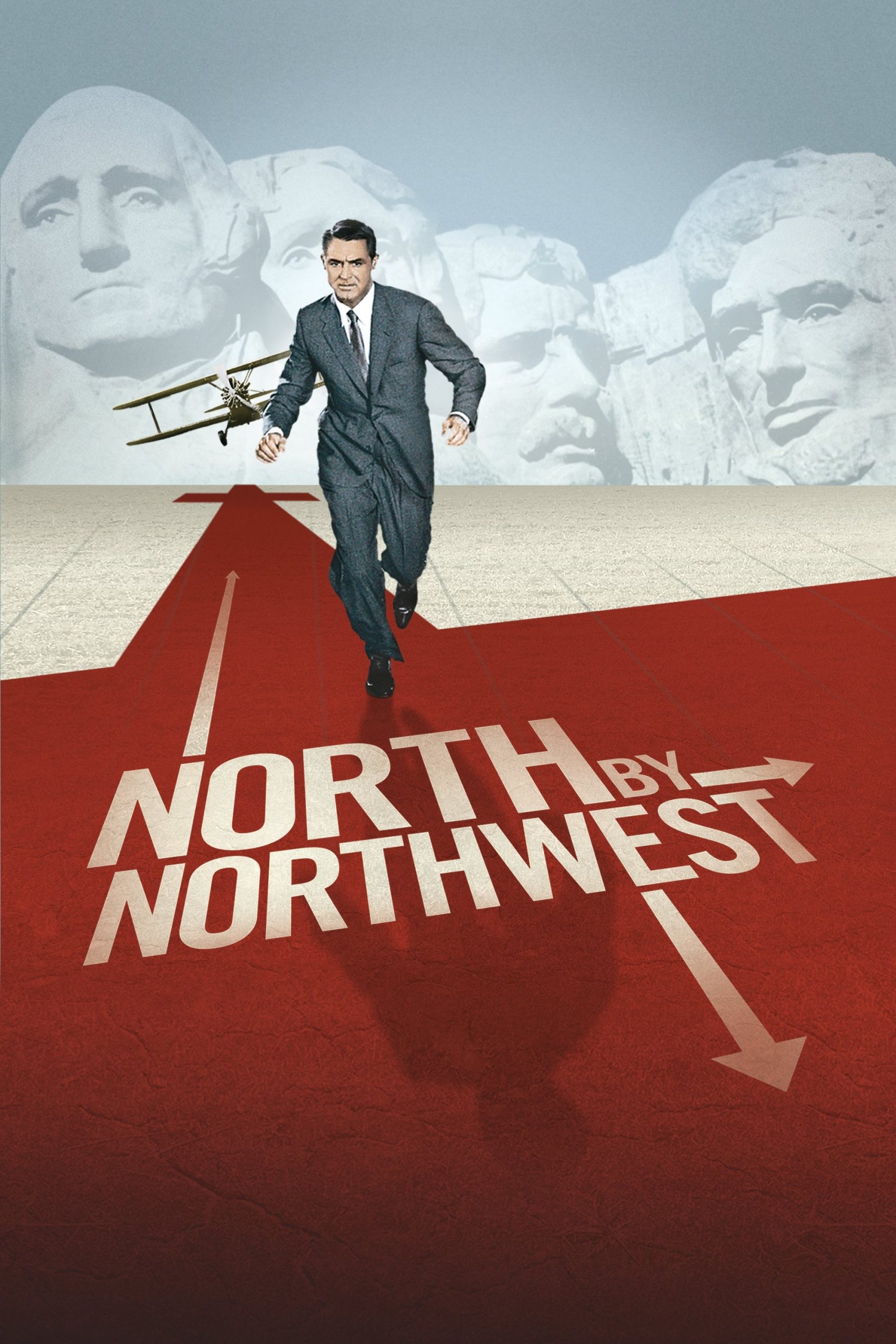
I remember the first time I stumbled upon a late-night airing of “North by Northwest” on television—I was just young enough to have no idea who Cary Grant was, but old enough to recognize the arresting spell of Alfred Hitchcock’s bravado. My immediate reaction wasn’t awe at a “masterpiece,” but rather a slow, hypnotized fascination with the film’s energy: the relentless pace, the immaculate cool, and the odd, double-edged exhilaration of being swept up in a world where nothing is quite as it seems. Even all these years and rewatches later, what keeps me returning isn’t nostalgia or canonical reverence—it’s the gleeful uncertainty, the seductive artifice, the particular existential panic throbbing underneath its elegant surface. There’s something intensely personal about being lost—in a crowd, in a landscape, in a life that isn’t your own. Few films capture that sensation with such sly, seductive wit.
What the Film Is About
At its core, “North by Northwest” propels an unwitting advertising executive, Roger Thornhill, into a maelstrom of mistaken identity and institutional paranoia. For me, the emotional engine revs hottest not in the moments of high-octane action, but in the shrill, growing terror of being misunderstood by everyone around you. Thornhill isn’t just running from shadowy spies and government agents; he’s running from the collapse of his own identity, a kind of existential vacuum where even your mother can’t believe your story. This sense of isolation and confusion surfaces as a deeply human fear—one far more resonant than any espionage MacGuffin could provide.
I interpret Hitchcock’s tale as a twisted coming-of-middle-age story. Thornhill’s journey—replete with deceptions, doubles, and dazzlingly dangerous women—mirrors the journey so many of us dread: the abrupt confrontation with a reality indifferent to our carefully constructed sense of self. The film toys with the façade of ordinary life, suggesting that beneath the everyday lies a chaos that can engulf anyone at random. Hitchcock plays with sentiment and suspicion, coaxing us to question who we are when the world refuses to recognize us anymore. In this light, “North by Northwest” isn’t merely a thriller—it’s a queasy meditation on the fragility of identity in a modern, impersonal world.
Core Themes
The one theme that has always resonated with me above all is the precariousness of identity within the machinery of bureaucracy and power. Roger Thornhill, the prototypical “man in the gray flannel suit,” is not just targeted due to a botched spy scheme but because he is utterly, devastatingly anonymous. The film’s entire plot is predicated on the fact that a person’s outward image—his suit, his haircut, the way he speaks—can be mistaken, misused, erased. In 1959, as America sat at the crossroads of conformity and rebellion, this anxiety must have been palpable; today, as our identities are scattered across data points and digital avatars, it feels even sharper. The ease with which Thornhill’s life is disrupted exposes how vulnerable we are to being redefined by others without warning or recourse.
Equally compelling is the film’s satirical dance with power, deception, and performance. Thornhill is forced to assume myriad roles, each more desperate than the last, and every character around him—especially Eva Marie Saint’s Eve Kendall—moves through layers of pretense. I see this as a brutal comedy about survival within a world of doublespeak, one where truth is a luxury and illusion a necessity. There’s something both hilarious and chilling in the way secrets are traded, masks are donned, and real motivations flicker elusively behind polished exteriors. Watching “North by Northwest” through this lens, I feel it’s not just a Cold War thriller but a barbed satire about how we navigate the shapeshifting theater of modern life.
Symbolism & Motifs
Hitchcock is a filmmaker who communicates in riddles, and “North by Northwest” is no exception. The most obvious and enduring symbol, to my mind, is the motif of movement—trains, automobiles, airplanes, and the relentless forward rush of the narrative itself. Thornhill is constantly on the move, yet perpetually lost, echoing the way modernity itself so often propels us forward without destination or meaning. The train journey, in particular, feels less like transportation and more like a passage through the fog of uncertainty, where chance encounters twist destinies in unpredictable ways.
Architecture also plays a critical symbolic role—the stately United Nations building, the impossible modernist house on Mount Rushmore, even the barren, featureless stretch of Midwest highway where the infamous crop-dusting attack occurs. Each of these backdrops feels deliberately chosen to highlight the insignificance of the individual amid towering institutions and landscapes. The final Mount Rushmore sequence is a symbol writ large: American icons looming as both literal and figurative backdrops to personal crisis. For me, it’s an image of how our narratives and crises become dwarfed by history and myth—an ironic stage upon which personal survival must play out.
Above all, I can’t help but see the motif of mistaken identity as a recurring, mordant joke: names swapped, lives traded, everyone scrambling to keep up with fictions invented in the moment. It gives the entire film the unnerving flavor of a dream—one where logic slips and slides, leaving only the mounting anxiety of not being understood, or ever finding your way home.
Key Scenes
The Spellbinding Drift of the Crop Duster
Nothing in Hitchcock’s filmography—for me—captures anxiety quite like the scene where Thornhill waits in the vast emptiness of an Illinois highway, only to be menaced by a low-flying crop duster. It’s a masterclass in suspense and existential dread, and I find it crucial not just because of its technical bravura, but for the way it captures the story’s beating heart: a man hunted in a world stripped of the usual signposts. There are no witnesses, no reason, nothing but the raw terror of being a target in a landscape that doesn’t care. This is Hitchcock’s thesis in miniature: modernity is wide but indifferent, and danger is never as far away as it seems.
Intimacy and Deceit Aboard the Twentieth Century Limited
The romance between Thornhill and Kendall aboard the train feels electric specifically because of its artifice—every word, every gesture veiled in ambiguity. I’ve always been captivated by how seduction and survival are hopelessly entangled here. The compartment scene, with its sly banter and glances, is iconic not solely for its sexual charge, but because both characters know, even if only subconsciously, that the world outside their window is full of lies. In this suffocatingly close space, connection is fleeting, never truly honest, and always shadowed by betrayal.
The Tumult atop Mount Rushmore
When the film’s final confrontation spills out across the stone faces of American presidents, the moment lands with an ironic, almost mocking grandeur. Here, at the feet of literal national myths, personal secrets and deceptions are laid bare. I view this finale not just as the climax of the chase, but as a commentary on America’s own performance of innocence and heroism—the personal narrative is subsumed beneath monumental history. The rush to “save the girl” and expose the villain becomes, in Hitchcock’s hands, a darkly comic ritual enacted on the stage of national identity.
Common Interpretations
Most critical readings of “North by Northwest” focus on its value as a near-perfect example of the “wrong man” thriller, with critics marveling at Hitchcock’s bravura technique, the razor-sharp dialogue, and the film’s fusion of comedy and suspense. Some push further, reading it as an allegory about Cold War fear or even a sly parody of American masculinity—Cary Grant’s thorny suaveness taken to comic extremes. These are all valid and illuminating views, but I find them somewhat flat compared to the slippery, vertiginous quality that stays with me long after the credits roll.
What I rarely see addressed, but matters most to me, is the movie’s persistent destabilization of identity and the profound anxiety it breeds. Critics often celebrate Thornhill’s transformation from hapless ad man to resourceful hero, but what stays with me is that his ordeal is not genuinely transformative—he survives not because he conquers his fate, but because he adapts to perpetual uncertainty. For all its dazzling surfaces and quotable lines, the film is, to me, an unsettling vision of a world where safety is an illusion and the real heroism lies in learning to move, constantly, through fog and farce.
Films with Similar Themes
- The 39 Steps – Like “North by Northwest,” this Hitchcock classic circles the theme of mistaken identity and the terror of the innocent being swept into intrigue.
- Charade – The deceptive games and shifting allegiances in this romantic thriller remind me of the constant role-playing found in Hitchcock’s film.
- The Manchurian Candidate – Explores paranoia, brainwashing, and the fragility of the self in a society ruled by hidden powers, echoing themes of institutional control and personal uncertainty.
- Three Days of the Condor – Its lone protagonist, pursued by shadowy agencies, faces conspiracies that reflect the same sense of rootless danger and anonymity.
Conclusion
I find that watching “North by Northwest” today is far from an exercise in nostalgia—it is, instead, a strikingly modern experience. As we race through digital domains and social landscapes that prize appearances over authenticity, Hitchcock’s portrait of mistaken identity and existential drift gains even sharper resonance. I encourage new viewers to savor not just its suspense, but also its sly critique of the self in peril. Understanding its themes, I believe, enriches our sense of both cinema’s capacities and our own shadowy anxieties—making every rewatch not just a thrill, but a provocation.
Related Reviews
If you found value in my perspective, you might also enjoy exploring my thoughts on other cinematic landmarks such as Vertigo and Charade.
To broaden this interpretation, you may also explore how critics and audiences responded over time.
🎬 Check out today's best-selling movies on Amazon!
View Deals on Amazon