
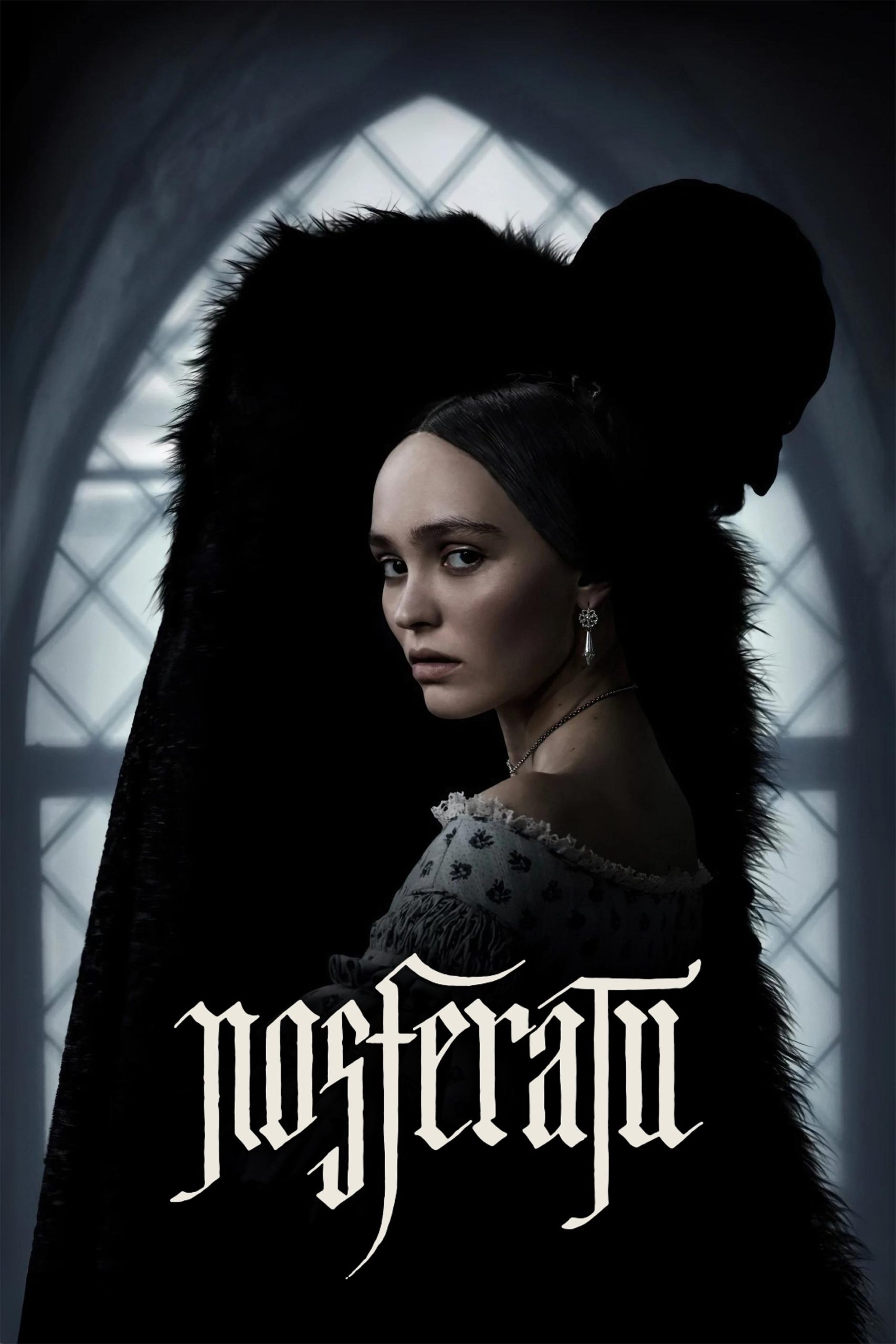
Shadowplay on the Edge of Sanity
There’s a moment in Nosferatu where the sheer impossibility of what I’m seeing pushes me to the edge. I’m not just talking about Count Orlok’s gaunt figure stalking up those crooked stairs, but the film’s invitation to lose myself in its shadow-soaked world, where boundaries between dream and nightmare dissolve. Watching Nosferatu feels like a confrontation with the collective subconscious—mine, yours, and that of a whole culture teetering on the brink after the traumas of war and plague. The real terror isn’t the vampire, but how everything familiar becomes uncanny, even one’s own reflection in a window darkened by night.
Pestilence Wears Many Masks
What has always haunted me most about this film is how little comfort it offers. Orlok’s monstrousness isn’t just a matter of fangs and elongated fingers—his evil spreads like an infection, mirrored in the rats that scurry from the coffin, the spectral fog rolling through streets, the way townsfolk turn on each other in panic. This is a film obsessed with contamination—of blood, of mind, of community itself. I read Orlok’s journey by ship not just as a physical passage, but as the arrival of an uncontrollable otherness, a force that reveals the fragility of social fabric and the thin line between civilization and chaos. The city, with its rituals and order, is powerless before this creeping dread; the real horror is the recognition of our own impotence when faced with calamity.
The Vampire in the Mirror: Alienation and Desire
When I consider Orlok, I don’t just see a supernatural monster—I see a being exiled from humanity, doomed to hunger for what he can never possess. There’s a melancholic poetry in the way he gazes at Ellen through her window, separated by glass and sunlight. Unlike later, more seductive cinematic vampires, Orlok is all abjection and longing. He’s not the embodiment of forbidden pleasure so much as a figure of exile, his desire rendered monstrous by its very impossibility. In this way, Nosferatu isn’t just about fear of the other, but fear of our own alienation—how unchecked yearning can twist us into something unrecognizable, estranged from ourselves and those we love.
Landscapes That Bleed Unease
I find myself hypnotized by the landscapes of Nosferatu: barren hills, crooked gables, windows that gape like wounds. Everything seems tilted, off-kilter, as if the world itself is infected by Orlok’s presence. The physical settings aren’t just backdrops but manifestations of psychological unrest. Every shadow seems alive, every corridor endless, as if the very geometry of reality is warping under the strain of dread. The constant interplay of light and dark, the way ordinary objects—doors, staircases, even Ellen’s simple bedroom—become sites of danger and longing, makes each frame tremble with anxiety. I can’t shake the sensation that this film’s world is one in which nature and the supernatural have collapsed into each other, and nothing is safe.
Silence, Expression, and the Language of Fear
The absence of dialogue in Nosferatu is not just a technical limitation of its era—it’s a defining aspect of its meaning. When I watch Max Schreck’s Orlok move, what unnerves me is not just his physicality, but the way all communication seems to fail in his presence. The film’s intertitles are spare, almost perfunctory; true terror is expressed through gesture, posture, and the interplay of light and shadow. The silence becomes oppressive, amplifying small sounds—the creak of a door, the scurry of rats in the mind’s ear—until the atmosphere feels unbearably taut. This is a world where words are useless, where horror seeps in through everything left unsaid, and I’m left yearning for the comfort of speech that can never come.
Death, Sacrifice, and the Lure of Oblivion
No analysis of Nosferatu feels complete to me without wrestling with Ellen’s sacrifice. Her vulnerability isn’t passive—there’s a grim inevitability to her realization that she alone can lure Orlok into destruction. Her willingness to give herself over to the monster is a paradoxical act: part martyrdom, part unsettling surrender. I find myself questioning: is this an act of agency or extinction? The sequence plays out less as triumph than as a ritual embracing oblivion. Ellen’s self-sacrifice destroys Orlok, but at the cost of her own life, suggesting that the ultimate price of purging evil is to become its vessel, if only for a night. The film’s bleakness lies in its refusal to celebrate survival; instead, it leaves us with the sense that genuine triumph is impossible, that innocence and corruption are forever entwined.
German Expressionism as Psychological Autopsy
To watch Nosferatu is to witness the visual language of German Expressionism employed as a kind of psychic X-ray. I’m constantly struck by how the film’s angular sets and stylized lighting serve not just aesthetic ends but as a map of interior distress. The distortion of reality in the film’s design mirrors the distortion of the human psyche under horror and trauma. Every extreme shadow, every exaggerated gesture, traces an emotional contour—terror, loneliness, desperation. What lingers for me isn’t just the fear of the supernatural, but the exposure of vulnerabilities we’d rather keep hidden. If Orlok is a monster, he’s also a projection: the fever dream of a society grappling with upheaval beyond its control.
The Enduring Curse: Why Nosferatu Still Bites
After all these years, I don’t revisit Nosferatu for the conventions of its story, but for the way it continues to unsettle me. This film’s meaning is not fixed; it’s a living, crawling anxiety that shifts with each new viewing. In Orlok’s shadow I see not only the specter of death and disease that haunted postwar Europe, but also the dread of encountering something irreducibly alien—outside the self, and yet disturbingly familiar. Nosferatu asks what we are willing to sacrifice to banish our demons, and whether such victory is ever more than temporary. For me, the answer is always ambiguous, always chilling.
For Those Who Long for the Night
Two films that evoke similar chills, negotiating the borders of horror, alienation, and the dark yearnings of the soul:
- The Cabinet of Dr. Caligari (1920)
- Vampyr (1932)
If you’re curious about how this film was originally perceived or how it compares to similar works of its era, these resources may be helpful.
🎬 Check out today's best-selling movies on Amazon!
View Deals on Amazon