
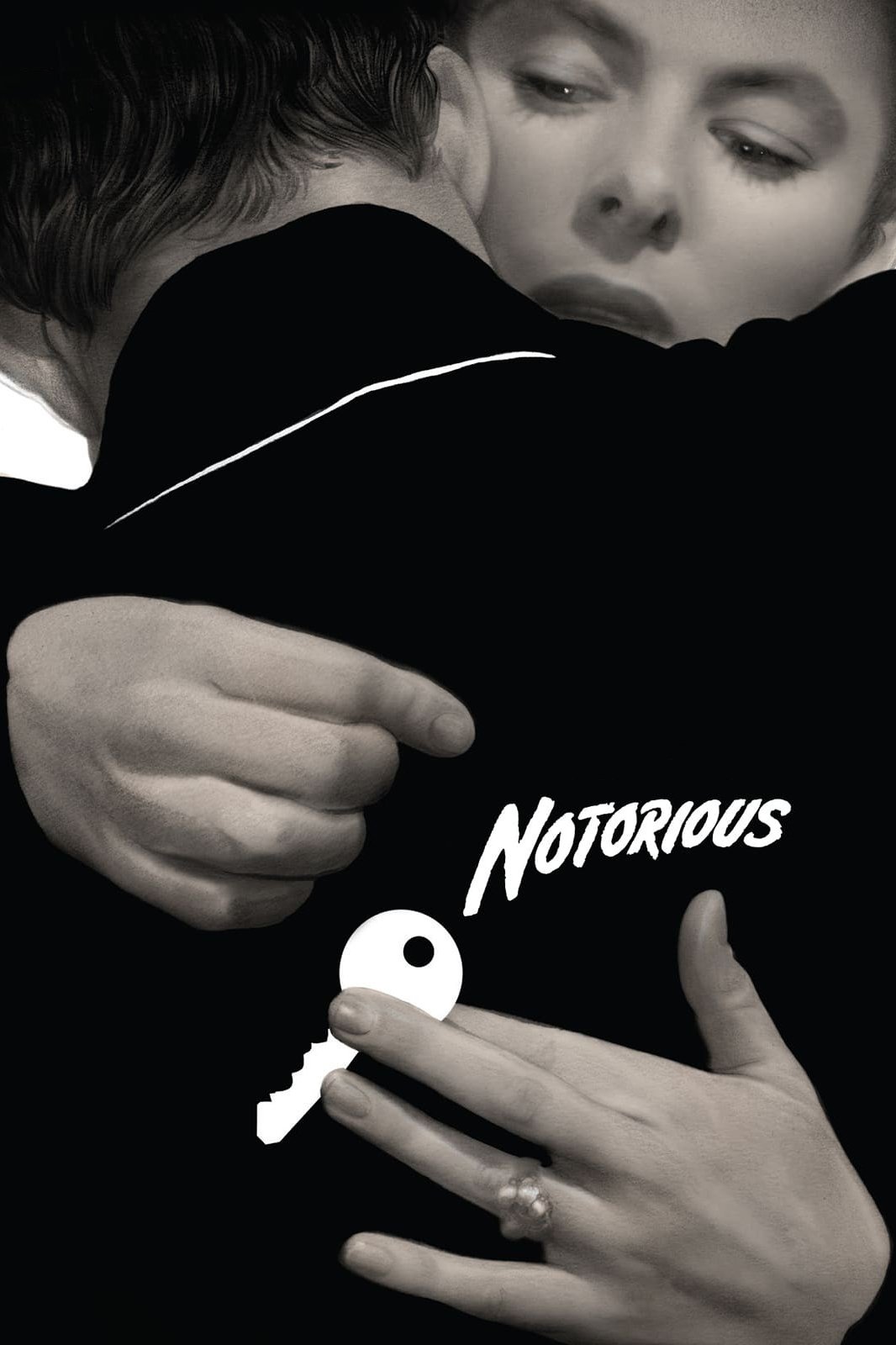
There’s something about the tension of love and espionage in “Notorious” that always pulls me back, a kind of relentless gravitational force. I remember the first time I watched Ingrid Bergman’s self-doubt flicker behind that immaculate facade—her eyes darting, never quite able to rest. It left me unsettled for days—not by any twist, but by how acutely Hitchcock captured the feeling of being unmoored, belonging nowhere, loved with conditions. Every time I return to this film, it’s a mirror for my own anxieties about trust and sacrifice, about what it costs when you’re asked to prove yourself—to a person, to a nation, to yourself.
The Heart of Betrayal and Trust
To me, “Notorious” is a study in emotional collision. Alicia, the daughter of a German spy, is pressed by American agent Devlin into seducing a Nazi conspirator to help the Allies. Yet, beneath this machinery of intrigue, the real story unfolds in brittle, bruised intimacies—the weapons are not guns or poisons, but words and glances. Watching Bergman and Cary Grant tiptoe through their scenes, I am always struck by how love is treated as something that must be proven rather than given, twisted by patriotism and gender roles into something transactional. The agony here is in watching Alicia’s self-worth erode under the twin hammers of Devlin’s jealousy and the government’s indifference to her well-being.
What I find most powerful is the sense that nobody is allowed to be their true self. Devlin can’t admit his feelings, hiding behind aloof professionalism; Alicia is forced into manipulation, always performing. There’s a lingering fear that even the most genuine emotion will be weaponized. “Notorious” thus becomes a film less about international intrigue and more about the cost of emotional transparency in a world that punishes vulnerability. Its core, for me, is about the immense risk of giving yourself to another person—or a cause—without ever knowing whether that trust will be honored or betrayed.
Under the Surface: Thematic Complexity
What keeps me returning to “Notorious,” more than its technical brilliance or suspense, is its searing dissection of trust and power. At its heart, the film explores how institutions—governments, families, lovers—demand sacrifice without providing security. Alicia is valued for what she can do, not for who she is. This resonates today, as questions about loyalty, agency, and the limits of self-sacrifice remain urgent. The film’s exploration of agency feels as modern as ever, with Alicia’s fate dictated by men who never fully see her as a person.
In 1946, this was radical. The war had left people questioning authority, reevaluating gender expectations and moral boundaries. “Notorious” lays bare the corrosive effects of using love as a bargaining chip for political ends. In doing so, it also interrogates issues of identity—the struggle to define oneself in the eyes of others, to assert agency when every aspect of your life is being surveilled. These dilemmas haven’t faded with time; if anything, modern relationships and power structures still echo this dance of suspicion and need.
Layers of Image and Meaning
Hitchcock has always been adept at imbuing objects and gestures with meaning, and “Notorious” is no exception. The image that most haunts me is the infamous key Alicia slips from Sebastian’s keyring—an ordinary object transformed into the linchpin of desire, trust, and betrayal. Every time I see her palm it, I think about how much of her personhood she must hide simply to survive. The key isn’t just a plot device; it’s a symbol of the access denied her at every level, the agency she seizes piece by piece.
Then there’s the recurring motif of drinking and intoxication. From the opening scene, where Alicia seeks solace in alcohol, to the sinister finale, in which Sebastian’s mother slowly poisons her, spirits carry more than liquid comfort; they signal loss of control, the blurring of consent, and the way devotion and self-destruction can become intertwined. The visual claustrophobia of Sebastian’s household—with its looming staircases and oppressive interiors—mirrors Alicia’s mounting sense of entrapment, her dwindling options framed by the architecture itself. For me, these symbols deepen the narrative, giving substance to the abstract bruises Alicia collects as she moves through each room, each encounter.
Moments Engraved in Memory
The Balcony Kiss: Suspense Wrapped in Intimacy
I am always captivated by the celebrated balcony kissing scene. Hitchcock’s sly workaround of the Hays Code—sustaining not one kiss, but a seamless dance of brief touches—creates a tension so visceral I hold my breath every time. It’s a masterclass in how longing is more potent than fulfillment; desire is portioned out in whispers and glances, never quite satisfied. This is the moment where I feel most sharply the tragedy of the characters’ inability to speak plainly: their restraint communicates more than any declaration of love ever could, underlining what is at stake emotionally.
Unlocking the Cellar: Truth in Shadows
The nerve-wracking descent into Sebastian’s wine cellar stands out to me as the film’s pivotal act of rebellion. Alicia’s silent theft of the key and Devlin’s cautious investigation are charged with more than peril—they’re about trust, about what each is willing to risk for the other. When the bottle of uranium shatters, it isn’t just the intrigue that explodes; the moment lays bare the fractures in their relationship, the danger of proximity without trust. For me, this scene symbolizes the tightrope walk between personal and political loyalties, the ever-present threat of exposure in both.
The Final Ascent: Escape as Catharsis
The conclusion, as Devlin carries a poisoned Alicia out past Sebastian and his mother, is where the film’s themes coalesce. Here, I always feel the agony and triumph of finally being seen as worthy of saving, not just of using. Every step up those stairs is freighted with the knowledge of how far Alicia has fallen—literally and metaphorically—before she is allowed to reclaim her agency. The moment is suffused with Hitchcock’s signature suspense, but it’s the emotional release, the rare mercy shown by Devlin, that lingers for me long after the credits roll.
Contrasting Critical Takes with My Own
Over the decades, critics have often emphasized “Notorious” as a political thriller wrapped in melodrama, or a romantic film cleverly disguised as a spy caper. Many readings focus on Hitchcock’s technical prowess—the long tracking shots, the vibrant close-ups, the cunning use of the key as a MacGuffin. Scholars praise the film’s bravado, its tight plotting, or its sly resistance to the moral certainties of the postwar era.
I appreciate these views, but for me, focusing on plot mechanics undersells the emotional devastation at the film’s heart. Most critics see Devlin as a tragic romantic hero, struggling against his own conditioning. I, however, am disturbed by his passive cruelty and reluctance to protect Alicia until she is already mortally endangered. The usual reading of Alicia as mere “damaged goods” is troubling. I see her instead as the film’s real protagonist: a woman who risks everything, not just for her country, but for the chance to be seen and loved on her own terms. Popular interpretations emphasize the suspense and technical achievement; I believe it’s the ruthless emotional realism that makes “Notorious” endure.
Cinematic Kindred Spirits
- “Casablanca” (1942): Both films pit romance against the soft tyranny of political necessity, forcing their heroines to choose between personal happiness and a greater cause.
- “Vertigo” (1958): Hitchcock again returns to themes of identity, obsession, and the dangerous allure of remaking another person, deepening the psychological focus found in “Notorious.”
- “The Third Man” (1949): This noir classic shares the motif of postwar moral ambiguity, where trust and betrayal become instruments within a shattered social order.
- “Mission: Impossible” (1996): While modern in scope, it echoes “Notorious” in its intertwining of espionage with the tension of loyalty and deception within close relationships.
A Window to Our Own Vulnerabilities
To me, “Notorious” isn’t just a chapter in Hitchcock’s filmography—it remains essential viewing for anyone who cares about how cinema reflects our deepest insecurities. Watching it now, I invite viewers to see past the era-specific conventions and focus on what feels universal: the cost of trust, the corrosiveness of suspicion, and the hunger for acceptance. Its themes ring true not because the world hasn’t moved on, but because we are still reconciling intimacy and danger in our own lives. By grappling with its ambiguities, we gain not just a richer appreciation of Hitchcock but a window into the complicated machinery of the human heart. That, for me, is the film’s true legacy.
Related Reviews
If you found value in my perspective, you might also enjoy exploring my thoughts on other cinematic landmarks such as “Rebecca” and “The Third Man.”
To broaden this interpretation, you may also explore how critics and audiences responded over time.
🎬 Check out today's best-selling movies on Amazon!
View Deals on Amazon