
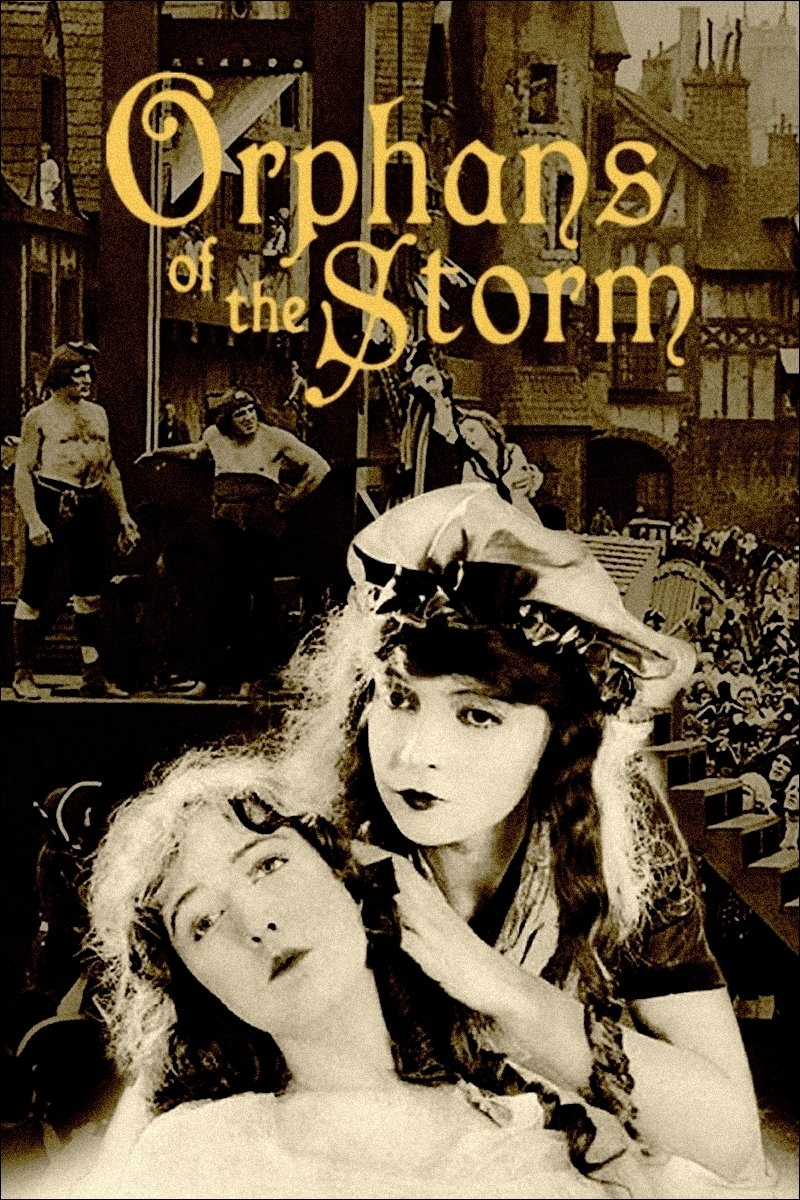
There’s a photograph on my desk, a black-and-white portrait of two sisters, their hands intertwined, caught somewhere in that half-world between dignity and desperation. It could be a still from “Orphans of the Storm,” where I find myself drawn back, not just by the grandeur of its set pieces or the gravity of its historical canvas, but by its pulsing emotional heat. Since the first time I watched Griffith’s melodrama, I’ve been struck by how it carves its emotional truth—not with subtle gestures, but with broad, urgent strokes. “Orphans” isn’t a silent film that asks you to sit back and analyze; it throws you into the storm itself. When the world outside feels uncertain, it’s fascinating to watch characters fight for agency and compassion amid the sweep of revolution. For me, this film is a testament to how history can shrink to the length of an arm’s reach—the pulse of two struggling hearts against the chaos of change.
Unraveling the Emotional Tides of Revolution and Sisterhood
“Orphans of the Storm” is, on its surface, a grand historical melodrama: two sisters, Henriette and the blind Louise, are separated by fate as the French Revolution begins its deadly ascent. The emotional engine of the film is not the turmoil of Paris, but the wrenching, near-primitive need to stay together in a society bent on tearing families apart. Every plot twist, from mistaken identity to sudden betrayals, is a reminder of how personal bonds are threatened—and sometimes made indomitable—by the violence of the wider world.
For me, the central conflict isn’t merely the external threat of revolution, but an internal struggle to preserve humanity against a rush of dehumanizing forces. Griffith uses the sisters’ journey as an allegory for the way innocence is imperiled by ideological fury—and by those who exploit chaos for personal gain. This is not a film that chooses sides politically; instead, it asks whether compassion can survive in a world set afire by dogma. In each sequence, I see an urgent question: when masses rage and the guillotine rises, can love, mercy, and individual worth hold their ground?
There is a timelessness here. Watching the film today, I relate viscerally to the confusion, the oscillation between hope and fear, that the characters endure. Theirs is less a historical journey than a mirror of our collective anxieties—about safety, kinship, and the cruelty of systems uncontrolled by empathy.
Threads of Power, Mercy, and Identity—Then and Now
Themes of power and class struggle radiate from every frame of “Orphans of the Storm.” What compels me most is the way Griffith isn’t content with a simple dichotomy between rulers and ruled; instead, he captures the nearly hallucinogenic instability of class lines during revolution. Power, in this vision, is always one step away from brutality, whether wielded by despots or the so-called people. The film’s true subject is how the machinery of revolution easily crushes the vulnerable—often the very souls the revolution seeks to redeem.
Identity is another crucial undercurrent: for Louise, whose blindness renders her utterly reliant on others, and for Henriette, whose very survival depends on shifting social roles—servant, victim, survivor, and finally, agent of change. Their fates rest less in personal fault than in the tides of history and the whims of those who briefly hold power. I find it haunting that, despite the clamor for liberty and equality, the marginalized remain footnotes in history books—but they’re the ones we remember after the spectacle has faded.
In 1921, just after the devastation of World War I and in the midst of social upheaval, these themes would have resonated fiercely. Today, their relevance is undiminished. Watching this film now, during moments of personal or national uncertainty, I find its warning clear: revolutions, old or new, often forget the individuals they claim to rescue.
The Visual Echoes: Symbols That Bind and Shatter
Few films of the silent era wield symbolism with such audacity. The image of clasped hands, motif of faith and protection, surfaces again and again. The hands of sisters, straining toward one another amid crowds, become almost sacramental—an invocation against separation. For me, these gestures remain more powerful than any title card. They are silent pleas, raw and direct, for human connection and solidarity.
The guillotine is the film’s most loaded symbol—an omnipresent threat, both literal and metaphorical. It’s less a tool of historical justice than a monument to the dangers of unchecked zeal. Every cutaway to its looming blade feels like a pulse of doom, a reminder that politics untethered from empathy ends in annihilation, not renewal.
I also see strong motifs in visual contrasts: light and darkness, opulence and squalor, anonymity and celebrity. Griffith’s use of flowing crowds—sometimes faceless, sometimes mob-like—suggests that collective action without conscience dissolves personal identity. These visual strategies reinforce my conviction that the sisters’ struggle is universal, echoing long after the last silent frame.
Pivotal Moments Etched in My Memory
The Shattering Separation: Fate Intervenes
The moment when Henriette and Louise are torn apart by an eruption of revolutionary fervor is, for me, the emotional fulcrum of the whole film. Here, the crowd is at once background and antagonist—a shapeless force that seizes the sisters and rends their bond asunder. I am always struck by how Griffith’s blocking and pacing exaggerate the cruelty of bureaucracy and mob rule, reducing the girls’ cries to gestures of anguish. It’s in this scene that the personal cost of revolution becomes unavoidably real.
The Ball at the Aristocrats’ Mansion: Fragile Illusions
In stark contrast, the lavish ball attended by Henriette—cloaked for a brief spell in the trappings of privilege—is not just spectacle. It’s a fevered dream of security, a space where danger is only temporarily postponed. For me, this scene demonstrates the seductive power of comfort in a hostile world, and how social mobility can be illusory. The juxtaposition of silks and candlelight with the chaos outside underscores how thin the wall truly is between grace and ruin.
The Climax at the Guillotine: Mercy on the Edge
No sequence in the film is as searing as the final race to save Henriette from execution. The clash of innocence and historical violence finds its apex here, distilled into suspenseful cross-cutting and the trembling approach of the blade. Every time I watch, I’m riveted by the question: can compassion arrive in time, or will the wheel of justice crush one more blameless life? It’s in this culmination that the film’s philosophical argument is made most daringly—mercy, if it comes, is always hard-won, never inevitable.
How Critics Have Read “Orphans”—And Where I Diverge
Traditionally, critics praise “Orphans of the Storm” as a technical marvel and a melodramatic apotheosis of silent storytelling. Its sweeping set pieces, confident cross-cutting, and massive crowd scenes have earned Griffith an enduring place in the director’s pantheon—even amid increasingly complex reappraisals of his other work. Many see the film as an allegory for postwar anxieties, an expression of the dangers of mob rule and the unpredictability of revolution.
Yet I find much of the academic reading a little too tidy. The focus on spectacle, for me, sometimes smothers the raw pulse of vulnerability that makes the narrative so haunting. The film’s reputation for innovation and grandiosity is deserved, but it’s the fragility of its protagonists—and its subtle indictment of all forms of institutional callousness—that truly resonates with me.
I also part company with those who claim Griffith’s vision is overtly reactionary. While there is an undercurrent of suspicion toward radical change, I see, above all, a plea for humanity in times of institutional collapse—a message as relevant now as it was in 1921.
Other Works Echoing the Cry for Mercy
- Les Misérables (1935) – Like “Orphans,” this film explores how social upheaval threatens the powerless, focusing on mercy, justice, and personal redemption amid revolutionary chaos.
- Intolerance (1916) – Another Griffith epic, this film uses cross-cutting to interrogate the cyclical nature of oppression and the struggle for compassion in violent societies.
- La Révolution Française (1989) – A direct cinematic kin to “Orphans,” this miniseries examines the human toll and ethical ambiguity of the French Revolution.
- The Crowd (1928) – King Vidor’s masterpiece similarly questions the meaning of individual struggle against the backdrop of vast, indifferent society.
Where Compassion Survives—My Final Thoughts
For modern viewers, “Orphans of the Storm” offers more than historical pageantry or technical innovation; it’s a living, breathing plea for empathy in an age of turmoil. Approaching it today requires patience and openness to silent film’s particular expressiveness—but the emotional and ethical questions it asks are as immediate as ever. In my experience, recognizing its themes isn’t just a matter of film history, but a way to interrogate how we ourselves respond to crisis—whether we stand on the sidelines, or reach out as the orphans do.
I recommend entering this film not as a distant relic, but as a mirror held up to our perennial struggle between justice and mercy. Its value lives in its ability to make us question how far we’ve come—and how far we still have to go.
Related Reviews
If you found value in my perspective, you might also enjoy exploring my thoughts on other cinematic landmarks such as The Crowd and Intolerance.
To broaden this interpretation, you may also explore how critics and audiences responded over time.
🎬 Check out today's best-selling movies on Amazon!
View Deals on Amazon