
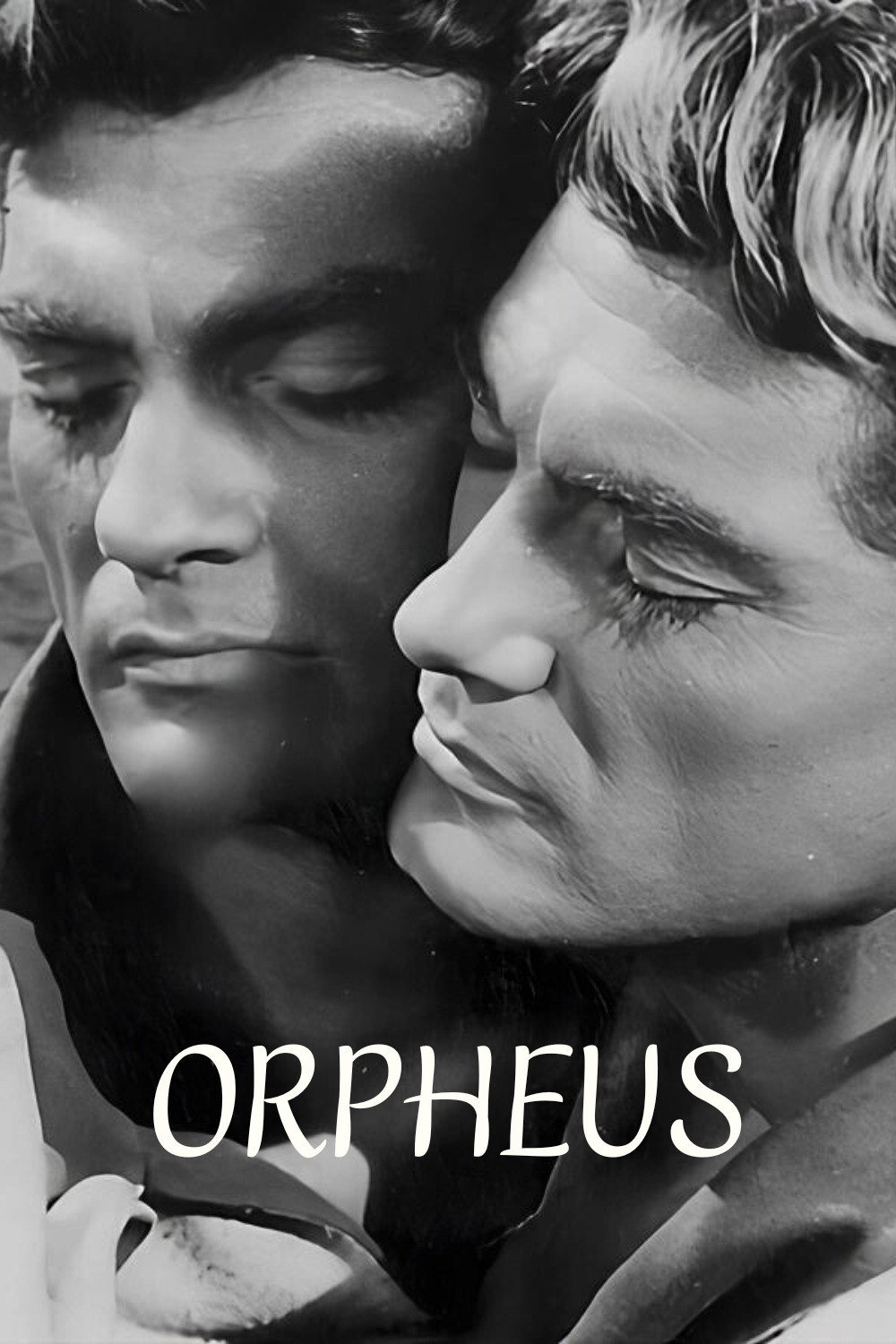
The Mirror That Refuses to Lie
From my first viewing of Jean Cocteau’s Orpheus, I felt like I’d stumbled upon a dream that kept mutating the longer I stared. The film’s opening—a poet sitting at a café, awash in trivial rivalries—struck me as both mundane and fantastical, a tone that never leaves the film. It’s impossible, for me, to watch this film without being confronted by its central obsession: the dangerous seduction of the creative process and the blurry boundary between life and art. Cocteau’s camera lingers over mirrors as if they’re portals, not just to another world but to the dark unknown inside the self. Every glance, every gesture, is heavy with the sense that art is a perilous journey, and its cost may be one’s own sense of reality.
Obsession at the Edge of Reality
What resonates most with me about Orpheus is how the film refuses to separate dream from waking, poetry from prosaic life. Orphée’s obsession with mysterious messages—broadcast from the car radio like cryptic transmissions from the underworld—feels less like a myth retelling and more like a confession: artists, in pursuit of something transcendent, often tune out ordinary love and domesticity, seduced instead by what eternally eludes them. I see Orphée ignoring Eurydice, not simply because he’s bewitched by Death, but because he’s lost in the labyrinth of his own compulsions. The more he reaches for inspiration, the deeper he falls into alienation. For me, this isn’t just a film about lost love—it’s about the soul’s peril in chasing a vision at the expense of everything else.
The Hypnotic Power of Death
One of my strongest memories is the way Death enters the film, not as a skeletal figure but as a woman in a black car, regal and inscrutable. Cocteau’s Death is both love and oblivion, and I felt her presence stretch across every shadowy frame. There’s something deeply seductive about how she regards Orphée, inviting him (and us) to question whether artistic immortality is worth the price of living among the living. The film’s Death is not just a narrative device—she’s the embodiment of destructive creative yearning, the ultimate muse who asks for nothing less than utter surrender. Every time Orphée follows her through the mirror, I feel myself pulled into a metaphor about what is forfeited in pursuit of genius: the warmth of everyday connection, the solidity of the tangible world.
Mirrors: More Than Portals, Unforgiving Judges
The mirrors in Orpheus are so much more than clever visual tricks—they’re the film’s most honest arbiters. When Orphée dissolves into the glass, I see more than a man crossing into the afterlife; I see the artist stepping away from experience toward an unattainable ideal. These mirrors, cold and reflective, force him (and us) to face what gets left behind. For Cocteau, the mirror is not an escape—it’s an accusation. The more Orphée pursues his art, the more he turns his back on real intimacy. Every time I watch him glide through that glass, I sense the story warning me: every act of creation is also a subtraction, every spell cast in art may be a curse in reality.
The Tyranny of Messages and Meaning
I can’t help but notice how obsessed Orphée becomes with deciphering the radio’s cryptic messages. The poet in him is desperate to find meaning, to extract poetry from what sounds like random noise. Every phrase, every nonsensical line, feels like a riddle he must solve. Yet, what if those messages are as empty as they seem? Cocteau’s film seems to whisper that searching too desperately for significance can push us into dangerous territory—sometimes, the pursuit of meaning produces only further confusion, isolation, and self-destruction. Orphée’s endless decoding reminds me of the hazards in reading too deeply into every sign: we risk losing sight of the world in front of us while searching for secrets that may not exist.
Eurydice: The Ghost in the Domestic Machine
I’m always haunted by the way Eurydice exists in this film—not so much as a character, but as a fragile presence Orphée is never quite able to hold. She’s less a wife, more a symbol for the ordinary, nurturing love that poets and dreamers so often sideline. Her death and Orphée’s desperate quest to reclaim her feel, to me, like a parable about the costs of neglect. Each time Orphée looks back—against the rules, against Death’s command—I see the terrible irony: artists who dwell on their losses, or who try to recover what’s already past, are doomed to miss the present altogether. Eurydice’s fate isn’t just tragic; it’s a warning about the price of obsession and the impossibility of recapturing innocence once it’s gone.
The Language of Shadows and Silence
What always strikes me in Orpheus is how much of its power comes from what remains unsaid, and from what flickers in shadow. Cocteau’s use of negative space, the murmuring stillness of the underworld, the relentless hush that follows Orphée as he searches for Eurydice—these are as eloquent as any line of dialogue. Silence in the film is not emptiness but the very texture of longing, exile, and creative struggle. Watching Orphée traverse those silent corridors, I am reminded of the loneliness that shadows every act of creation, the sense that even triumphs in the artistic realm may echo hollowly when one is isolated from real life.
Love, Sacrifice, and Unattainable Grace
Few films have made me feel as ambivalent about love as Orpheus. The love triangle at its heart—between Orphée, Eurydice, and Death—is no mere romantic entanglement. I always interpret it as a meditation on the conflicting demands of art, mortality, and human connection. Orphée’s passion for Death, and her reciprocation, reads to me as a doomed attempt to reconcile creation with destruction, inspiration with annihilation. The final decision to let Orphée and Eurydice return to life, but deprived of memory, is the cruelest grace of all: to regain ordinary happiness, they must forget the extraordinary journey that nearly destroyed them. I’m left wondering if true love is only possible when we surrender our ambitions, or if every act of commitment carries the shadow of what we have chosen not to pursue.
Why Cocteau’s Myth Matters to Me Now
Every time I revisit Orpheus, I’m struck by how intimately it speaks to the anxiety of anyone who’s ever tried to make something beautiful out of the chaos of life. The mythic trappings are dazzling, but the ache at the film’s core is painfully real. Cocteau asks what it really means to live as an artist—and what one may have to sacrifice in order to bring art into the world. That question never feels antique or academic to me; it’s as urgent now as it was in 1950, maybe even more so in a world saturated with distraction and self-absorption. I keep returning to this film because its paradoxes feel honest: that inspiration is both a gift and a curse, that love is always haunted by what it cannot hold, and that sometimes, forgetting may be the only way to begin again.
Two Films for Kindred Spirits
If you’re moved by the haunted beauty and spiraling ambiguities of Orpheus, I would urge you to discover these two classics:
- Häxan (1922) – Benjamin Christensen’s delirious mix of witchcraft and documentary is as hypnotic and subversive in its dream logic as Cocteau’s underworld.
- The Red Shoes (1948) – Michael Powell and Emeric Pressburger’s ballet tragedy, a meditation on the fatal tension between artistic calling and earthly love, aches with the same impossible choices.
If you’re curious about how this film was originally perceived or how it compares to similar works of its era, these resources may be helpful.
🎬 Check out today's best-selling movies on Amazon!
View Deals on Amazon