
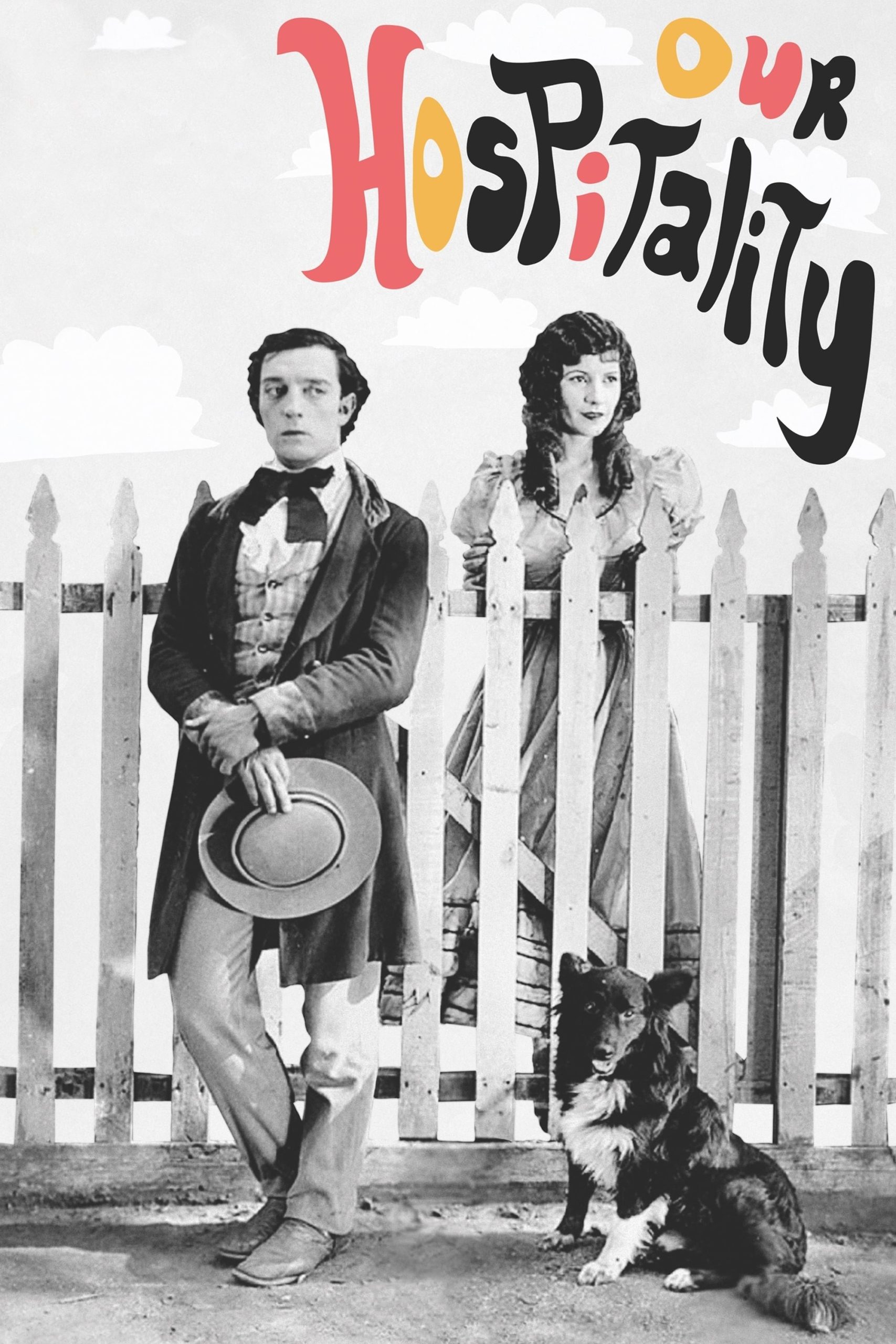
I first encountered “Our Hospitality” on a battered 16mm print projected at a midnight screening in an old repertory theater—one of those places that still smelled faintly of nitrate, dust, and bygone laughter. What drew me in—against more illustrious silent comedies vying for my affection—was how unassumingly bold it felt. This was Buster Keaton fighting deathly feuds and gravity with the same deadpan resolve, threading physical danger and small-town romance into a near-mythic tangle. I recall how the audience gasped and then exhaled together during the film’s final moments, that communal, unspoken awe at how something so fragile in age could still feel volatile and alive. That initial electric charge is why I return to “Our Hospitality” not as a historical artifact, but as a living, deeply strange piece of cinema made by someone who understood how thin the line is between comedy and tragedy.
What the Film Is About
At its core, “Our Hospitality” is both a send-up and a subtle elegy for the cycles of violence that shape families and communities. Keaton’s character, Willie McKay, finds himself unwittingly drawn into a generations-old feud—one that predates his own memory and, in some ways, even his own identity. It’s a story told with ironies that sting because they carry tragic consequences beneath all the slapstick grace. The tension lies in how every gesture—romantic, foolish, or mundane—is shadowed by the threat of inherited vendetta. This is a film about how people become casualties of loyalties they never chose, and how escaping those cycles is a matter of courage, luck, and sheer physical ingenuity.
What continually fascinates me is the emotional paradox at the film’s heart: the deep attachment to tradition and place is what binds these characters, but also traps them. Keaton never lets the audience forget that behind every pratfall lies someone’s looming sense of duty, or loss, or longing for escape. “Our Hospitality” illustrates, with both humor and real sadness, that reconciliation is neither sentimental nor easily attained; it comes, if at all, at the edge of calamity.
Core Themes
“Our Hospitality” is haunted by the theme of inherited conflict—the idea that one generation’s disputes become another’s burdens. To me, this remains pressing in any age, but especially when considering how, in 1923, the world was still reckoning with the aftershocks of the Great War: traumas, grudges, and alliances that were not of the young’s making yet shaped their lives indelibly. Keaton’s approach is sly and subversive: he exposes the absurdities of blind loyalty while never veering into cruelty. The machinery of tradition becomes a Rube Goldberg device, grinding the innocent into powder unless someone dares to step outside the prescribed dance.
Another aspect that resonates is the absurdity of social rituals. The McKay-Canfield feud is buoyed by a convoluted etiquette—where a guest is treated with “hospitality” as long as he remains under a rival’s roof, but is fair game the moment he steps outside. The collision of hospitality and hostility is not just comedic; it’s a razor’s edge critique of how societies ritualize violence and civility in the same breath. For me, “Our Hospitality” ultimately offers a glimpse of possible reconciliation—not grand or triumphant, but awkward and very nearly accidental. Its relevance endures because the questions it poses about breaking inherited cycles, and the cost of tradition, are never settled.
Symbolism & Motifs
I’m continually struck by how meticulously Keaton and his collaborators deploy objects and landscapes as loaded symbols across the film. The train journey early in the film—more an elaborate, rickety joke than a true means of travel—serves as both a physical journey back into danger and a metaphor for returning to the past one has tried to escape. Every bump and derailment on this primitive locomotive foreshadows the precariousness of attempted reconciliation: progress is never smooth, and the journey is fraught with peril both comic and grave.
Another recurring motif is water, particularly the raging river in the final act. Keaton’s harrowing rescue set piece is more than spectacle. The river becomes a purgatorial space where the central conflict is put to the ultimate test—only through willingness to risk death for another can the pattern of retributive violence be broken. I also notice the delicate use of interiors and exteriors: the Canfield home is fortress-like, drawing sharp contrast between the seeming safety of hospitality and the outside world’s latent threat. All these elements, through Keaton’s precise visual language, serve to reinforce how escape from inherited hostility requires crossing treacherous, liminal spaces.
Key Scenes
The Tumultuous Train Ride: Comedy as Foreshadowing
What lingers with me most is the early scene of Willie’s journey south via a primitive train, an extended symphony of precarious gags and engineering mishaps. It’s commonly celebrated for its slapstick inventiveness, but what makes it crucial is how it mirrors Willie’s own helpless movement into the jaws of danger. The chaos of the journey gestures at the uncontrollable forces of fate, yet Keaton’s composure amidst it underscores his resilient, nearly tragic innocence. This scene is the film’s overture, composing the rhythm of anxious momentum that will propel the rest of the narrative.
Hospitality at the Canfield Home: Tension Behind Every Smile
Perhaps my favorite stretch is the long sequence where Willie, having inadvertently courted a Canfield daughter, becomes an honored guest at the rival household, safe only as long as he stays indoors. This exquisitely builds tension through spatial comedy—every door, window, and hallway is a threshold between life and death. It’s a masterclass in balancing farce with mortal peril, and the perfect articulation of the film’s commentary: that social graces can barely restrain the violence simmering beneath.
The Perilous River Rescue: Risk and Redemption
There is no moment more searing than the film’s climax on the storm-swollen river. Buster Keaton’s daring rescue of his would-be executioner’s daughter is not just breathtaking in its stuntwork, but loaded with significance. In that roiling water, the film’s central argument comes to a boil: only an act of selflessness—of placing another’s life above inherited animosity—can break the pattern of vengeance. The river becomes a baptism for the feud, washing away old hatreds, if only briefly, and opening up a space for forgiveness where there was previously only violence.
Common Interpretations
Many critics praise “Our Hospitality” as the first truly “modern” silent comedy, fusing high-stakes action with character-driven story. It’s often lauded for blending physical risk with psychological nuance—Keaton is not just a gag machine, but a subtle critic of social mores. I agree with the assessment, though my personal view is sharper: where some see the feud as comic fodder, I see it as a blueprint for understanding the emotional mechanics of inherited violence. To my mind, the tension between personal desire (Keaton’s romance) and social duty (the feud) is the film’s most subversive strand.
Other readings elevate the technical innovations: the realistic sets, carefully planned gags, and bravura river sequence. While I admire these elements, what endures for me is how Keaton uses them to deepen character and theme, not just to awe the audience. The ability to generate laughter, suspense, and critique—often simultaneously—is why “Our Hospitality” resonates more fiercely than many films that followed in its wake.
Films with Similar Themes
- “The General” (1926): Another Keaton film, this time the absurdity of war and the individual’s struggle against large-scale conflict serve as thematic cousins to the cycles of retribution and responsibility in “Our Hospitality”.
- “Seven Chances” (1925): Here, the pressures of social expectation and family dictate the protagonist’s journey, echoing the tension between personal freedom and inherited burdens.
- “Way Down East” (1920): D.W. Griffith’s melodrama similarly deploys the motif of a life-threatening river and probes the hypocrisies of rural social codes.
- “The Kid” (1921): Chaplin’s blend of comedy, sentiment, and critique of societal norms dovetails with Keaton’s technique of illuminating deep themes through physical performance and familial dynamics.
Looking at “Our Hospitality” Today
A modern audience brings baggage both heavier and lighter to “Our Hospitality.” On the one hand, it’s tempting to view the film through the lens of kitsch nostalgia; on the other, its undercurrents—about legacies, tribalism, and the difficulty of forgiveness—remain painfully prescient. I believe that approaching this film with an openness to its melancholy as well as its mirth can unlock layers of meaning lost in its reputation as mere “slapstick.” Keaton’s quiet rebellion against fate, his dogged hope for peace, is a model for viewing cinema as both mirror and tool for transformation. It isn’t just a historical curiosity but a living interrogator of how we love, fight, and attempt to break old patterns. That’s why revisiting it—not just watching, but sitting with its themes—adds immeasurable value to our understanding of film and ourselves.
Related Reviews
If you found value in my perspective, you might also enjoy exploring my thoughts on other cinematic landmarks such as “The General” and “Way Down East”.
To broaden this interpretation, you may also explore how critics and audiences responded over time.
🎬 Check out today's best-selling movies on Amazon!
View Deals on Amazon