
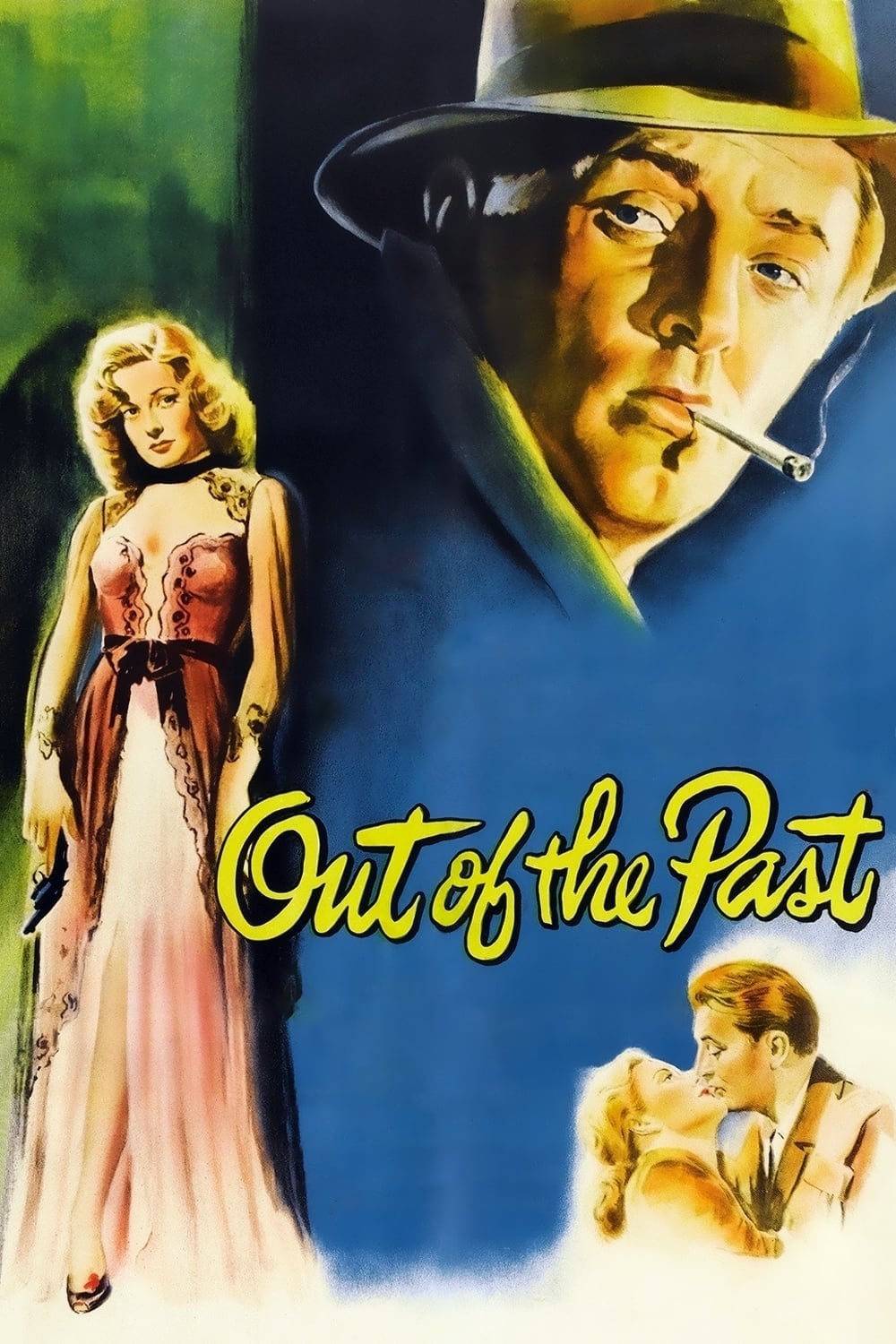
Shadows That Never Disperse: My Encounter with “Out of the Past”
I still remember the first time I watched “Out of the Past”—not as a passive spectator but as someone who felt the film pressing in on me, the way fog clings to a ruined pier at dawn. There’s something about Jacques Tourneur’s 1947 noir that doesn’t dissolve, even after the credits crawl away. It lingers, invades, settles into the corners of my memory like the cigarette smoke drifting across Robert Mitchum’s face. From the very beginning, “Out of the Past” wasn’t just another hard-boiled drama; it became a meditation on what happens when the past refuses to let go, ambushing us in every shadow we try to escape.
Seduction and Doom: The Allure of What We Cannot Change
One of the earliest things that struck me was the seductive rhythm—the way the story glides between the past and the present, mirroring the main character’s inability to disentangle himself from what’s come before. The narrative coils back on itself, not for cleverness, but to suggest that memory and fate are indistinguishable in certain lives. Every choice Jeff Bailey makes is haunted by the echo of his former self, as if each decision is merely the natural continuation of mistakes made long ago.
Watching Jeff (Mitchum) and Kathie (Jane Greer), I found myself tangled in their chemistry, but more so in their shared fatalism. The dialogue is crisp, yes, but the real seduction is existential. This is a film that whispers: you may try to start over, but the past is always just outside the door, waiting for you to turn your back. The romantic entanglements aren’t just plot— they’re symptoms of a deeper inability to escape oneself, and I felt the weight of that implication every time Jeff looked over his shoulder.
The Double Lives of Everyday Men
What fascinates me most about “Out of the Past” is its insistence that double lives aren’t reserved for movie criminals or detectives. The film’s small-town gas station, with its modest rhythm and honest labor, is just as much a mask as any alias or forged document. When I watch Jeff trying to blend into rural tranquility, I don’t see someone reinventing himself; I see a man in hiding, performing normalcy with every gesture.
This duplicity is more universal than it first appears. Tourneur’s direction seems to say that all of us are fugitives from something—regret, shame, the consequences of love gone wrong—and that we build new lives less to begin anew than to cover up what came before. The anxiety that pulses underneath the film’s surface is not the fear of violence or exposure, but the dread of never truly escaping oneself. Each supporting character, no matter how innocent, reflects this tension. Even Ann, with her hopeful eyes, seems to sense that Jeff is more ghost than man.
Light, Shadow, and the Geography of Guilt
I’m always entranced by the way “Out of the Past” uses light—not for mere atmosphere, but as a commentary on the moral topography of its world. Every shaft of sunlight, every swath of shadow, traces the boundaries between what should be confessed and what must remain hidden. The film’s chiaroscuro isn’t ornamental; it diagrams the interior landscape of its characters, where guilt and innocence commingle in uneasy silence.
There’s a moment when Jeff stands half-lit in a doorway, caught between the world of his new life and the darkness of his old one. That image says more than dialogue ever could about how guilt divides a person, cleaving them into visible and invisible halves. Visual storytelling here isn’t just stylish—it’s essential to the film’s meaning. The cinematography externalizes the psychological struggle, turning the California sun and Lake Tahoe’s murky depths into metaphors for the boundaries we draw inside ourselves.
Femme Fatale as Mirror and Myth
Many viewers are lured by Kathie Moffat’s supposed evil, but what I see is a mirror held up to every other character, especially Jeff. Kathie isn’t simply a destroyer; she’s a catalyst, forcing those around her to confront the worst within themselves. When she claims innocence, it rings both as a lie and a universal plea—to be forgiven, to be loved in spite of our own capacity for betrayal.
She’s less an individual than a mythic force. The femme fatale in this film isn’t just twisting men’s fates for her own gain. She represents the seductive idea that escape is possible, that love can obliterate the past, even as every action she takes proves the opposite. I find it impossible to see Kathie as a mere villain. She’s the manifestation of every dangerous hope, every rationalization, every doomed attempt to start over. Her tragedy is that she runs from herself just as blindly as Jeff does.
The Ruins of Redemption: Hope Under Siege
What “Out of the Past” keeps whispering to me, with each resigned glance and every cruel turn, is that the longing for redemption is as dangerous as any gun. Jeff’s attempt to escape his old life is not an act of renewal but a desperate refusal to accept who he really is. The small-town innocence he tries to embrace is tainted before he even arrives, spoiled by the lies he has to tell just to survive another day.
What makes this film so persistent in my mind isn’t just its style or plotting, but its deep suspicion of second chances. The world of “Out of the Past” punishes wishful thinking; every time Jeff or Ann imagines a happy ending, the universe closes in with grim precision. There are no clean slates here. The past exists not as memory, but as a malignant presence, moving through the present, rearranging reality in its own image. Even when the film flirts with hope, the viewer knows not to trust the light.
Language as a Veil: What’s Left Unspoken
One aspect that quietly gnaws at me, long after viewing, is the way dialogue refrains from ever naming the central pain. Noir is famous for its sharp exchanges, but “Out of the Past” prefers to hedge, to suggest, to bury the truth beneath banter and euphemism. Every time Jeff and Kathie meet, they say almost nothing of substance, yet the air crackles with meaning. I’m left to wonder if this evasiveness is a form of protection, or simply proof that the characters can’t bear to look their destinies in the eye.
I’m drawn to the film’s silences as much as to its words. The most honest moments happen in glances, pauses, and half-finished sentences, as if the only way to survive one’s past is to keep it unspoken. Much is made about what noir dialogue reveals, but in this film, it’s the ellipses—the things left unsaid—that seem to matter most. I come away feeling implicated in their evasions, as if my own secrets had been gently, artfully exposed.
Where the Road Ends: The Limits of Escape
When the film draws to its soft, brutal close, I’m always struck by how inevitable it feels. Redemption proves hollow, escape illusory, and yet there is a grace to the way Jeff accepts his fate—almost as if he welcomes it, tired at last of running from himself. The final scenes aren’t just tragic; they’re clarifying. The cost of denial, the wages of the past, are tallied with merciless honesty.
“Out of the Past” leaves me with the uneasy knowledge that most of us, if forced to account for everything we’ve done, would find ourselves walking similar roads. The film’s greatest truth is its insistence that our histories aren’t separate from us; they are the fabric of who we become. It’s not simply a crime story or a love story—it’s a reckoning, rendered in shadows so deep that they rarely lift, even when the screen goes dark.
Other Journeys Through Darkness
For those as haunted by “Out of the Past” as I am, there are two classic films that wander similar fog-shrouded roads: “Double Indemnity” and “The Reckless Moment.” Each offers its own vision of what it means to be undone by temptation, regret, and the impossible hope for a clean escape.
If you’re curious about how this film was originally perceived or how it compares to similar works of its era, these resources may be helpful.
🎬 Check out today's best-selling movies on Amazon!
View Deals on Amazon