
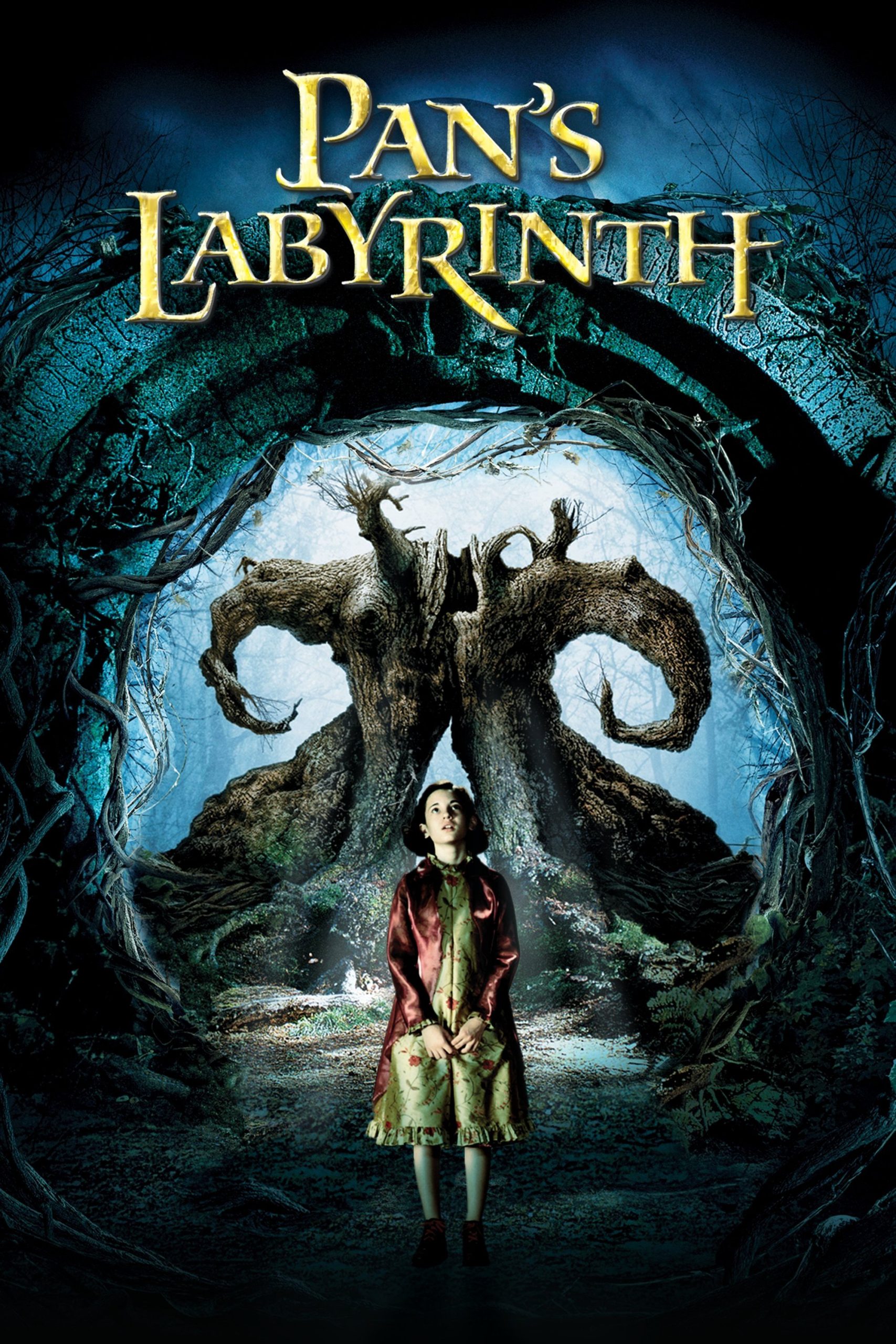
Childhood tales never quite left me. Even as an adult, the boundary between fairy stories and bitter history seems porous, permeable. When I first watched “Pan’s Labyrinth,” it struck an unspoken chord deep within—a tangle of innocence and brutality that felt uniquely personal. I remember sitting transfixed, alternately dreading and craving each turn, as if the film itself were drawing me into its labyrinth. What held me captive was not simply the lush visuals or the otherworldly monsters, but how the director, Guillermo del Toro, allows fantasy to express truths there are no ordinary words for. For me, this film is less a fairy tale than an emotional map of fear, hope, and resistance—a story that haunts the edges of what I thought I understood about childhood and war.
What the Film Is About
“Pan’s Labyrinth” is, on the surface, a story about a child navigating fantasy realms amidst the violence of post–Civil War Spain, but what I really see is a relentless emotional journey, tracing the contours of resilience amid senseless cruelty. Ofelia is our through-line—not simply a protagonist, but also a mirror for our own need for meaning in a brutal world. Her quest, given by the Faun, becomes as much about reconciling innocence with horror as it is about solving riddles or obeying arbitrary rules.
Beneath the literal events, I find the film interrogates the ways power consumes both the young and the powerless. It raises questions: What chance does imagination have up against fascism? How do we, as adults or children, craft stories to bear the unbearable? I felt, again and again, the push-pull between escape and confrontation, as Ofelia’s fantastical missions unfold in parallel with her mother’s decline and her stepfather’s sadistic tightening grip. It’s as if the labyrinth were not just underground, but intertwined with every moment of reality—reminding me that escape, when it matters most, is never as simple nor as safe as we might wish.
Core Themes
I keep returning to “Pan’s Labyrinth” because it is layered with meditations on obedience, disobedience, and the cost of moral courage. The film’s central theme, for me, is the tension between innocence and the loss thereof. Ofelia embodies a will to see magical possibility despite omnipresent violence; in her, I sense a fierce preservation of selfhood, even at profound cost. In 2006, that felt like a potent reminder—the world was hardly free from war, and children were still its casualties. Today, the theme has not faded; if anything, events globally have deepened its relevance.
Another crucial thread is the seductive nature of authority and the necessity of resistance. Captain Vidal is the embodiment of rigid hierarchy and unchecked cruelty—a man determined to bend reality to his will, squashing whatever will not submit. In contrasting Vidal’s oppressive world with Ofelia’s acts of refusal, the film insists that true heroism often means saying “no” where others comply. That echo reverberates painfully in today’s climate, where the struggle between conscience and compliance shapes so many headlines.
Finally, the film’s exploration of stories as survival mechanisms resonates deeply. Del Toro insists, through Ofelia, that fantasy is not cowardice; rather, it’s a stubborn assertion of hope, of meaning, in a world bent on annihilation. That defiant hope is what I carry into every rewatch.
Symbolism & Motifs
The film’s symbolism is dense and deliberately elusive; it almost begs me to get lost and return, seeing new patterns each time. The labyrinth itself stands as a visual metaphor for the maze of moral decisions—not just for Ofelia, but for anyone up against impossible circumstances. It winds and doubles back, never offering a single, clear solution. I see in it a reminder that both innocence and resistance are acts of navigation rather than destinations reached.
Another motif that lingers on my mind is the visual recurrence of keys, doors, and thresholds. Each portal promises transformation, but sometimes—crucially—at a cost. When Ofelia turns a key, I hold my breath: Will it be safety, or is she opening the way for more destruction? The ambiguity is the point; the film refuses easy answers.
The pale, eyeless monster known as the Pale Man haunts my imagination, too, far more than most cinematic creatures. He is a composite of repression, consumption, and the horror of authority unchecked. Painted in grotesque, churchlike surroundings, he underscores the film’s critique of institutions that claim to nurture but instead devour.
Key Scenes
Confronting the Pale Man: A Lesson in Disobedience
Everything slows in my mind when I recall Ofelia’s tense passage past the Pale Man. She is told to obey: do not eat, do not stray from the task. When she succumbs to hunger, the consequences are instant and terrifying. What’s crucial here is how the film valorizes disobedience as a form of agency. Ofelia’s small act of defiance reveals her humanity in a world of monstrous appetite, and as I watch, I am reminded of the risk and necessity of breaking unjust rules. This scene distills the perverse attraction and punished cost of not conforming.
Captain Vidal’s Clock: The Tyranny of Order
I cannot shake the image of Captain Vidal polishing his father’s pocket watch, a gesture soaked in ritual and rigidity. This clock is more than a timepiece; it’s emblematic of Vidal’s obsession with control and legacy. The camera lingers on its ticking—mechanical, relentless, unfeeling. For me, this is all the more chilling because its tyranny is so recognizable: the drive to impose order and erase ambiguity, regardless of the suffering inflicted. The scene’s coldness quietly amplifies the human cost of fascism, both personal and collective.
The Final Sacrifice: Choosing Innocence Over Survival
In the final reel, Ofelia refuses to spill her baby brother’s blood to gain entry to the fairy realm, even though the Faun insists. Her choice, rooted in compassion, shatters the machinery of both fairy tale and fascist logic. Here, the film achieves its deepest resonance for me—insisting that the ultimate act of heroism is the refusal to become complicit, even under excruciating pressure. I find it endlessly moving that, in a world obsessed with survival at any cost, Ofelia chooses what’s right over what’s easy.
Common Interpretations
Many critics interpret “Pan’s Labyrinth” as a dual fable—a political allegory wrapped in an escapist fairy tale. They see the fantasy as either a coping mechanism or an open window into the child’s mind—detached from the film’s brutal reality but offering solace. I see truth in this, but for me, it oversimplifies the active role imagination plays. Ofelia’s mythmaking is not merely retreat, but an act of creation and resistance.
Some readings emphasize the film as a lament for lost innocence or, more cynically, as a denial of hope—suggesting Ofelia’s fantasy world is just a dying child’s hallucination. While I cannot dismiss the narrative’s darkness, I prefer to engage with its invitation to hold both realities at once: to accept the ugliness of the world and still insist that compassion, wonder, and defiance matter. The film, after all, never lets us forget the price paid for such insistence.
Films with Similar Themes
- The Devil’s Backbone (2001) – Also directed by Guillermo del Toro, this film weaves childhood fears with the ghosts of war, exploring innocence, trauma, and resistance against an authoritarian backdrop.
- The Spirit of the Beehive (1973) – Set in post-Civil War Spain, it too looks through a child’s eyes to find meaning and refuge amid violence and repression.
- Come and See (1985) – A far more harrowing, realistic take, but its focus on childhood corrupted by war and the impossibility of escape links it thematically to Pan’s Labyrinth.
- Coraline (2009) – While lighter in tone, its parallel world, dark fable structure, and themes of courage and agency bear strong echoes of Ofelia’s journey.
Conclusion
“Pan’s Labyrinth” remains vital because it refuses boundaries—between fantasy and historical trauma, between innocence and complicity, between what is real and what ought to be. For modern viewers, I believe it offers not mere escape but a framework for empathy in the face of cruelty. The act of engaging with its themes—moral courage, the necessity of disobedience, the price of holding onto hope—enriches more than the film itself. It invites us to reflect on our own paths through history’s labyrinth, urging us to choose, again and again, the difficult road of compassion.
Related Reviews
If you found value in my perspective, you might also enjoy exploring my thoughts on other cinematic landmarks such as The Spirit of the Beehive and Come and See.
To broaden this interpretation, you may also explore how critics and audiences responded over time.
🎬 Check out today's best-selling movies on Amazon!
View Deals on Amazon