
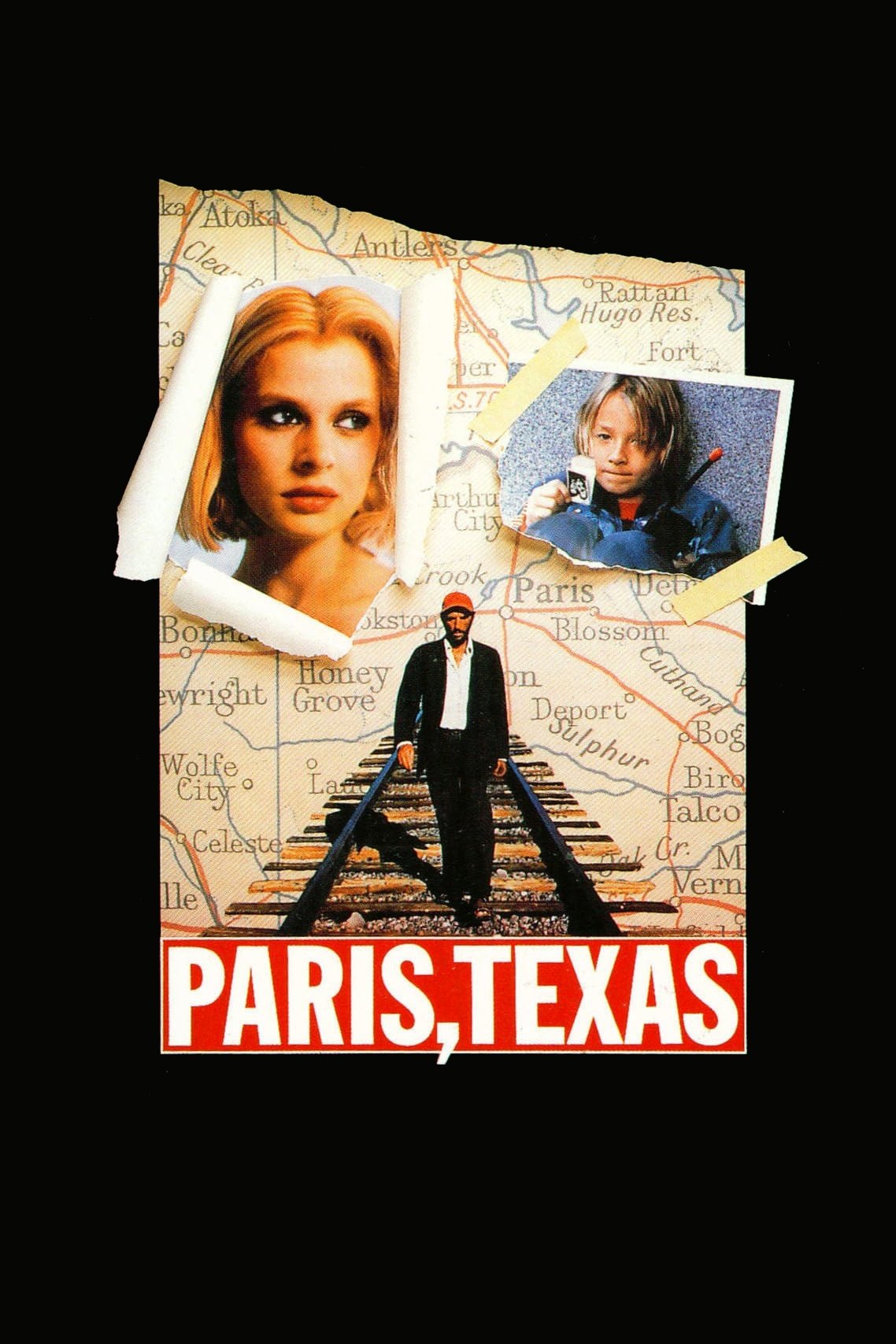
Wandering the Empty Highways of the Soul
There’s something about Travis’s silent walk out of the desert that always unsettles me. The opening images of “Paris, Texas” don’t just introduce a lost man—they conjure the ache of wandering through one’s own life as if it were a scorched, inhospitable landscape. I can never shake the sense that the film is less a road movie than a meditation on estrangement—where the American West isn’t just a backdrop, but the very terrain of Travis’s fractured mind and battered spirit.
Mirages of Memory and the Weight of Silence
Whenever I watch Travis, mute and shaken, unable (or unwilling) to speak, I feel the oppressive gravity of everything he’s left unsaid—words and confessions that linger in the air like a mirage. The film’s first act is marked by a deliberate absence of exposition, as if Travis’s silence is both a curse and a shield against the pain of remembrance. Each interaction with Walt, his patiently exasperated brother, is loaded with the tension of half-buried grievances and love warped by disappointment. I find that these early scenes evoke the struggle of reentering a past you’ve tried to erase—where every step toward reconciliation is haunted by an undertow of guilt and shame. In “Paris, Texas”, memory isn’t just unreliable; it’s a force that distorts and paralyzes.
Broken Families, Fractured Geographies
The journey from the Texas desert to bustling Los Angeles, and ultimately toward Houston, never feels like a simple odyssey home. Instead, I see it as an illustration of the fractured geographies of family life—the chasms that open when trust and love have been torn apart. Travis’s odyssey with his son, Hunter, becomes a plaintive search not only for reunion, but also for redemption within the debris of his choices. Every motel and roadside diner feels like a temporary refuge, never a home, and the rental car becomes a lifeboat adrift on an ocean of regret. What strikes me most is how the landscapes the characters pass through echo their emotional states—arid, desolate, and yet occasionally pierced by fleeting beauty or kindness. The film’s America is not the land of promise, but a map of disappointments and abandoned dreams. I can’t help but think that Wim Wenders’s camera is always searching for the points where people and places fail to connect.
The Glass Wall: Seeing Without Touching
There’s a scene that always stops my breath: Travis and Jane, separated by a one-way mirror in a peep show booth. For me, this moment is the still point around which the whole film revolves. They see each other, yet can’t touch; they speak across a barrier designed to separate fantasies from reality, clients from performers, men from women, husbands from wives. The glass becomes the perfect metaphor for their predicament—ever-present yet impossible to break through without shattering both people. During their wrenching conversation, I sense that confession is both salvation and torture for Travis. Here, the film articulates its deepest theme: the longing for intimacy that’s forever complicated by our own histories, and the pain of seeing the truth when it’s irreparable.
Color, Light, and the Texture of Longing
Visually, “Paris, Texas” leaves an imprint on me with its saturated reds, faded neons, and vast, unyielding skies. Robby Müller’s cinematography conjures a world where color becomes a living, breathing part of the emotional tapestry. That jarring shift from the sun-bleached desert to the atmospheric glow of Houston’s nightscape feels, to me, like stepping through a dream into another, lonelier one. The film’s palette never settles; it keeps me uneasy, as if every hue is tinged with memory and regret. I interpret the film’s visual language as a kind of silent dialogue—one in which light simultaneously exposes and conceals the characters’ true selves. The beauty is always laced with melancholy, underscoring that desire and loss are inseparable.
The Unspoken Contract of Fathers and Sons
When Travis begins to reconnect with Hunter, their awkward, tentative interactions remind me how fragile and wordless the bonds between fathers and sons can be. These scenes are imbued with both hope and tragedy—Travis re-learning how to be a father, Hunter daring to trust again. Their mimicked walking, the shy glances exchanged, speak volumes where dialogue fails. I’m always struck by how the film refuses sentimentality, instead showing love as a process of learning, failing, and quietly persisting. Watching their relationship unfold, I sense the film’s assertion that connection, though always threatened by the past, is built through small acts of patience and faith. Wenders suggests that reconciliation is possible, but only by accepting one’s own imperfections and those of others.
Women Behind Glass: Jane and the Price of Disappearance
Jane’s presence in the story is spectral, almost mythic, until the final act. When she does appear, I’m always startled by her gentleness, her fragility, and her haunted eyes. The film positions Jane as both a victim and an agent—someone who has fled in order to save herself, but who is still shackled to the wounds of her past. I read her absence as a form of resistance to Travis’s possessive love—a refusal to stay imprisoned by someone else’s pain. Yet, when the two finally speak, I’m reminded how impossible it is to fully escape the people we have loved or hurt. Jane’s vulnerability behind the glass echoes Travis’s earlier silence; both are forms of self-protection. The film’s heartbreaking honesty lies in its admission that healing sometimes means accepting the impossibility of return.
Self-Exile, Forgiveness, and the Mirage of Paris
The title itself—“Paris, Texas”—suggests a longing for elsewhere, for some imagined paradise where wounds might be healed. But the Paris in question is not in France, and its promise is as illusory as Travis’s hope of undoing the past. For me, the film’s deepest insight is that forgiveness, if it arrives at all, is a solitary act; reconciliation is possible, but not always between the original parties. Travis’s final gift—leaving Hunter with Jane and then slipping away—feels at once merciful and devastating. It’s an act of self-exile that acknowledges the limits of love and the necessity of letting go. By sacrificing his own desire for reunion, Travis becomes, finally, a true caretaker, even if it means disappearing once more. Redemption in this film never comes through grand gestures, but through small surrenders and the courage to walk away.
Echoes in Other Quiet Masterpieces
Whenever friends ask me what else to watch after “Paris, Texas,” I find myself steering them toward films that explore familial rupture and the lonely search for meaning in silent, visually poetic ways. Two I often revisit are “The Last Picture Show” and “Kes.” Like “Paris, Texas,” both are haunted by the ache of what can’t be reclaimed—and both offer their own meditations on the bittersweet possibility of new beginnings.
If you’re curious about how this film was originally perceived or how it compares to similar works of its era, these resources may be helpful.
🎬 Check out today's best-selling movies on Amazon!
View Deals on Amazon