
There are films I return to not for comfort but for confrontation. “Patton” is one such work—a cinematic engagement that never fails to unsettle and provoke thought. I distinctly remember the first time I watched George C. Scott’s indomitable performance late at night, alone, feeling dwarfed by the brass and bluster of a man larger than the war that shaped him. It wasn’t the spectacle of tanks or the grandiosity of battlefield strategy that drew me in; it was the eerie resonance of power, ego, and consequence. For me, “Patton” is a mirror held up to the soul of leadership, inviting me to reckon with its seductions and costs.
What the Film Is About
At its core, “Patton” charts the passionate rise and fraught reign of General George S. Patton during World War II, but the film is not simply a war epic. Instead, it is a rich psychological study of a man whose greatest victories are shadowed by his most damning flaws. I have always experienced the arc not as a simple progression of military campaigns, but as the gradual unraveling—and forging—of identity through adversity.
Patton’s journey is one of tension between public triumph and private torment. The film excavates the paradox at the heart of command: the need for both ruthlessness and empathy; the cost of iconoclasm in a world demanding conformity; the intoxicating freedom of command weighed against the inescapable solitude it brings. These are not just military concerns but deeply personal quandaries, and in watching Patton wrestle with them, I am forced to consider the ways ambition can consume, and the sacrifices we justify in pursuit of historic impact.
Ultimately, “Patton” seeks to interrogate the myth of the hero. It challenges my assumptions about greatness and questions whether victory—on the battlefield or in one’s personal quest for immortality—justifies the ruin it trails in its wake.
Core Themes
What continues to fascinate me is how “Patton” relentlessly explores the interplay of power, destiny, and identity. The film is a profound meditation on the burden of leadership. Patton is convinced of his role as a chosen instrument of war, often invoking fate and history to legitimize his controversial actions. This certainty—this belief that some men are born for greatness—forms both his armor and his Achilles’ heel.
The film also examines the cost of relentless ambition. Patton’s drive is both inspiring and isolating, revealing how greatness can become a prison. In the context of the era, 1970 was a nation facing ambiguity about military valor (the shadow of Vietnam weighed heavily on American consciousness). In that light, the film’s focus on the contradictions within heroism and patriotism still feels remarkably prescient. I see Patton’s struggles as a reflection of the broader American dilemma: how do we reconcile the past glories with present uncertainties?
Another layer that resonates deeply with me is the tension between individuality and institutional constraints. Patton is a maverick chafing against the machinery of bureaucracy and public opinion. This theme, as timely today as it was at the moment of release, prompts constant questions about the limits of autonomy and the responsibility of power in any era.
Symbolism & Motifs
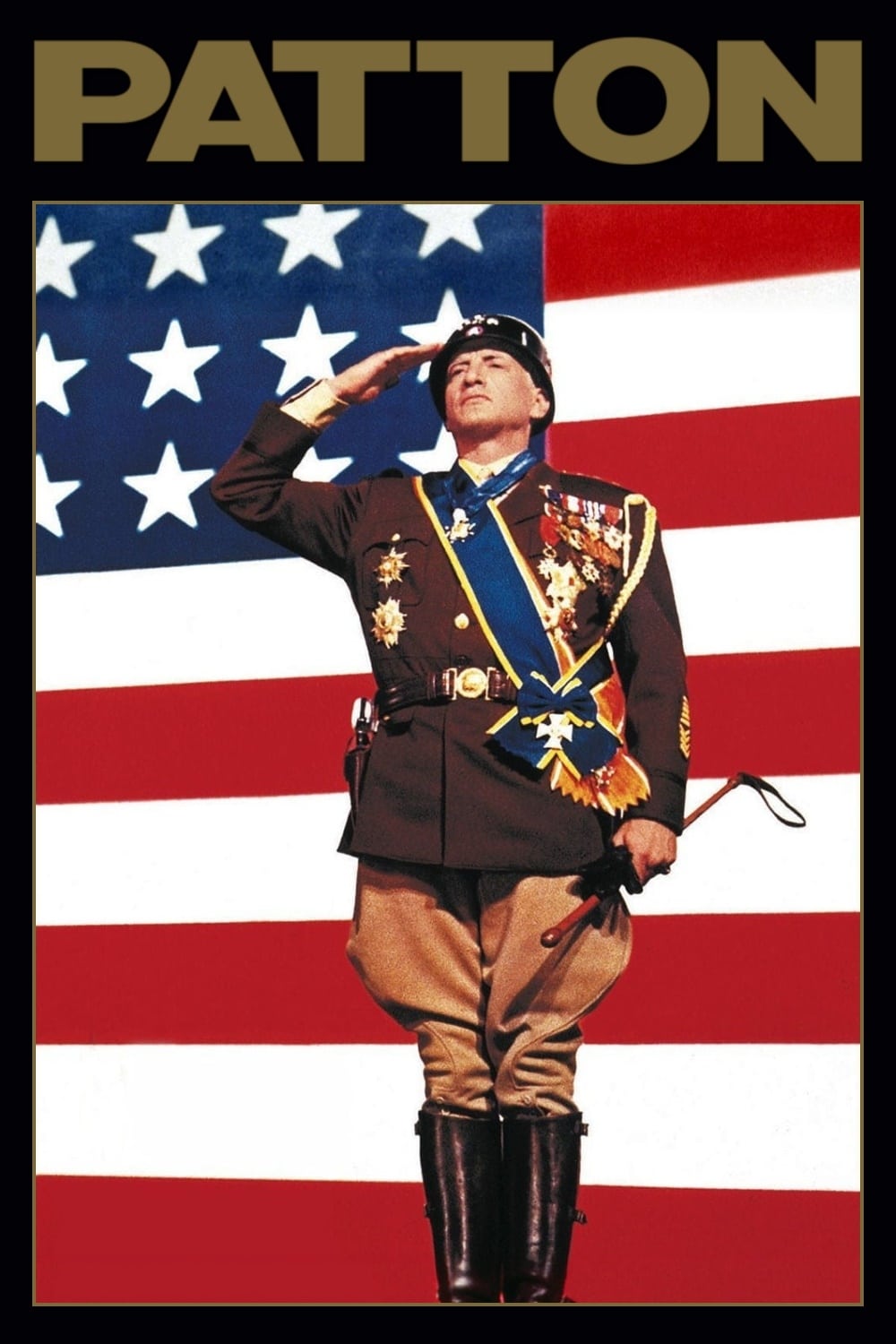
The opening scene alone, with Patton framed against a monumental American flag, is an enduring image that serves as more than patriotic display. For me, it symbolizes the merger of man and myth, an uneasy fusion where the personal is inextricably tied to the national narrative. The film returns again and again to the motif of military pageantry—flags, gleaming medals, uniforms, parades—which underscores the performance inherent in leadership.
I am particularly fascinated by the recurring motif of mirrors and reflections. Patton, in moments of self-doubt or triumph, often gazes into his own reflection, as if searching for validation or reassurance from within. To me, this device intensifies the sense that Patton is haunted not just by history, but by his own legend.
Equally evocative are the juxtapositions of violence and beauty: sunsets over ruined cities, larks singing on the battlefield. These images force me to confront the coexistence of glory and horror in war—a visual reminder that even the most poetic visions of destiny are written in blood.
Key Scenes
The Address Before the Flag: An Icon Forged
Few scenes have imprinted themselves upon my memory like Patton’s legendary opening monologue. Facing the unseen troops—and, by extension, us—he delivers a thunderous declaration of American will. This moment is crucial because it lays bare the mixture of charisma, arrogance, and vulnerability that defines the man. It feels less like motivational rhetoric and more like the forging of a public persona. Watching it, I sense both the intoxication and the profound solitude of command; Patton is always performing, even as he reveals his true self.
The Slapping Incident: Humanity Fractured
Late in the film, Patton’s confrontation with a shell-shocked soldier becomes a crucible for the character and the audience alike. The violence is less physical than psychological—a shattering exposure of the general’s compassion and limitations. This scene is essential to my understanding of the film because it refuses to excuse Patton’s brutality. Instead, it offers a rare window into the collision between heroism and human frailty.
The Cemetery Amid the Battlefield: Reflections on Legacy
One of the most resonant moments comes as Patton contemplates the dead after battle, his musings about ancient warriors echoing across the ruins. This scene, heavy with melancholy and grandeur, crystallizes the film’s meditation on mortality, memory, and legacy. It is here I most feel the shadow cast by the pursuit of glory: the price paid by others for one man’s ambition. The moment lingers, a sobering reminder that even immortality carries a toll.
Common Interpretations
Critics have often emphasized “Patton” as a meditation on the nature of military genius. Many see it as an ambivalent portrait—neither condemnation nor celebration—placing it in the pantheon of ambiguous historical biopics. I understand this perspective. The film’s refusal to preach, to render clear judgment, has made it both lauded and, at times, criticized for moral equivocation.
Yet, in my own experience, the film’s neutrality is a myth. I sense a palpable tension: a deep ambivalence about the price of greatness. While some critics fixate on the authenticity of its battlefield choreography or the complexity of its subject, I am always drawn back to its psychological landscape. Patton does not emerge as a blank canvas; he is, in fact, portrayed in lacerating detail, exposing the wounds inflicted by his own convictions. For me, the film’s core is not in military strategy but in the psychic cost of seeking immortality in a mortal world.
Films with Similar Themes
- Lawrence of Arabia — Like “Patton,” it delves into the psyche of a complex leader driven by destiny, ego, and the ambiguous morality of war.
- Apocalypse Now — Shares not just the epic scope of conflict but an exploration of obsession, madness, and the seductions of power.
- A Bridge Too Far — Offers a critical view on military ambition and the unforeseen costs of overreaching, echoing Patton’s dilemmas.
- Paths of Glory — Addresses the human cost of leadership and the moral ambiguities faced by those in command during wartime.
Why “Patton” Demands Our Attention Today
Approaching “Patton” as a modern viewer, I believe it demands not just attention but interrogation. The film’s meditation on power, legacy, and the psychological complexities of leadership remains urgent in a world where authority and ambition continue to shape destinies and societies. By engaging directly with these themes, I find not just a vision of past conflicts but a lens through which to examine present tensions. “Patton” rewards viewers who look past the surface of spectacle and glory, inviting an unsettling—but necessary—reckoning with personal and collective myths. To experience the film is not to judge Patton, but to question the structures of greatness that define our own histories.
Related Reviews
If you found value in my perspective, you might also enjoy exploring my thoughts on other cinematic landmarks such as Lawrence of Arabia and Paths of Glory.
To broaden this interpretation, you may also explore how critics and audiences responded over time.
🎬 Check out today's best-selling movies on Amazon!
View Deals on Amazon