
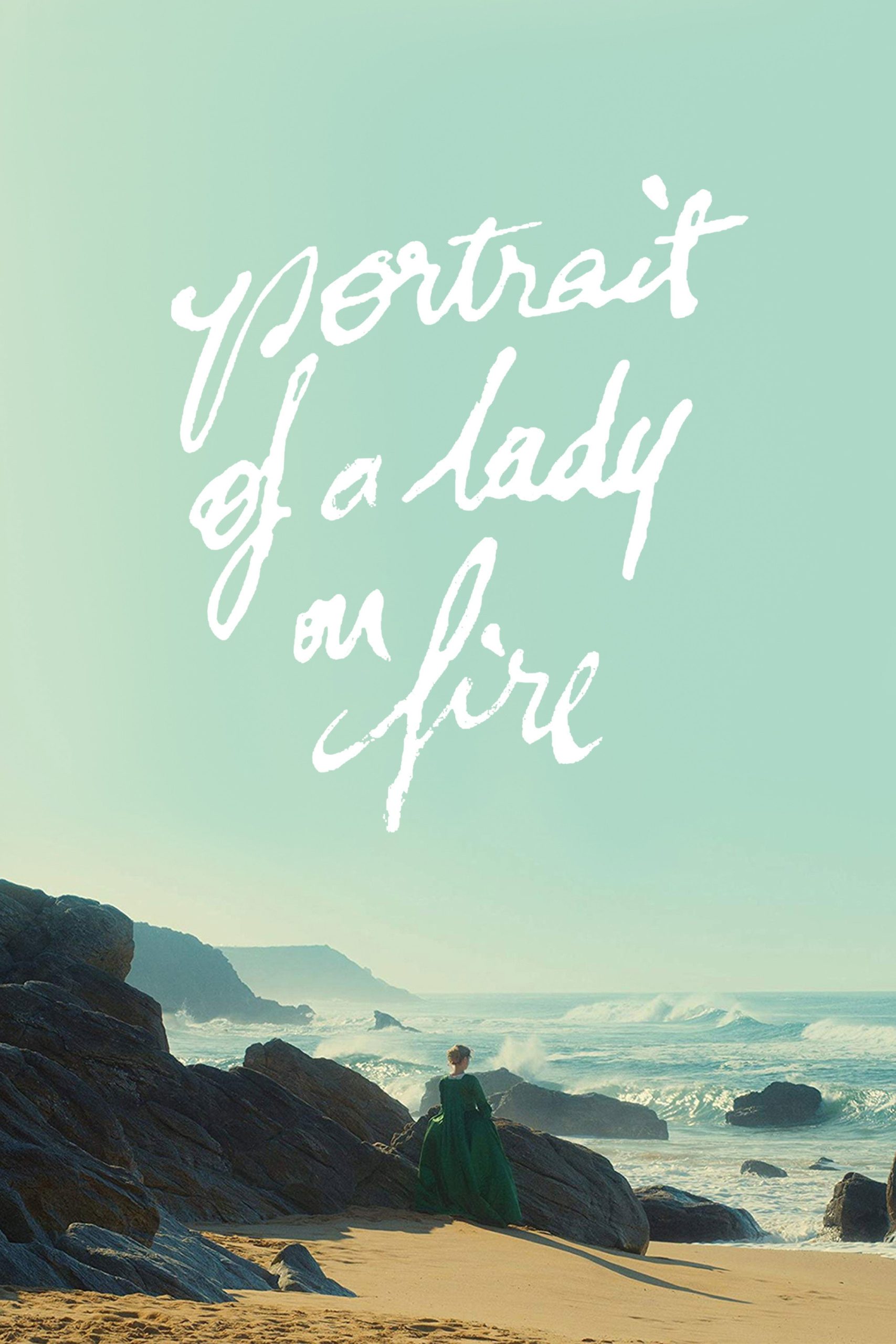
Sometimes, a film arrives as an unexpected whisper—an invocation of feelings I’d thought only belonged to memory or poetry. “Portrait of a Lady on Fire” came to me on a quiet afternoon, and by the time the closing frame lingered, I felt as if I had lived someone else’s lucid dream, tinged with longing and glimmering with possibility. What compels me to revisit Céline Sciamma’s work is not its overt beauty—though it is utterly beautiful—but the precision with which it mirrors the intensity of gazes and gestures that define every private heartbreak or thrilling secret I’ve carried. This is a film that makes me remember how devastating it is to fall in love when time itself is the antagonist.
What the Film Is About
At its surface, the story traces the encounter between Marianne, a painter, and Héloïse, the woman she must paint in secret. Both are constrained by 18th-century norms: Marianne as a woman artist seeking creative autonomy, Héloïse as an unwilling bride barred from speaking her own desires. But reducing it to a love story fails to capture its full resonance. The film is constructed around the particular agony of self-restraint, of the desire to look and be seen, and of memory’s power to both heal and haunt.
I was particularly drawn to the slow unfurling of affection and recognition between these women. Each brushstroke, each glance, is freighted with anticipation. Sciamma never surrenders to melodrama; instead, she allows us to witness how an extraordinary intimacy forms not only in moments of physical contact but across the silences and distance they must endure. Their central conflict isn’t only with their society, but with time itself—the brief, finite nature of their love, perpetually on the verge of being lost to history.
Core Themes
Few contemporary films investigate the dynamics of gaze, authorship, and the cost of memory as rigorously as this. At every turn, characters seem to ask: Who gets to see, and who is seen? And even deeper—what do we owe to those we have loved, or those who have loved us? Sciamma unravels the power structures embedded in painting and loving alike: Marianne’s ability to represent Héloïse on canvas is both empowering and fraught with ethical ambiguity, for to paint is, in some way, to possess.
In 2019, these inquiries resonated beyond the historical setting. The world—both on screen and off—was reckoning anew with questions of women’s creative agency, representation, and the hidden costs beneath every “timeless” image. Today, the urge for authentic connection, unmediated by social scripts and unbarred by imposed roles, feels more urgent than ever. I find the film’s fearless exploration of forbidden love and creative authorship to be a crucial intervention, one that questions who gets to participate in art, love, and self-determination.
Symbolism & Motifs
What struck me most was Sciamma’s use of the act of looking as both subject and method. Mirrors, reflections, and moments of direct eye contact recur—each a reversal of the traditional (male) artist’s gaze. The motif of the unfinished portrait recurs, standing for both possibility and loss. When the women finally see the completed painting, I am reminded of the impossibility of perfectly capturing a living, breathing presence—an acknowledgment that memory, too, is an act of interpretation rather than recreation.
A particularly compelling symbol is the motif of fire itself. The literal and figurative fires flicker throughout: from the glowing campfire where Héloïse’s dress flames and she sings, to the gentle, illuminating candlelight that allows hidden feelings to emerge in the darkness. Fire represents desire, destruction, and the light by which hidden lives are made visible. For me, each burning moment is a reminder of the fragility and intensity of desire that risks being extinguished by convention—or by time itself.
Key Scenes
When Art and Artist Meet: The Reveal of the Portrait
This moment is a crescendo of honesty and vulnerability. When Héloïse at last confronts Marianne’s first completed portrait, the room holds its breath. Here, I was struck by how the act of “capturing” someone can feel like both a betrayal and a confession. Héloïse’s disappointment is not just about aesthetics but about being truly seen—the portrait exposes what words have left unsaid, and the boundary between artist and subject dissolves painfully for both.
A Night Illuminated: The Bonfire Gathering
For me, the sequence at the bonfire—when Héloïse’s skirts catch the flames and she stands, radiant amid the singing women—forms the heart of the film’s visual language. This is a vision of women living, creating, and loving outside the strictures of the visible world, momentarily freed from Patriarchal gaze. The camera lingers on the crackling orange against midnight blue, and I felt how the possibility of a different kind of life can bloom, however briefly.
The Final Glance: Vivaldi in Venice
It’s the film’s closing moments that still unsettle me. Marianne spies Héloïse across the symphony hall, and the camera transfixes itself upon Héloïse’s face as she is overtaken by memory and music. It was not just her trembling, tearful reaction to Vivaldi that left me unable to breathe; it was the mutual understanding that love, once ignited, can never be unwritten—even when it is relegated to silence. This is the closest cinema has come to capturing the afterimage of first love.
Common Interpretations
Many critics lauded “Portrait of a Lady on Fire” for its subversion of the heterosexual male gaze, its feminist stance, and its reclamation of the female body as subject rather than object. It is often described as a love letter to lost histories and the women who were denied their own narratives. These readings are compelling and justified—I, too, see the radical power in Sciamma’s supple, patient direction and her refusal to make spectacle of intimacy.
However, while I share the admiration for these aspects, my own interpretation leans more toward the film’s painfully honest account of memory and impermanence. For me, the story’s queer feminist politics are inseparable from its meditation on the act of remembering—how those we love survive only as images and music echoing inside us. While others have discussed it as a reclamation, I experience it more as a gentle elegy: a recognition that to love this fiercely, in this world, may mean to carry both the fire and the ash forever.
Films with Similar Themes
- Carol (2015): Another contemplative exploration of forbidden queer love set against a repressive society; both films use visual language to articulate longing and the constriction of desire.
- Blue is the Warmest Color (2013): Explores the intensity, growth, and devastating loss inherent in first love between two women, paralleling Sciamma’s attention to the transformative power of gaze and touch.
- The Piano (1993): Jane Campion’s film engages questions of voice, agency, and the female muse, all filtered through a period lens and a story suffused with sensual longing.
- Brokeback Mountain (2005): Besides its prominence in queer cinema, this film’s emphasis on memory, irrevocable loss, and the brutality of social constraint feels intimately linked to Sciamma’s vision.
The Gift of Witness: A Final Reflection
To approach this film today is to step into a world built from silence, glances, and the poignant knowledge that not all love is destined for permanence. It rewards repeated viewings because each return uncovers new facets of what it means to look, to love, to remember. I find that understanding the stakes and subtleties of its themes—particularly the tension between creation and erasure—enriches the experience, deepening empathy and sharpening insight. This is a film that endures not because it shouts, but because it lingers quietly, asking us who and what we carry forward into memory.
Related Reviews
If you found value in my perspective, you might also enjoy exploring my thoughts on other cinematic landmarks such as Carol and The Piano.
To broaden this interpretation, you may also explore how critics and audiences responded over time.
🎬 Check out today's best-selling movies on Amazon!
View Deals on Amazon