
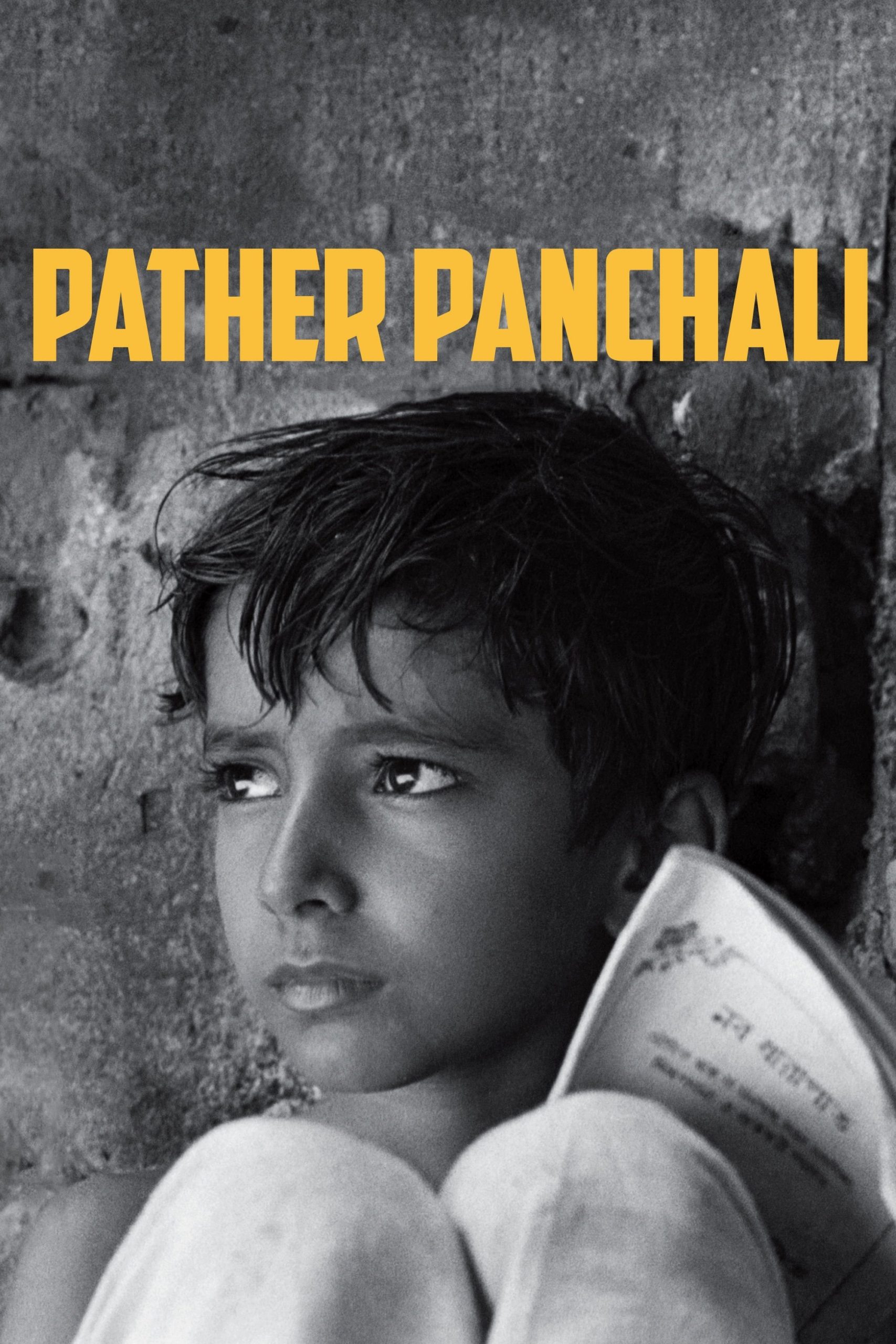
I find my mind inevitably returning to a rainy afternoon when I first encountered Pather Panchali. I was barely in my twenties, caught in that peculiar space between adolescence and adulthood, perpetually searching for stories that reflected life’s small details in ways Hollywood seldom did. I remember how the entire house seemed to hush as I watched it; the world outside fading until I was left with nothing but the flickering monochrome images of rural Bengal. This film didn’t feel distant or foreign. Instead, it was as though an old relative quietly began telling me a delicate, private story—a story not about grand heroism but the persistence of daily hope and heartbreak. Experiencing Satyajit Ray’s debut was akin to peering through a window into another world whose sorrows and fleeting joys eerily mirrored my own formative years.
What the Film Is About
If I had to distill Pather Panchali into its emotional core, it is the aching chronicle of a family’s resilience against the relentless forces of poverty, fate, and loss. At its center is Apu, a wide-eyed boy learning to navigate the rhythms of village life with his mischievous elder sister, Durga. The family’s struggle feels both intimate and mythic, their joys so fragile, their suffering vast but never melodramatic. The film doesn’t lean on overt tragedy; instead, it skillfully captures how small moments—sibling laughter, the arrival of sweets, a chance encounter with a train—become profound in the shadow of hardship.
I feel the central conflict lies not within any villain but in the ceaseless grind of want and aspiration. Apu’s father dreams beyond his station, wishing for education and dignity, while his mother bears the crushing immediacy of feeding her children and maintaining a semblance of order. The emotional journey pulls me in because every gesture and silence speaks of longing: for escape, for recognition, for the simple right to dream. To me, Ray is not just chronicling deprivation; he’s sculpting a universally resonant story of dignity amid adversity. What lingers is not just sorrow but the strange, luminous beauty that surfaces when people endure, quietly, every day.
Core Themes
The most compelling thematic thread I pull from Pather Panchali is the persistence of hope amid crushing limitations. I see this especially in the contrast between the children’s curiosity and the weary resignation of their mother. This isn’t just a story about poor villagers; it’s a meditation on endurance. The film offers viewers a window into what it means to wish for more, even when reality conspires to defeat you. Dignity, familial love, and the ache for a better life are themes that refuse to date. Even now, as so many across the globe face economic dislocation and estrangement, these themes ring fiercely true.
At the time of its release in 1955, India was sorting through the aftershocks of independence, and the world was still largely unaccustomed to such a raw, unembellished portrait of rural misery and joy coming from outside Western cinema. Ray’s decision to center the narrative on a child’s perspective felt radical—it both softened and sharpened the edges of adversity, showing us suffering not as spectacle but as lived experience. Even in today’s climate, where films often try to dazzle or distract, I find Ray’s focus on lived reality—on people, places, and feelings forgotten by the mainstream—deeply necessary. There is also a resonance with contemporary discussions of representation, agency, and the politics of looking; the way Ray gave voice to the voiceless is as vital now as then.
Symbolism & Motifs
Nature is everywhere in Pather Panchali: not decorative, but as a living, breathing presence. The lotus ponds, the swaying fields, and most memorably, the sight of the distant train—these are more than just backdrops; they are subtle characters. The train especially, to me, acts as both a literal and figurative symbol of modernity’s call, a reminder of possibilities outside the boundaries of Apu’s world. Each time it appears, it unsettles and excites—a faint promise trembling at the edge of the known.
The motif of water recurs—rain on leaves, women drawing water from a well, and the monsoon deluge that triggers disaster. Water, in my eyes, becomes a complicated force: cleansing, nurturing, and yet, when uncontrolled, the agent of loss. The glimmer of the morning sun on grass, the dust motes floating in shafts of light through the crumbling house, all add layers of texture, suggesting fragility and transience. I’ve always admired the juxtaposition of ruin and renewal: the decrepit homestead in a lush landscape, children’s laughter amid sorrow, life continuing amid decay. These natural motifs—subtle, unforced—amplify the story’s emotional power without ever overstating their presence.
Key Scenes
The Arrival of the Train: Horizons Beyond
This sequence—Apu and Durga’s breathless dash through the fields as the ground shivers beneath the oncoming train—remains one of the most exhilarating and heartbreaking cinematic moments I’ve witnessed. The children’s eyes widen as they glimpse the sleek, unfamiliar machine, a manifestation of everything promised yet just out of reach. For me, this scene encapsulates the way dreams and reality coexist: wonder and limitation caught in a single, indelible frame.
Sarbojaya and the Loss of Durga: A Mother’s Grief
The stillness of this scene, as Sarbojaya (Apu’s mother) grapples with the death of Durga, communicates an agony that words cannot reach. Her face—ravaged by sorrow and exhaustion—conveys a pain that feels elemental. I find the power here lies in Ray’s refusal to dramatize; instead, he lets time stretch as grief washes over the household, showing how loss robs even the simplest moments of their innocence. For me, this is the heartbeat of the film—a testimony to the endurance and fragility of love.
Indir Thakrun’s Quiet Exit: The Forgotten Elder
There is a quiet poetry in the tragic arc of Indir, the aging relative so often shunted aside by the family. When she dies alone by the roadside, it’s both inevitable and shattering. The indifference of her passing, and Durga’s subsequent guilt, highlight how the marginalized are doubly erased: first by poverty, then by neglect. This scene, gentle yet devastating, forces me to confront the uncomfortable truths about familial duty and societal neglect—truths that echo far beyond the film’s setting.
Common Interpretations
Critics, especially in the West, have long praised Pather Panchali for its “neo-realist” influences and artistry. There’s frequent admiration for its so-called ‘exotic’ window into rural Indian life, for its embrace of the everyday as worthy of cinematic treatment. Many emphasize the lyricism of the imagery, or the courageous depiction of poverty and hardship. It has often been received as a universal fable: a story about childhood innocence and the poetic beauty of struggle.
Yet, my own reading resists these universalizing impulses. While I recognize the film’s broad appeal, what strikes me is its precise, unsentimental gaze. Ray never fetishizes poverty; instead, he approaches the characters with humanity and specificity. It’s not the supposed “timelessness” of the story that moves me, but its deep roots in presented reality—the awareness of a changing India, the particular burdens placed on rural women, the ambiguity of progress symbolized by the train. I sometimes bristle at interpretations that treat the film as mere ethnography, because for me it’s not just about aesthetic beauty or cultural “authenticity,” but about the courage to honestly portray the messiness and contradictions of survival.
Films with Similar Themes
- Bicycle Thieves (1948) – Like Pather Panchali, this landmark of Italian Neorealism explores the dignity and despair of ordinary people facing economic adversity.
- The Spirit of the Beehive (1973) – Both films capture childhood wonder against a backdrop of rural desolation, using delicate observation rather than grand narrative.
- The 400 Blows (1959) – Truffaut’s tale of a young boy’s alienation and resilience pairs with Apu’s journey in depicting how childhood is shaped by forces beyond one’s control.
- Grave of the Fireflies (1988) – This Japanese animated film shares Pather Panchali’s unflinching yet humane focus on siblings navigating tragedy in a world indifferent to their pain.
The Film’s Relevance for Today’s Viewer
If I were to guide a contemporary audience to Pather Panchali, I’d urge patience and openness—let the film’s rhythms envelop you, its seemingly minor moments accumulate their quiet force. The more one views it, the more it reveals about the enduring struggles and silent triumphs that define human experience. Understanding its themes—resilience, love, and longing—even now, is an act of empathy. To me, embracing this film is less about nostalgia and more an invitation to reconsider what makes life, in all its difficulty, so precious.
Related Reviews
If you found value in my perspective, you might also enjoy exploring my thoughts on other cinematic landmarks such as Bicycle Thieves and The 400 Blows.
To broaden this interpretation, you may also explore how critics and audiences responded over time.
🎬 Check out today's best-selling movies on Amazon!
View Deals on Amazon