
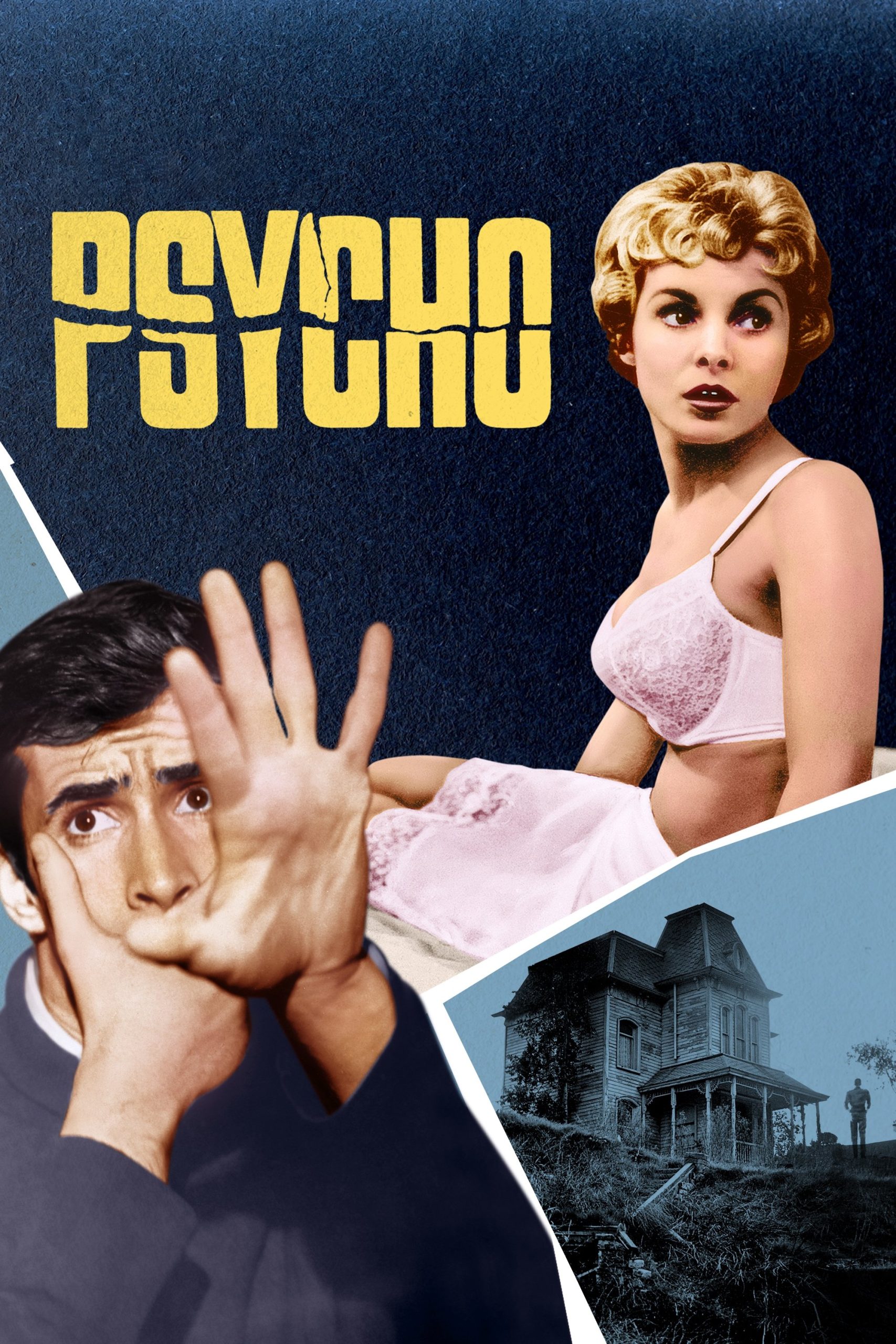
From the moment I first encountered Alfred Hitchcock’s “Psycho,” I found myself almost hypnotized—not by the infamous shower scene alone, but by the film’s ability to burrow beneath the skin and unsettle the soul. What strikes me most is how “Psycho” transforms terror into an existential riddle, using its shadows and silences as forcefully as its screams.
Behind Closed Doors: The Fatal Allure of Suppressed Desires
What lingers with me long after the credits is how the Bates Motel operates as a symbol of private shame and forbidden hunger. I’m struck by the way Hitchcock uses the motel’s isolation not merely to create suspense, but to externalize the characters’ inner exiles. Marion Crane’s decision to stop at this roadside limbo mirrors her own psychological crossroads—her theft is not just a crime, but the outward manifestation of a festering discontent that she cannot resolve in daylight.
The film’s setting becomes a physical extension of repression and secrecy. Every room is a box of withheld intentions; Norman’s parlor, filled with stuffed birds, feels like the sanctum of a man preserving fragments of forbidden curiosity. The house looming behind the motel—its gothic silhouette against a stormy sky—suggests a mind compartmentalizing trauma, each floor a layer of Norman’s divided psyche.
The Artifice of Innocence: Hitchcock’s Cinematic Sleight of Hand
One of the film’s most unsettling qualities, in my experience, is how it weaponizes our assumptions about narrative and character. Psycho dismantles the viewer’s expectation of moral clarity. We are encouraged to empathize with Marion, only for her story to be violently cut short; our allegiance is transferred, almost against our will, to Norman Bates, whose boyish awkwardness masks a churning darkness.
Hitchcock’s manipulation of perspective is surgical. The camera lingers on Marion’s anxiety, rendering her theft both thrilling and intimate. When the film pivots, following Norman as he methodically cleans the bathroom, I am forced into complicity with him, made to share the burden of his secret. Hitchcock’s framing and pacing implicate me; I become an accomplice, feeling an uneasy relief when Norman covers Marion’s tracks, even as I recoil from the horror he represents.
Mirrors, Birds, and Water: Symbolic Echoes of Fractured Identity
What elevates “Psycho” beyond mere horror, for me, is its tapestry of recurring images—mirrors, birds, and water—that echo the characters’ psychological fragmentation. Mirrors recur at moments of crisis and transition, reflecting Marion’s divided moral self and Norman’s fractured identity. I notice Hitchcock positioning mirrors to create doppelgängers, as when Marion packs in her hotel room or as Norman gazes anxiously at his own reflection, hinting at the split personalities within.
The stuffed birds leering from the parlor’s walls—owls and ravens, not songbirds—are more than morbid décor. They signal predation, entrapment, and the idea of suspended animation. Norman, a collector of dead creatures, is himself trapped in a cycle of death and denial, preserving but unable to animate what he loves. Birds are also a metaphor for Marion, who is also both predator and prey—her last name, Crane, is a sly nod to this motif.
Water, too, is a persistent element—rain falling as Marion drives into the night, the shower’s deluge both cleansing and catastrophic. The fluidity of water suggests purification but also erasure, as Marion’s life and crime are washed away in a swirl down the drain. The sound and sight of water become a kind of existential punctuation, marking pivotal moments of guilt and transformation throughout the narrative.
A Symphony of Suspense: Bernard Herrmann’s Sonic Architecture
It is impossible for me to speak about “Psycho” without invoking Bernard Herrmann’s score—a soundscape that is inseparable from the film’s texture. The shrieking strings during the shower sequence are not merely accompaniment; they are sonic violence incarnate. Herrmann’s music renders the unseen more terrifying than any gore, exploiting the audience’s anticipation and dread.
But beyond that iconic crescendo, I find Herrmann’s use of motifs and silences equally haunting. The minimalist repetitions mirror the monotony of guilt and the inescapability of fate. The score’s jagged rhythms seem to mimic the fractured state of Norman’s mind, lending the film an aural sense of instability. In quieter scenes, Herrmann’s music is a clinical, almost surgical presence, amplifying the tension of every glance and every footstep.
The Mother Problem: Gender, Power, and the Anxiety of the Family
Every time I revisit “Psycho,” I am drawn into its fraught depiction of family, gender, and control. The absent-yet-omnipresent figure of Mother looms as both victim and oppressor. Her influence is suffocating, even though she never walks the screen in the flesh. The movie’s dialogue around motherhood—possessive, idolized, and ultimately monstrous—exposes anxieties about the breakdown of traditional family structures.
Norman’s relationship to his mother is the film’s emotional core and its primary source of dread. Mother becomes a vessel for fears about the loss of autonomy, the terror of being consumed by the expectations and needs of others. For Marion, her flight is a desperate attempt to assert her independence, yet she too is pulled inexorably back by guilt and social pressure. The house, perched above the motel, is a literal and symbolic reminder of the way the past dominates the present—a structure we cannot escape, no matter how far we run.
Through its subtext on gender, “Psycho” exposes the violence latent in familial roles and the dangers of suppressing true identity. The film’s horror is not just in the murders, but in the collapse of boundaries between self and other, sanity and madness, male and female.
Voyeurism and the Cinema of Anxiety
I’ve always been fascinated by how Hitchcock implicates me, and every viewer, in the act of watching. The film is a meta-commentary on cinema itself—what it means to look, to spy, and to judge. From the peephole in Norman’s office to the lingering gaze of the camera, “Psycho” is obsessed with the ethics and dangers of spectatorship. I am made to feel both powerful and powerless, both protected and exposed, by the very act of observing the story unfold.
The notorious shower scene isn’t just a jolt of violence; it’s a meditation on vulnerability. The editing fractures time and space, denying closure and emphasizing the violation. The viewer becomes a participant in the crime, as the camera’s eye is aligned with both Marion’s terror and Norman’s invasive gaze. Hitchcock transforms the audience into voyeurs, complicit in both curiosity and cruelty.
Breaking Rules, Building Legacies: Psycho’s Cinematic Revolution
I am awed by how “Psycho” shatters the conventions of classical Hollywood cinema. By killing off its ostensible protagonist halfway through, the film destroys the narrative safety net that once defined mainstream storytelling. Suddenly, I am adrift, unable to predict who will survive or how the tale will resolve. Hitchcock’s gambit forced audiences to acknowledge that evil is not just a plot device, but a pervasive and unpredictable force.
The deliberate choice to film in black and white, despite the availability of color, grants “Psycho” a documentary-like severity. It strips away glamour, focusing my attention on contrast and detail. The film’s editing—sharp, disorienting, and relentless—prefigures the modern horror film, setting the stage for decades of psychological thrillers and slasher movies. Hitchcock’s willingness to confront taboo subjects—sexuality, mental illness, the violence of the family—marks “Psycho” as a watershed moment in cinema’s evolution.
Echoes in the Smoke: Enduring Questions and Haunted Spaces
No matter how often I return to “Psycho,” I find the film refusing easy resolution. The final scenes, with Norman swaddled in a blanket, echo with ambiguity. Is evil a matter of nurture or nature? Can the self ever be truly whole, or are we all, in some way, divided and haunted by the ghosts of our own making?
Even the film’s infamous psychiatric monologue, offering a rational explanation for Norman’s condition, feels like an afterthought—a soothing story told to calm a world that cannot bear the true depths of its own darkness. What lingers is not closure, but the sense that the shadows at the edge of the frame have merely shifted, not vanished. “Psycho” endures because it makes me question the boundaries between the ordinary and the monstrous, and because it recognizes that sometimes, the scariest place is not the house on the hill, but the mind itself.
Other Cinematic Journeys into the Abyss
- “Les Diaboliques” (1955)
- “Repulsion” (1965)
If you’re curious about how this film was originally perceived or how it compares to similar works of its era, these resources may be helpful.
🎬 Check out today's best-selling movies on Amazon!
View Deals on Amazon