
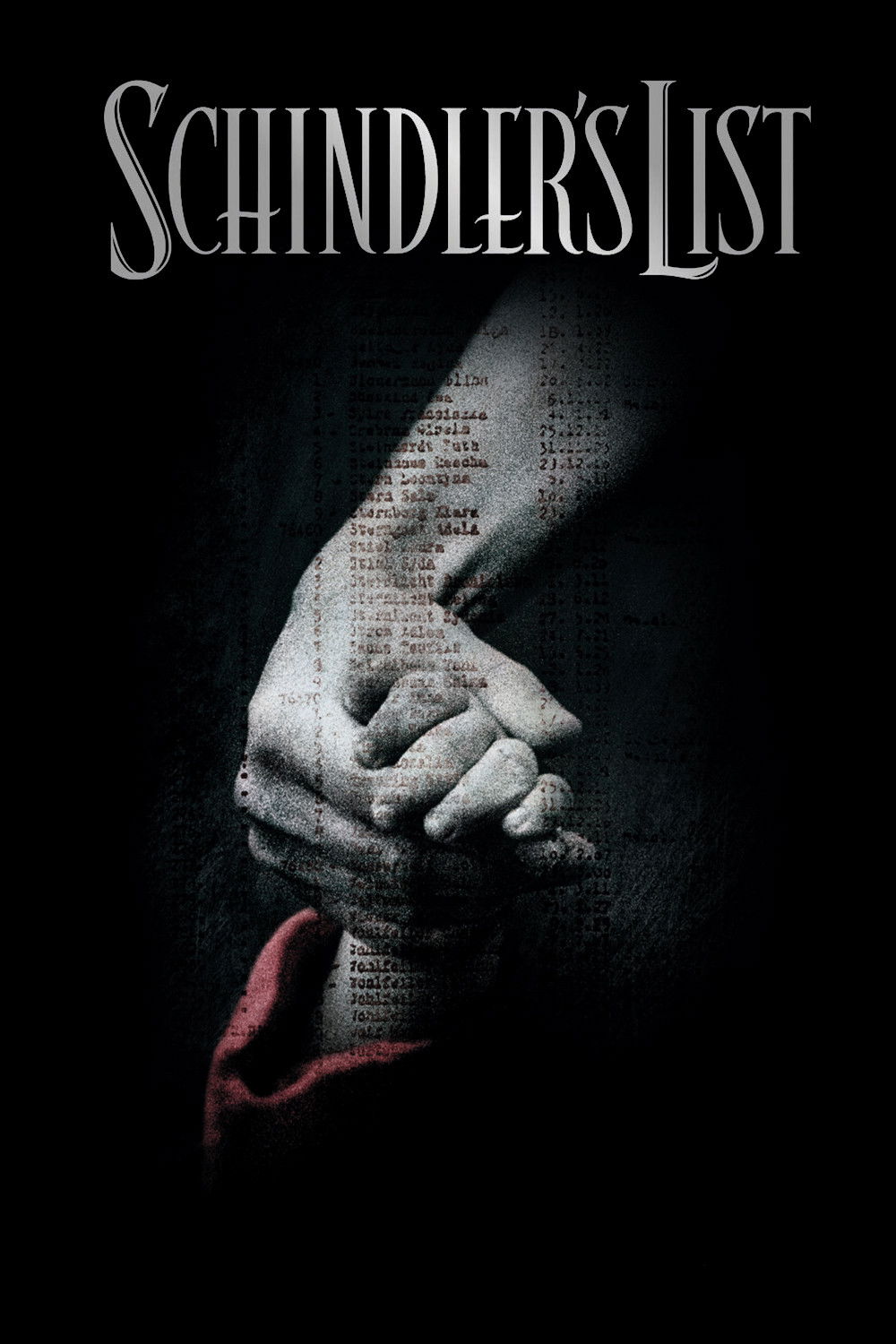
The first time I experienced “Schindler’s List,” I was left raw, unable to speak for several minutes, haunted by the film’s stark confrontation with humanity’s greatest abyss. It’s a film that persists inside me, prodding my conscience, making me question not just what I would have done in Oskar Schindler’s place, but whether I’m prepared to recognize evil when it quietly festers in my own time.
Shadows on Celluloid: The Ethos of Black-and-White
From the beginning, what struck me most about Steven Spielberg’s approach was his uncompromising decision to shoot almost the entirety of “Schindler’s List” in black-and-white. It’s not simply a nod to archival footage or a device to evoke an era; it’s a profound commentary on moral clarity and ambiguity. The absence of color becomes a visual metaphor for the stripping away of illusion, forcing both characters and viewers to confront reality in its barest, most essential form. The world of the Holocaust, as presented here, is not open to the comforting distractions of cinematic embellishment. Instead, the harsh contrasts reflect the brutal polarities of good and evil, life and death, complicity and resistance.
But the black-and-white palette also creates gradients—soft shades of gray that mirror the film’s central question: Can anyone be purely good, or irredeemably bad, in circumstances so extreme? As I observed the shifting tones and shadows, I was reminded that moral choices are rarely easy, and the greatest dilemmas often inhabit a spectrum rather than a binary.
The Alchemy of Guilt and Redemption
Oskar Schindler’s transformation is not a heroic arc as much as a study in guilt and paradoxical grace. At first blush, Schindler is opportunistic, motivated by profit and self-preservation. But as the machinery of genocide whirls around him, his gaze shifts, his affect hardens, and his priorities change with harrowing urgency. I felt as if I was witnessing a man dragged toward morality by horror, shame, and a dawning sense of responsibility; not led by innate virtue, but compelled by witnessing the suffering of those around him.
Crucial to the film’s impact is how it refuses to sanctify Schindler. Spielberg presents his flaws—his vanity, his womanizing, his initial indifference—side by side with his unlikely heroism. To me, this reflects an essential truth: redemption, when it comes, is rarely untainted. Schindler’s final emotional breakdown, famously lamenting the lives he might have saved, is as much about his sense of limits and failure as it is about triumph. His tears are not just of pride but of unyielding sorrow—a reminder that goodness is often a response to guilt rather than its antidote.
The Girl in Red: A Singular Flame in the Void
There are few cinematic images as indelible as the little girl in the red coat. Against the monochrome horror, her coat blazes with impossible clarity. For me, this moment distills the incomprehensible scale of the Holocaust into a single, individual tragedy. She is not an abstraction, not a statistic, but a person—a child—rendered unforgettable through a single splash of color.
This artistic choice accomplishes several things at once. It is a beacon for Schindler’s conscience, a pivot around which his own evolution turns. It’s also a bold reminder that genocide is not just mass death, but the erasure of singular lives, each with a name, a story, a family. Spielberg’s restraint in employing color elsewhere magnifies this one instance, making it not just a narrative device but a moral imperative: Do not look away; do not forget.
Mechanisms of Dehumanization: Bureaucracy and Banality
What unsettles me most deeply when reflecting on “Schindler’s List” is not just the violence, but its systematic efficiency. The film lingers on the cold, methodical processes that enabled genocide: the lists, the paperwork, the rubber stamps, the orderly lines to the showers. Here, Spielberg exposes the banality of evil—the way atrocities are made possible not only by monstrous individuals but by the machinery of bureaucracy and the everyday compliance of ordinary people.
The infamous character of Amon Göth, portrayed with chilling intensity by Ralph Fiennes, is a study in sadism, but his power is grounded in the structures that enable him. He is terrifying, yes, but so too are the clerks and guards whose unthinking obedience turns cruelty into routine. The greatest horror, for me, is recognizing how evil can become mundane—how systems can desensitize us until the unthinkable becomes normalized.
Witnessing and Survival: The Role of Testimony
I can’t separate my experience of “Schindler’s List” from the knowledge that it was based on real accounts. The film’s structure—grounded in the research of Thomas Keneally and further supported by survivor testimony—imbues it with a painful authenticity. Spielberg himself spoke of the obligation to bear witness, to transform cinematic artifice into a vessel for memory and warning.
The character of Itzhak Stern, beautifully portrayed by Ben Kingsley, embodies this ethic of witnessing. Through Stern, I saw not only the suffering of the many but the quiet heroism of those who risked everything to preserve life, history, and dignity. The power of the list—both as a bureaucratic instrument and as a symbol of survival—is one of the film’s most potent metaphors: to be on the list is to reclaim one’s humanity, to snatch a name from the void. Every signature, every forged document, becomes an act of rebellion against annihilation.
Music, Silence, and the Weight of Absence
John Williams’ score for “Schindler’s List” is haunting in its restraint. The mournful violin, played by Itzhak Perlman, weaves through the film like a lament, refusing easy uplift. I’m always struck by Spielberg’s careful use of silence, too—the unspeakable spaces between notes, the moments when the only sound is the shuffling of feet or the hum of machinery. In these silences, I find the heaviest weight: the absence left by millions of voices extinguished.
The music’s melancholy does not manipulate; it mourns. It calls attention to the humanity of those lost, and in moments—such as the children’s choir over the closing credits—reminds me that the true cost of atrocity is not just in numbers but in songs left unsung, futures never lived.
Cinema as Responsibility: The Ethics of Representation
Reflecting on “Schindler’s List,” I grapple with the ethics of depicting such overwhelming suffering. Spielberg walks a precarious line, avoiding exploitation even as he forces viewers to bear witness. I believe this film’s enduring power lies in its refusal to offer comfort or catharsis. There are no tidy resolutions, no narrative redemption that can undo what has been done.
Many have debated whether it’s possible—or appropriate—to represent the Holocaust through fiction. For me, “Schindler’s List” succeeds because it is self-aware, always pointing beyond its own frames. The now-famous ending, when real survivors and their descendants lay stones on Schindler’s grave, collapses the boundary between cinema and reality. The film becomes not just a story, but an act of remembrance and a call to moral accountability.
Afterimages: The Film’s Lingering Moral Challenge
Days, weeks, even years after viewing “Schindler’s List,” I still find myself haunted by its afterimages. It’s not the violence itself that stays with me, but the questions it provokes. How do I respond to injustice in my own world? When do I speak up? When do I stay silent?
The film’s enduring relevance is, in large part, due to its refusal to offer easy answers. It challenges me to see the world through the eyes of the oppressed, to recognize the perils of apathy, and to accept that the price of conscience is often paid in anguish and uncertainty. In the end, the greatest tribute to the lives memorialized by “Schindler’s List” may be the uncomfortable, necessary self-examination it inspires in every viewer.
If This Resonated: Two Films to Continue the Journey
- The Pianist (2002)
- Night and Fog (1956)
If you’re curious about how this film was originally perceived or how it compares to similar works of its era, these resources may be helpful.
🎬 Check out today's best-selling movies on Amazon!
View Deals on Amazon