
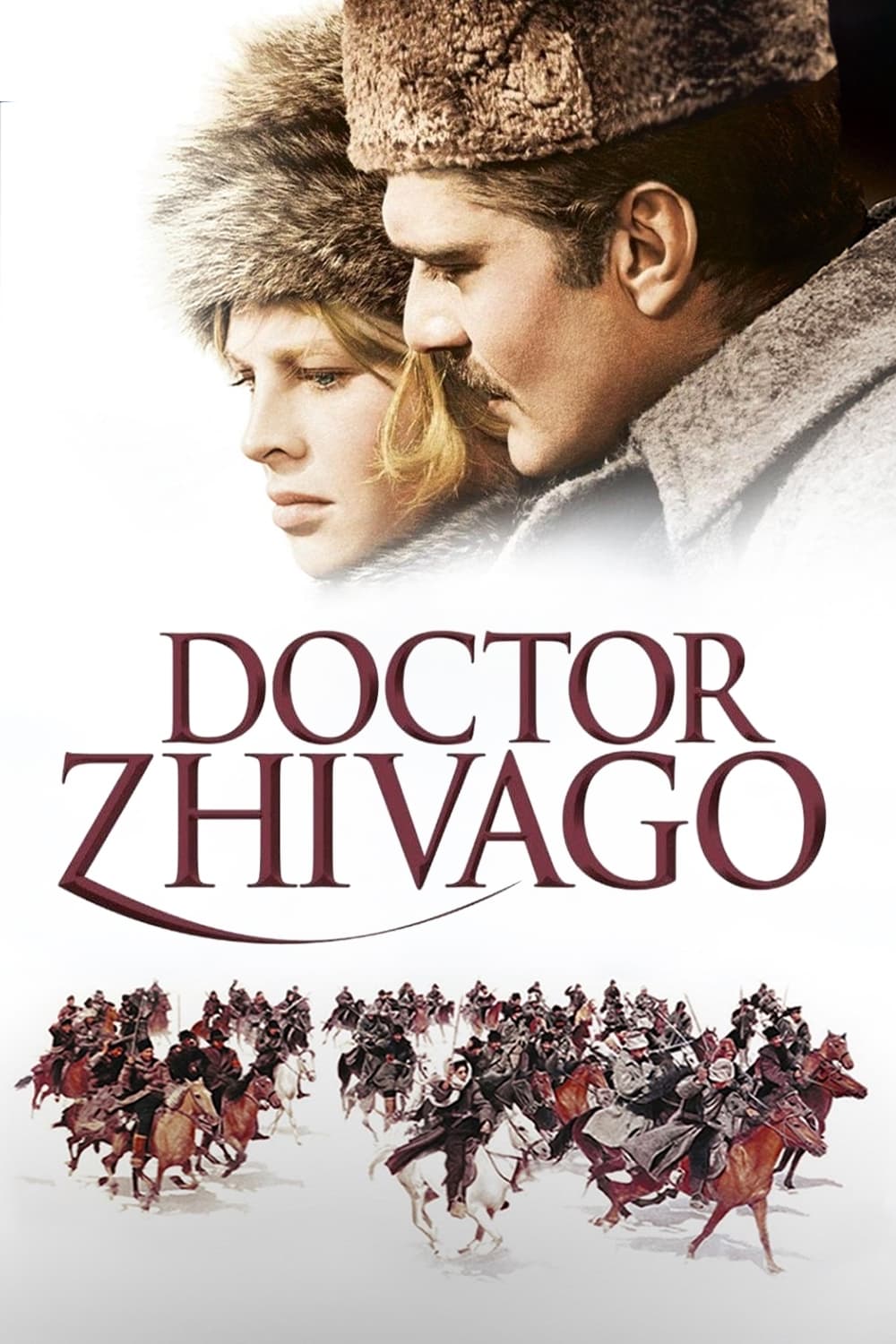
The first time I watched “Doctor Zhivago,” it was snowing outside my apartment window—light, gentle, almost silent. The quiet felt apt. There is a wintry hush at the soul of this film, something I recognized instantly: a collision of beauty and heartbreak, where life moves onward despite private devastations. What fascinates me most is not the epic scale, though its sweep is undeniable, but the intimacy of its melancholy. I find myself, with every viewing, troubled and amazed by the way hope glimmers like candlelight within the vast, relentless storm of history. It left me convinced that stories of survival are always, in some sense, love stories—shaped by war, but wound tight around the fragile, unyielding heart.
What the Film Is About
For me, “Doctor Zhivago” is not merely a chronicle of a turbulent era, but a meditation on the ways personal longing and political upheaval collide. The central journey is Yuri Zhivago’s—poet, lover, reluctant participant in revolution—whose fate is intertwined with Lara, an equally tragic and luminous figure. Through their eyes, I witness the erosion of a world: families consumed by ideological fervor, seasons devoured by war. Yet the deepest conflict is internal—a contest between the compulsion to endure and the irrepressible yearning to love.
What resonates most deeply is the film’s insistence that individual dreams persist even as society is upended. There’s a quiet defiance in how Zhivago pursues poetry, tenderness, fleeting domestic tranquility. Leaning towards the lyrical rather than the didactic, the narrative asks: Can private happiness survive the tidal forces of history? In my experience, this is the core of the film’s emotional charge. Zhivago and Lara’s romance is neither accident nor rebellion; it is a statement about what must be preserved when the world is burning.
Ultimately, I see “Doctor Zhivago” as Tolstoyan in its ambition but Chekhovian in spirit—a story not so much about political camps, but battered souls seeking grace amid catastrophe. The film’s true subject, as I perceive it, is the persistent, stubborn beauty of human connection. Through Zhivago’s eyes, I see both the folly and the necessity of loving—despite the odds.
Core Themes
Several themes pulse through the icy veins of “Doctor Zhivago.” Foremost is the tension between individual autonomy and the collective will. The Russian Revolution is not simply background; it is antagonist, reshaping destinies, breaking families, demanding certainties where there can be none. I cannot help but recognize the film’s compassion for those caught in the gears of history—my sympathies are drawn to the powerless, the hesitant, and the brave acts of small resistance.
Another theme I dwell on, long after the credits, is the persistence of art and memory. Zhivago’s poetry (and by extension, the film’s own opulent visuals) acts like a bulwark against erasure. The romance between Zhivago and Lara is painted not in lurid brushstrokes, but in moments salvaged from chaos. Their love exists in a suspended space: half-hope, half-requiem. Even as the revolution promises new futures, their relationship mourns lost possibilities—a dynamic as relevant today as it was in 1965, when fears of repression and the longing for authenticity gripped audiences worldwide.
When I consider the era of its release, I see a mid-1960s West wrestling with authority, modernity, and the boundaries of the self. For contemporary viewers, the film becomes a living document of the way ordinary people—then and now—must negotiate identity against social edicts. “Doctor Zhivago” is never vague about the cost: the sacrifice of private desires for the demands of the collective haunts every frame. I am reminded, watching it again in our own fractured world, how necessary it is to tend the fire of individuality.
Symbolism & Motifs
Few films employ visual metaphor as elegantly as “Doctor Zhivago.” I am repeatedly drawn to the recurring image of the harsh Russian winter—snow blanketing the landscape, muting sound, rendering the familiar strange and isolating. The endless fields of white become both sanctuary and prison. To me, snow is both a soft coverlet for stolen moments and a chilling force that threatens to extinguish all warmth.
Then there’s the motif of the train: a thundering harbinger of change, carrying Zhivago, Lara, and countless others toward uncertain futures. The train is not simply transit—within my reading, it represents the inexorable momentum of History, indifferent to the people it uproots. Household objects, like the balalaika or Zhivago’s worn notebook, become charged with poignancy, tokens of the fragile world they once knew. Throughout, the film returns to motifs of windows, thresholds—always hinting that what is desired lies just out of reach, always separated by glass or memory.
In each viewing, I notice anew how director David Lean uses contrasts in light and shadow, warmth and frigidity to map the characters’ interior states. Interiors are golden but besieged; exteriors, though majestic, are inhospitable. These visual choices aren’t ornate gestures—they reinforce what the script suggests: Love and art are the only hearths left standing in the storm.
Key Scenes
Snowbound Sanctuary: Zhivago and Lara’s Icy Asylum
One scene that lingers with me is the lovers’ retreat to the abandoned, frost-rimed country house. Every timber sparkles with frost, and yet inside, the smallest fire burns with desperate warmth. Here, love is not idealized but almost tragic in its fragility. Their brief sanctuary, carved against a world gone mad, seems more precious because it is doomed. I see in this moment both the ecstasy and the futility of insisting on beauty amid ruin.
The Tumult of Revolution: The March on the Streets
There’s a certain sweep to the film’s depiction of revolution—the early march where Zhivago walks among the chanting crowds. The energy starts as hopeful, turns violent, and ends in blood and confusion. What I find essential here is not the spectacle, but the personal disequilibrium. Zhivago is swept up, less by politics than by a sense of fate pressing down on every choice. In this scene, the revolution is not merely history; it is a force that rushes through and remakes individual lives. I recall my own sense of being caught in waves much larger than myself, and Lean translates this universal anxiety with devastating precision.
The Parting: Zhivago Sees Lara for the Last Time
Late in the film, after so many false starts and shattered reunions, Zhivago hopelessly pursues a glimpse of Lara across a crowded street. The whole saga contracts to that single, haunting instant where love is glimpsed, nearly within reach, yet lost forever. Amid the grand historical sprawl, it is this tiny, aching pause—full of what might have been—that I find most revealing. The film’s thesis on history and fate is distilled here: Our handfuls of happiness are ephemeral but immeasurably important.
Common Interpretations
Critics often view “Doctor Zhivago” as a lush melodrama, a showcase for Lean’s epic style and Freddie Young’s sweeping cinematography. The film has been described, not unfairly, as a lament for a lost world, a conservative nostalgia piece that focuses overly on romance and avoids deeper political critique. Some find its beauty self-indulgent, its narrative slow, its historical conscience muted. When I first encountered these readings, they gave me pause—they capture something real about the film’s distance from the raw chaos of revolution.
However, my reaction diverges from the critical mainstream. Where some see sentimentality, I see a daring insistence on the primacy of lived experience over ideology. The film is not uninterested in politics; it is intensely interested in their consequences for real bodies and hearts. To me, this is not evasion, but an honest reckoning with how most of us encounter history: not as abstractions, but as disruptions in the search for meaning, for love, for continuity. The fact that Zhivago’s poetry outlasts the noise of ideology seems quietly, subversively hopeful. I don’t view the film as apolitical, but as a meditation on the cost of survival, and the courage it takes to remain human in the face of history’s bludgeoning.
Films with Similar Themes
- War and Peace (1966): Both films explore individuals swept along by history’s tides, set against the Russian epochal backdrop, blending romance with war’s brutality and the slow, sometimes tragic discovery of personal values.
- The English Patient (1996): The collision of private love and public catastrophe echoes throughout—here as in “Zhivago,” characters strive to preserve intimacy amid war’s devastation.
- Gone with the Wind (1939): The erosion of a way of life by historical convulsion and the bittersweet tenacity of personal survival connects it to Lean’s epic vision.
- Cold War (2018): Though more restrained, it shares “Zhivago’s” concern with the impossibility of love surviving the fractures and ideologies of 20th-century Europe.
In Closing: Revisiting Lean’s Winter Kingdom
“Doctor Zhivago” invites viewers into a world simultaneously frozen and on fire, where private emotion strains against the immense canvas of revolution. For modern audiences, I believe the film rewards patience and vulnerability—its heart beats most strongly in scenes of small domestic ritual, hurried exchanges, shimmering loss. The value in understanding its themes lies in how it reminds us that every convulsion of history is built out of individual hopes and despairs. The snow will fall, realms will vanish, but the traces of poetry and connection endure.
Related Reviews
If you found value in my perspective, you might also enjoy exploring my thoughts on other cinematic landmarks such as War and Peace (1966) and The English Patient (1996).
To broaden this interpretation, you may also explore how critics and audiences responded over time.
🎬 Check out today's best-selling movies on Amazon!
View Deals on Amazon