
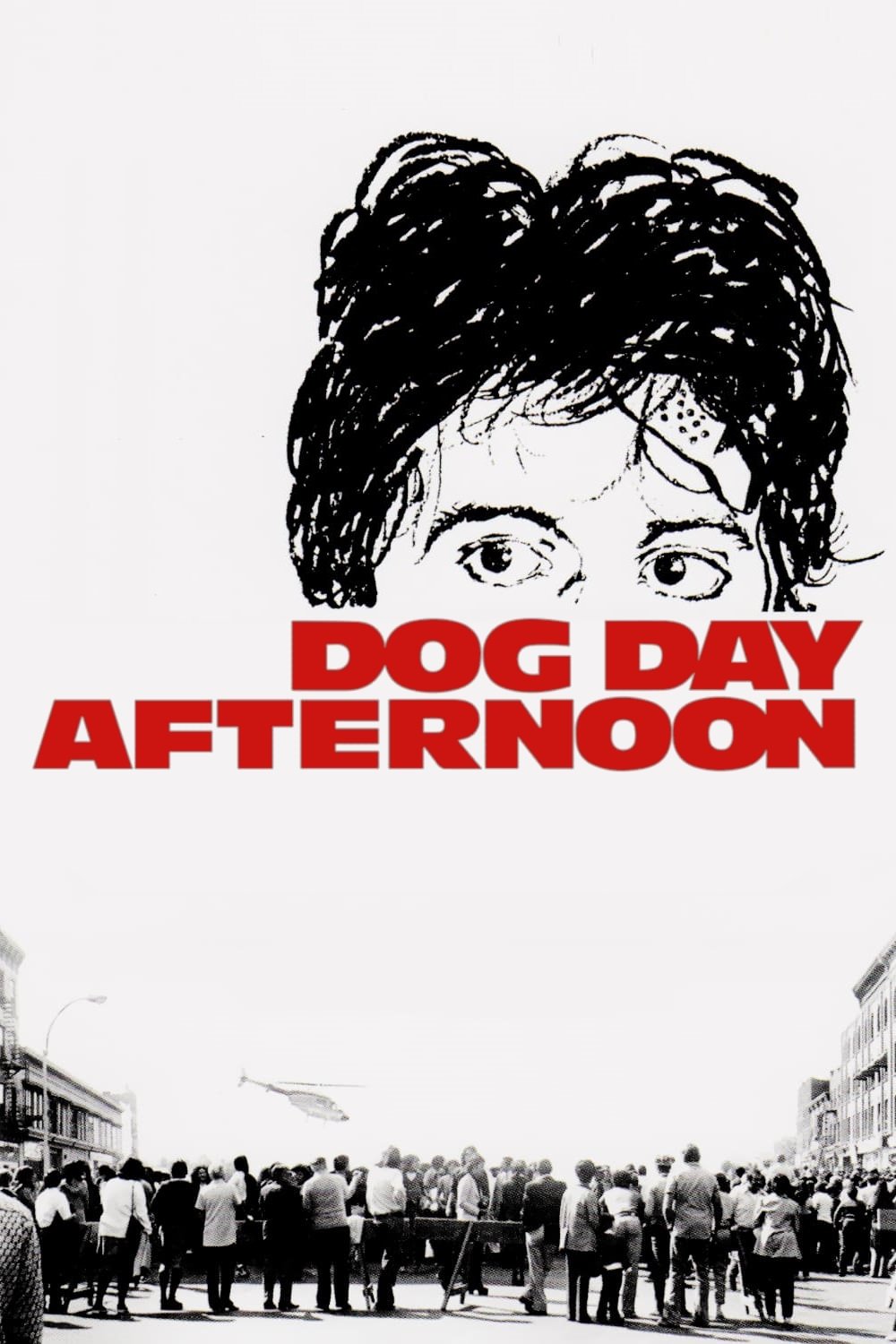
One sticky August afternoon, I found myself alone in a half-lit apartment, the city churning outside my window, the air vibrating with latent tension. I recall that sensation every time I watch “Dog Day Afternoon.” The film catches me in those unsettled moments—when the world turns strangely quiet, every sound feels razor-sharp, and the chaos lies just beneath an ordinary surface. This movie isn’t just a crime story to me. It’s a heatwave in human form—messy, delirious, unpredictable—surging with the nervous energy I associate with New York, with crime, with people grasping for something just out of reach. Every revisit reminds me why this cinematic fever dream continues to burrow under my skin.
What the Film Is About
At its rawest, “Dog Day Afternoon” is a chronicle of desperation. The surface narrative—a bank robbery gone wrong—unfurls into an emotional siege that traps not just the hostages, but every onlooker, cop, and even the would-be thieves. There is no master plan here, just impulsive, sweating confusion. What interests me most is how this confusion draws out the real conflict: not between criminals and police, but between individuals and the faceless forces around them—systems, spectators, and even themselves.
Sonny, played with an excruciating vulnerability by Al Pacino, drags us through the fever dream of someone boxed in by circumstance, love, and the expectations of society. His journey is not about success; it’s about the search for some sliver of agency in a system that’s indifferent at best and hostile at worst. The emotional whiplash of the film isn’t merely a product of its real-time structure or frenetic energy; it’s a testament to how public spectacle can strip a person bare, turning private motivations into public tragedy. I see “Dog Day Afternoon” as a siege on the self, where the central question is how much of oneself remains after being battered by public judgment and institutional pressure.
Core Themes
Identity, powerlessness, and spectacle—these themes burn at the heart of the film. Sonny’s sense of self is never stable, and watching him convulse between bravado and embarrassment, I am reminded of how fragile identity becomes under scrutiny. The choices he makes (robbing a bank to pay for his partner’s gender affirmation surgery) put him at odds with almost every institution represented: the police, the media, and cultural expectations about normalcy and morality. The movie unspools at the crossroads between personal truth and public performance.
This theme was blindingly relevant in 1975, as America struggled with the aftermath of Watergate, post-Vietnam disillusionment, and the rising visibility of LGBTQ+ issues. The sense that ordinary people were being swamped by massive institutional forces, forced into performances and confessions not of their own choosing, is tangible throughout. Today, this resonates just as strongly. I see echoes in our age of social media, where private lives are routinely blasted into the public square, and tragic spectacle plays out as viral entertainment. “Dog Day Afternoon” never loses its bite because the conflicts it stages remain unsettled in our world.
Symbolism & Motifs
One recurring motif that lingers with me is the oppressive heat—literally the “dog day” of the title. The relentless sun, sweat-soaked shirts, and sticky, fraying tempers serve as outward signs of internal combustion. Heat, here, isn’t just weather. It’s the boiling point of patience, the pressure cooker of urban life, and the fever of rebellion. Every glistening brow signals someone seconds away from breaking.
The bank itself morphs in my mind from a backdrop to a claustrophobic stage. As soon as the would-be robbers fail, the building ceases to be a place of commerce and transforms into a microcosm of urban society—corridors squeezed by fear, rooms overrun by negotiation, and glass walls separating spectacle from audience. The oscillation between inside and outside—the crowd’s chants, the snipers on the rooftops—highlights the motif of public versus private crisis. We see identities unravel in the glare of cameras and bulletproof vests.
Television and media presence is every bit as invasive as the armed police. To me, their cameras aren’t vessels for truth, but prisms that refract and distort. Every time a camera pans to Sonny, I sense his humanity thinning out, replaced by the empty calories of spectacle. This motif—media as both validator and executioner—cements public perception as a force even more relentless than the NYPD.
Key Scenes
“Attica! Attica!”—A Moment of Catharsis
I cannot shake the scene where Sonny explodes outside the bank, riling up the assembled crowd with cries of “Attica!” The reference, raw and immediate, evokes the infamous 1971 prison riot, conjuring up images of state violence and societal neglect. This is more than a rallying cry; it’s a desperate plea to be seen as more than a villain. For a few electrifying moments, Sonny channels the rage and disillusionment of an entire city, reframing his failed robbery as an act of rebellion. But the roar is fleeting, a reminder that solidarity quickly withers when the spectacle subsides.
The Phone Call—Love and Distance
Few moments in 1970s cinema ache with such awkward tenderness as Sonny’s phone call with Leon, his transgender partner. This scene carves the film wide open. The frantic, pained confession on both sides exposes every raw nerve; for a moment, the chaos recedes, and we’re left with the intimate wounds that drove Sonny into this disaster. It’s not a declaration of love so much as a confession of impossible longing. This exchange, for me, is the emotional heart of the film, revealing not just the stakes, but the terrible cost of survival in a world that refuses to accept difference.
Final Betrayal—The Illusion of Control
As the tense, chaotic standoff ends in betrayal and violence at the airport, the truth crystallizes: Sonny is not the architect of his fate, but merely another pawn. In those last moments, trust dissipates, and the machinery of the system reclaims ownership. I feel a wave of inevitability—Sonny’s dreams, his performance, his love, all ground down to nothing by a force that never needed to raise its voice. The abruptness of this finale leaves me breathless every time, less a resolution than a door slamming shut on possibility.
Common Interpretations
Critics often view “Dog Day Afternoon” through the lens of social realism and anti-establishment critique. Many focus on its prescient representation of LGBTQ+ visibility, the failures of law enforcement, or its meticulous recreation of the urban crime drama. These readings are persuasive—I’ve read no shortage of analyses that hail the film’s subversive rewriting of the bank heist formula and its empathetic take on “queer” cinema.
Yet, what connects most profoundly with me is not simply the criminal as anti-hero, or the subversion of genre convention, but the sustained sense of helplessness and exposure. For all its moments of rebellion, the film bleeds resignation. Sonny is less a symbol of revolt, and more a casualty of spectacle culture—caught in a system that forces people to turn their heartbreak into theater. The crowd may cheer “Attica!” but they vanish when the moment is over. I see the film not as a triumphant outcry for visibility, but as a haunting reminder of how quickly real struggles are swallowed by public consumption and forgotten in the news cycle.
Films with Similar Themes
- Network (1976) – Explores media spectacle and the commodification of private pain for public consumption, paralleling the intrusive press coverage in “Dog Day Afternoon.”
- Serpico (1973) – Another Pacino turn, examining the lone individual versus corrupt systems, mirroring Sonny’s battle against institutional authority and moral compromise.
- One Flew Over the Cuckoo’s Nest (1975) – Confronts themes of powerlessness and rebellion against dehumanizing institutions, echoing the epic struggle for autonomy seen in Lumet’s film.
- Boys Don’t Cry (1999) – Centers LGBTQ+ identity and violence against difference, building on the emotional urgency and outsider perspective at the core of “Dog Day Afternoon.”
Meditations as the Heat Lingers
For contemporary viewers, I recommend approaching “Dog Day Afternoon” not as an artifact, but as a living, breathing thing—still hot, still restless. The specifics—the fashions, the fumbles, the stunning Pacino performance—may belong to another era, but the film’s core questions about identity, public scrutiny, and the price paid for fleeting agency remain volatile and new. Bringing a modern lens to it, I am convinced the experience deepens. Understanding its themes is not just a history lesson; it’s a confrontation with our own world’s unresolved drama—one where spectacle still threatens to overwhelm reality, and the soul’s rebellion simmers, sweaty and relentless, inside every headline.
Related Reviews
If you found value in my perspective, you might also enjoy exploring my thoughts on other cinematic landmarks such as Network and One Flew Over the Cuckoo’s Nest.
To broaden this interpretation, you may also explore how critics and audiences responded over time.
🎬 Check out today's best-selling movies on Amazon!
View Deals on Amazon