
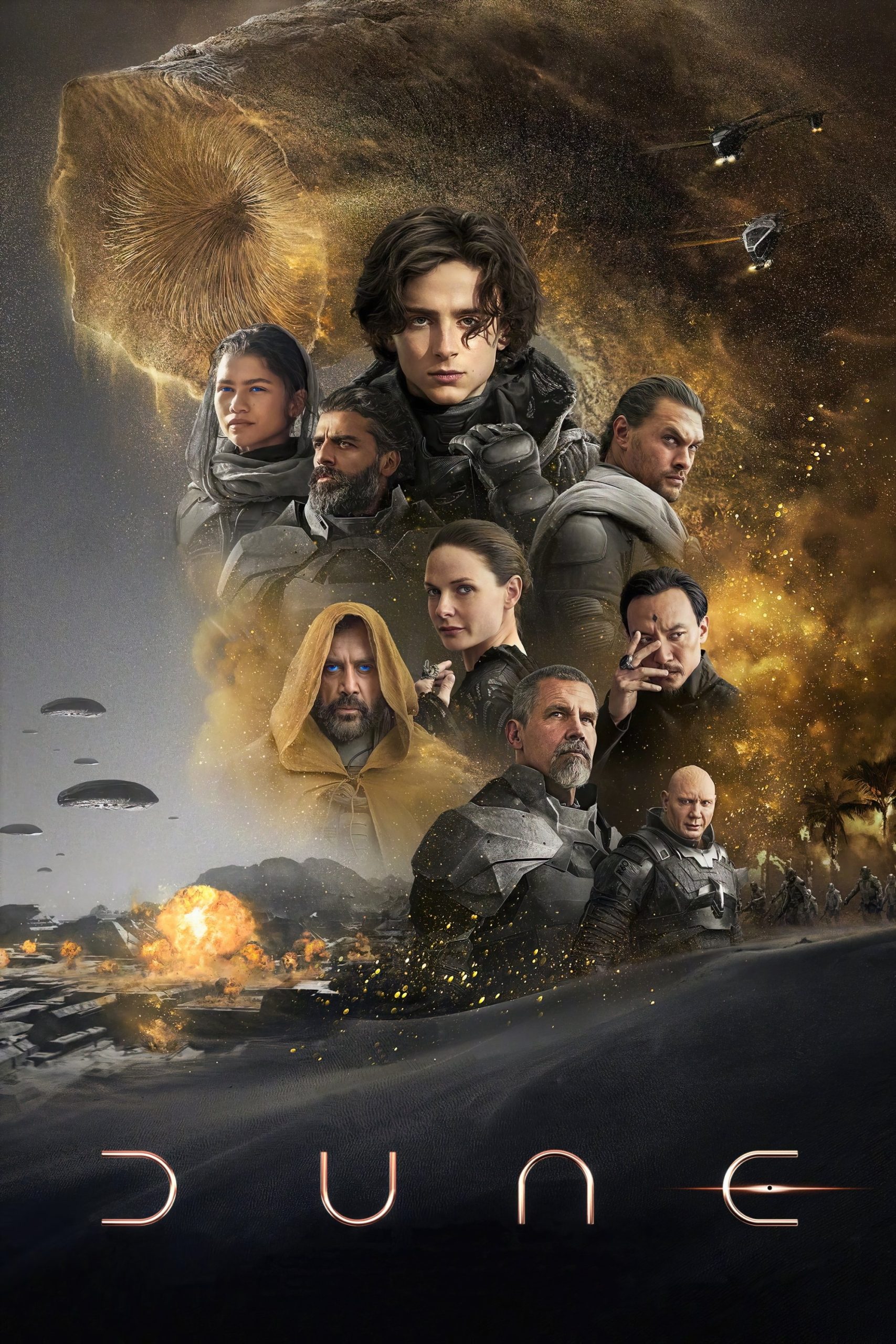
It might seem out of character, given my lifelong affection for slow-burn cinema and psychological drama, but I found myself obsessively rewatching Denis Villeneuve’s 2021 adaptation of Dune long after its desert sand had settled in my memory. My fascination began not with a love of epic science fiction, but because, in the hush of its monumental visuals and the weight of its silences, I recognized a deeply human parable about destiny, power, and ecology—one that echoed the same disquiet I feel in the face of seismic change. The film is uniquely haunting, its vastness not a mere spectacle, but a kind of existential test. In unpacking Dune, I’m not just grappling with Arrakis or Paul Atreides, but that anxious terrain that exists when inherited patterns and looming futures collide.
What the Film Is About
At its beating heart, Dune is the cinematic meditation on a young man, Paul Atreides, thrust prematurely into conflict with a universe that expects him to both submit and rebel. For me, what’s most arresting is how personal and private this journey feels even as it’s projected against interplanetary stakes. The film’s narrative tension is seeded in the impossible choices Paul must make—not simply for personal survival, but as an inheritor and potential disruptor of power systems so entrenched they feel geological. The core struggle is not good versus evil, but the paralysis and promise of agency in a hostile, ever-shifting world.
Villeneuve’s approach sidesteps the typical hero’s journey. There is a pervasive sense of foreboding and uncertainty—a gnawing awareness that prophecy, duty, and family legacy are both a compass and a shackle. As I see it, the film is less about the triumph of the individual and more about the tragedy, and sometimes terror, of possible destinies. The emotional journey is defined by loss, self-questioning, and those moments where silence says more than action ever could. What emerges is not superficial spectacle, but rather a meditation on adaptability, sacrifice, and the unrelenting cost of change.
Core Themes
The tapestry of Dune is woven from the threads of power, identity, colonialism, ecology, and spiritual uncertainty. What compels me about these themes is how their relevance seems to intensify with each passing year. The struggle for control of Arrakis, the planet of “spice,” is one of colonial exploitation—resource extraction at the expense of indigenous culture. This dynamic resonates painfully with modern crises: environmental destruction, the migration of displaced peoples, and the way imperial forces carve up futures with bureaucratic indifference.
On a more intimate level, identity is refracted through the prism of prophecy and manipulation. Paul Atreides is at once the architect and the subject of his fate, ensnared in both the expectations of his lineage and the mental conditioning of the Bene Gesserit order. I find Villeneuve’s use of prophecy particularly sobering—not as the promise of greatness, but as a source of psychic dread. Who are we when every choice feels predetermined by history, politics, or biology? This was an especially poignant theme in 2021, as the world reeled from pandemic uncertainties, leadership failures, and renewed questions about what “progress” really means.
Lastly, the environmental anxieties running through Dune are inescapable. The desert is not just a setting but a character—its harshness both a crucible and a judge. As I watched, I couldn’t help but reflect on how stewardship of the natural world remains dangerously undervalued, and how, like the spice, our planet’s resources are finite and fiercely contested.
Symbolism & Motifs
The film is an almost overwhelming feast of recurring imagery, but none more potent to me than sand. It’s not simply a backdrop; the sand of Arrakis is constantly shifting, erasing footprints and reminding us of the transience of legacy and the futility of domination. Each gust of wind that obliterates a carefully laid plan visually articulates the film’s warning: control is always temporary, and arrogance against nature is inevitably punished.
Costumes and architecture serve as subtle but insistent motifs. The stark contrast between the somber, monk-like garb of the Atreides household and the flamboyant decadence of House Harkonnen signals, without need for words, the underlying moral chasm between different visions of power. Even the technology—ornithopters mimicking the delicate, trembling flight of insects—communicates the precarious balance between adaptation and intrusion.
And then there’s the water motif: from Paul’s dreams of oceanic Caladan to the Fremen’s hoarding of moisture, water becomes a symbol both of nostalgia and of potential freedom. Its scarcity focuses the stakes not just on survival, but on longing, memory, and the value of what is shared versus what is hoarded. I see in these signs a deeply ambivalent hope—the possibility of renewal, if only the lessons of humility are learned.
Key Scenes
The Box of Pain: A Test of Humanity
No scene encapsulates Villeneuve’s handling of inner terror and resolve like Paul’s confrontation with the Reverend Mother and her ominous “Gom Jabbar” test. As Paul’s hand burns unseen within the box, the true drama unfolds on his face—fear, calculation, the willingness (or unwillingness) to endure unbearable pain for a higher cause. To me, this moment is the keystone of the film’s argument about what it means to be human: not the absence of fear, but the refusal to act from impulse or self-preservation alone. The box is not a test of physical endurance, but of the capacity to transcend immediate suffering in order to serve something larger.
If You Want the Desert, Take It
The ambush on the Atreides by the Harkonnen forces—the moment when Dune shifts from political chess game to existential struggle—is rendered with brutal efficiency. What haunts me isn’t the spectacle of explosions or betrayal, but the sense of inevitability Villeneuve creates: empires fall not in one violent stroke, but from a thousand preceding acts of hubris and oversight. The chaos, as Paul and his mother flee into the desert, is undercut by a near-ritualized quiet, as if the destruction was always an ancient script finally being read aloud. This is where the film’s meditation on fate and resistance truly sinks in.
The Duel in the Deep Desert
Paul’s confrontation with Jamis, culminating in his first deliberate act of lethal violence, is staged not as a triumph but a trauma. In forcing Paul to kill to be accepted by the Fremen, the film’s supposed prophecy-bearer is rendered painfully mortal, aware that every victory is also an irreversible loss of innocence. What matters here isn’t just the outcome, but the tremor in Paul’s expression—the realization that leadership has an unavoidable, cyclical cost. This duel is less a coronation than a warning about the price of “messiahhood.”
Common Interpretations
Critics frequently describe Dune as a lavish space opera—a grandiose but faithful adaptation that finally does justice to Herbert’s world-building. They see it as a triumph of atmosphere, worldcraft, and political intrigue, with particular praise for Villeneuve’s ability to render the unfilmable. There’s an enthusiastic consensus around its visual majesty and the cerebral pacing, as though restraint itself is a special effect.
Yet, I have always felt that such readings underestimate the film’s emotional core. Villeneuve’s real subversion is in how he untethers spectacle from catharsis. The narrative isn’t about achieving greatness, but enduring ambiguity; not about rousing battles, but about what remains after the storm. That quiet devastation is, for me, the most daring thing about Dune. Where some see distance or coldness, I see an honest grappling with destiny that refuses to flatter either the audience or its protagonist.
Films with Similar Themes
- Blade Runner 2049 – Both films, directed by Villeneuve, explore artificial and inherited destinies. They challenge the boundaries of humanity and what it means to choose one’s path within oppressive systems.
- Lawrence of Arabia – David Lean’s epic also centers on the outsider’s relationship to desert culture, probing the costs of heroism and the dangers of imposing foreign power structures onto indigenous lands.
- Children of Men – Alfonso Cuarón’s dystopian vision resonates through its focus on hope persisting in barren worlds, as well as through its depiction of leadership emerging unexpectedly from private suffering.
- Apocalypse Now – Francis Ford Coppola’s war epic mirrors Dune’s journey into a primal, lawless interior—substituting the jungle for sand—but maintaining the same sense of inevitable, corrosive transformation as its protagonist is subsumed by fate.
Conclusion
Watching Dune today means more than tracing Paul’s ascent; it means interrogating our own relationship to power, prophecy, and stewardship. Its haunting silences and relentless vastness are no mere set dressing, but an invitation to reflect on how we, too, stand at the edge of old certainties and tenuous possibilities. For modern viewers, bringing an awareness of these underlying themes sharpens the film’s relevance, making it not only a feast for the eyes but a challenge to our own imaginations and assumptions. Understanding Dune’s anxious meditation on change gives us a richer, more grounded experience—one that endures long after the credits.
Related Reviews
If you found value in my perspective, you might also enjoy exploring my thoughts on other cinematic landmarks such as Blade Runner 2049 and Lawrence of Arabia.
To broaden this interpretation, you may also explore how critics and audiences responded over time.
🎬 Check out today's best-selling movies on Amazon!
View Deals on Amazon