
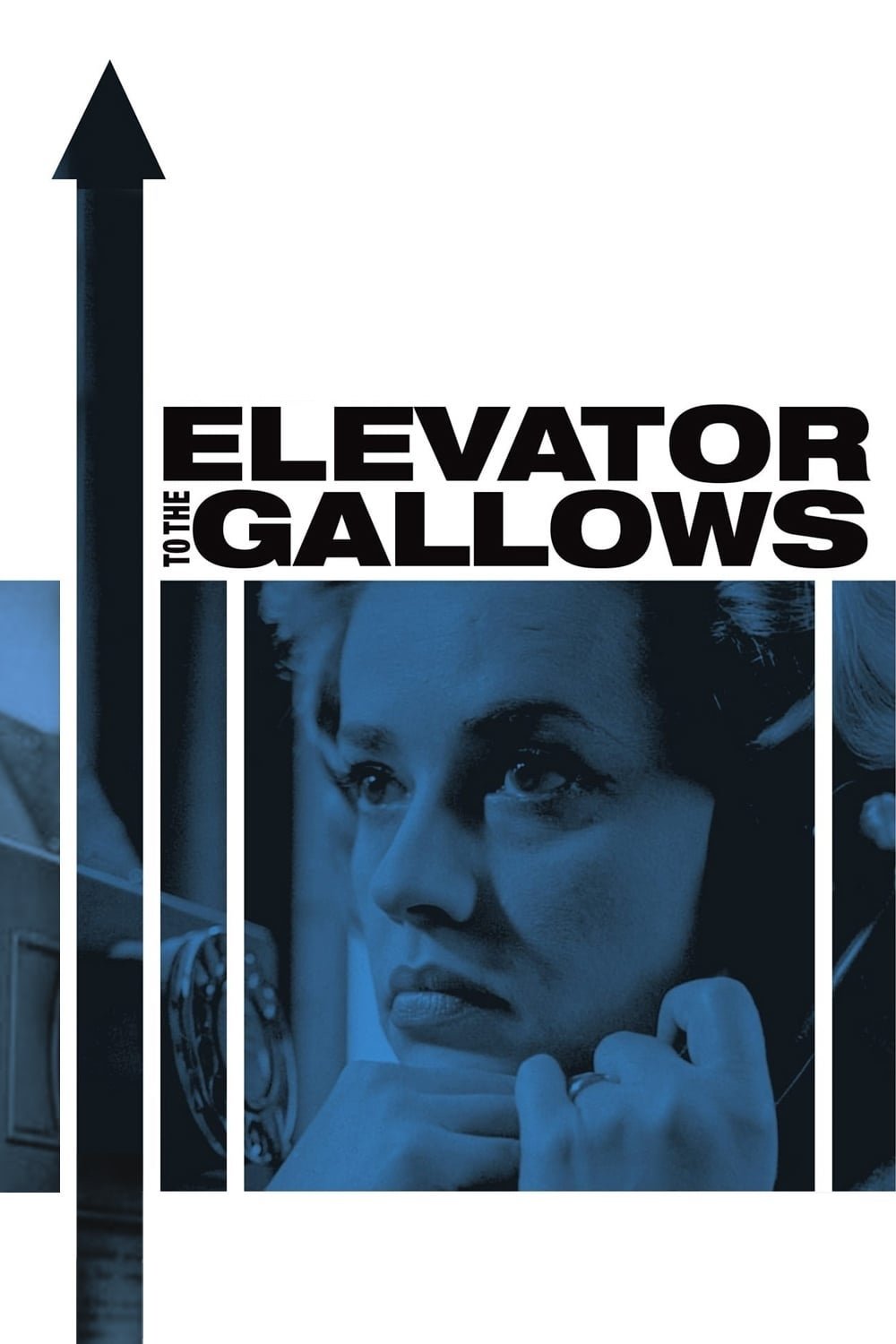
Trapped by Desire: My Fascination with Moral Free Fall
Elevator to the Gallows seized me from its first icy moments—not as a noir curio, but as a somber meditation on how yearning and fate spiral into chaos. There’s nothing cold or distant about my experience with Louis Malle’s 1958 debut; in fact, I felt complicit, helplessly riveted to Jeanne Moreau’s face as she floats through Paris like a ghost, her longing and remorse haunting every rain-slick street. Watching this film, I don’t see just a crime gone wrong. I see a moral vacuum, a world in which choices echo and multiply, binding us with invisible cords to consequences we never fully imagine. The elevator—trapped, suspended—becomes more than a plot device. It’s a pitiless metaphor for the paralysis that overtakes us when we think we’ve outrun fate, only to find ourselves locked inside our own schemes.
Paris After Midnight: Shadows, Silence, and Existential Drift
Paris on screen is usually luminous, bustling, alive. In Elevator to the Gallows, it’s emptied of comfort, reduced to echoing corridors, neon-lit bars, and the hush of streets after midnight. This isn’t the Paris of lovers or poets; it’s a purgatory, where every step feels loaded with existential dread. Malle’s camera lingers on Jeanne Moreau as she wanders, her face slick with rain and anguish, searching for her missing lover. What strikes me is how the city becomes an accomplice to her despair—its reflective surfaces and endless alleys amplify her alienation. The famous Miles Davis score coils around each image, suffusing everything with melancholy and foreboding, a kind of musical fog. Here, jazz improvisation mirrors emotional improvisation—each character responding to crisis with impulsive, sometimes destructive improvisation. Paris, so often idealized, becomes a labyrinth where intent and action betray their architects.
Crimes Without Center: The Unraveling of Agency
There’s a peculiar thrill in watching a perfect crime derail before it even starts, but Elevator to the Gallows goes further. I didn’t just witness a botched murder; I watched the illusion of control dissolve on screen. Julien Tavernier, Moreau’s lover, moves with the calm assurance of a man who has accounted for every variable. Yet as the elevator cables clamp shut and the lights flicker out, I sensed a tectonic shift—the film insisting that no plan, no matter how meticulous, can outwit randomness. Watching Julien’s world shrink to the cramped elevator box, I felt the claustrophobia of hubris giving way to panic. The plot’s accidental offshoots—the young couple stealing Julien’s car, their own impulsive crimes—splinter the narrative, reflecting how our lives intersect in ways impossible to predict or control. Agency in this world is an illusion; the more characters grasp at power, the tighter fate constricts.
Women in the Window: Florence Carala and the Void of Waiting
Florence, played by Moreau, is more than a classic femme fatale. Watching her, I never sensed the manipulation typical of noir women, but rather a portrait of aching vulnerability, of a woman caught between longing and loss. What devastates me isn’t her involvement in the murder, but how she’s ultimately punished by her own yearning. Each shot of her walking, searching, dissolving into the city’s nightscape, made me think of the emotional prisons we build. The camera adores her, but it also exposes her solitude. Florence’s journey, her face pressed against café windows, transformed for me into a meditation on waiting—how desire becomes corrosive, how love can be both motivating and annihilating. Less a seductress and more a tragic figure, Florence’s emptiness is the film’s true center.
The Elevator as Existential Confession Booth
There’s a moment in the elevator, when Julien finally seems stripped of bravado. The darkness wraps around him, machinery creaks, his hands fumble with wire and tools. For me, these scenes throb with existential anxiety—the sense that one’s life can be reduced to a series of futile gestures in a closed, indifferent universe. The elevator is both sanctuary and cell, forcing Julien—and me, as the viewer—to confront the weight of his choices. This is where Malle’s film achieves its bleakest poetry: the elevator is purgatory, a place of enforced reflection, where the past is inescapable and the future closes in like a trap. The longer Julien remains inside, the more the outside world unravels, as if his paralysis taints everything. It’s a brilliant metaphor for the ways we become prisoners of our own designs.
The Abyss Beneath Everyday Glamour
One thing that’s always unsettled me about Elevator to the Gallows is how ordinary everything seems at first—the crisp offices, the chrome, the tailored suits, the gleaming convertibles. Malle and his cinematographer, Henri Decaë, shoot Paris with a documentary starkness that strips away romance. Every detail feels deliberate, as though suggesting that beneath every polished surface lurks the potential for chaos. For me, the film’s true terror lies not in its violence, but in how easily the mundane slides into the murderous. The “perfect” lovers are revealed as desperate and flawed, their passion curdling into paranoia and self-sabotage. This is a world where banality and catastrophe are only inches apart, and that insight haunts me more deeply than any onscreen bloodshed.
Improvisation and Fate: The Miles Davis Score as Moral Atmosphere
The soundtrack to Elevator to the Gallows breathes its own nihilistic jazz. As I listen to Miles Davis’s trumpet follow Florence’s wanderings, I’m struck by how the music’s restless improvisations echo the characters’ impulsive decisions. There’s a sense of inevitability in the score’s ebb and flow, as though fate itself is composing the themes in real time. Jazz here is not just atmosphere—it’s the sound of uncertainty, of moral ambiguity, of lives teetering on the edge of decision and consequence. Malle could have chosen a conventional orchestral score, but Davis’s sparse, haunted notes instead deepen the sense of isolation and dread. Each note lingers in the air like secondhand regret. It’s an aural equivalent to Moreau’s drifting, doomed presence.
A Mirror for Our Own Calculated Risks
Why does Elevator to the Gallows continue to grip me, decades after its release? It’s not just its style, its music, or even its performances. The film compels me to consider my own capacity for rationalizing risk, for believing that the world will bend to my intentions. Every time I rewatch it, I’m reminded of how fragile our moral footing can be, how swiftly certainty can become chaos. The film doesn’t moralize or preach, but it exposes the abyss beneath our most “logical” choices. It’s a film about consequence, but also about the delusion that we can ever fully anticipate or control the outcomes of our actions. Watching those trapped, spiraling characters, I sense the film whispering: you, too, might be one miscalculation away from disaster. That realization never fails to chill me.
If This Left You Haunted: Two More Journeys into Moral Night
If the style and existential panic of Elevator to the Gallows left an impression on you, I recommend delving into the doomed fatalism of Double Indemnity and the psychological turbulence of Les Diaboliques. Both films, in their own ways, explore the seductive lure of the “perfect crime” and the ways conscience gnaws at those who try to outwit destiny.
If you’re curious about how this film was originally perceived or how it compares to similar works of its era, these resources may be helpful.
🎬 Check out today's best-selling movies on Amazon!
View Deals on Amazon