
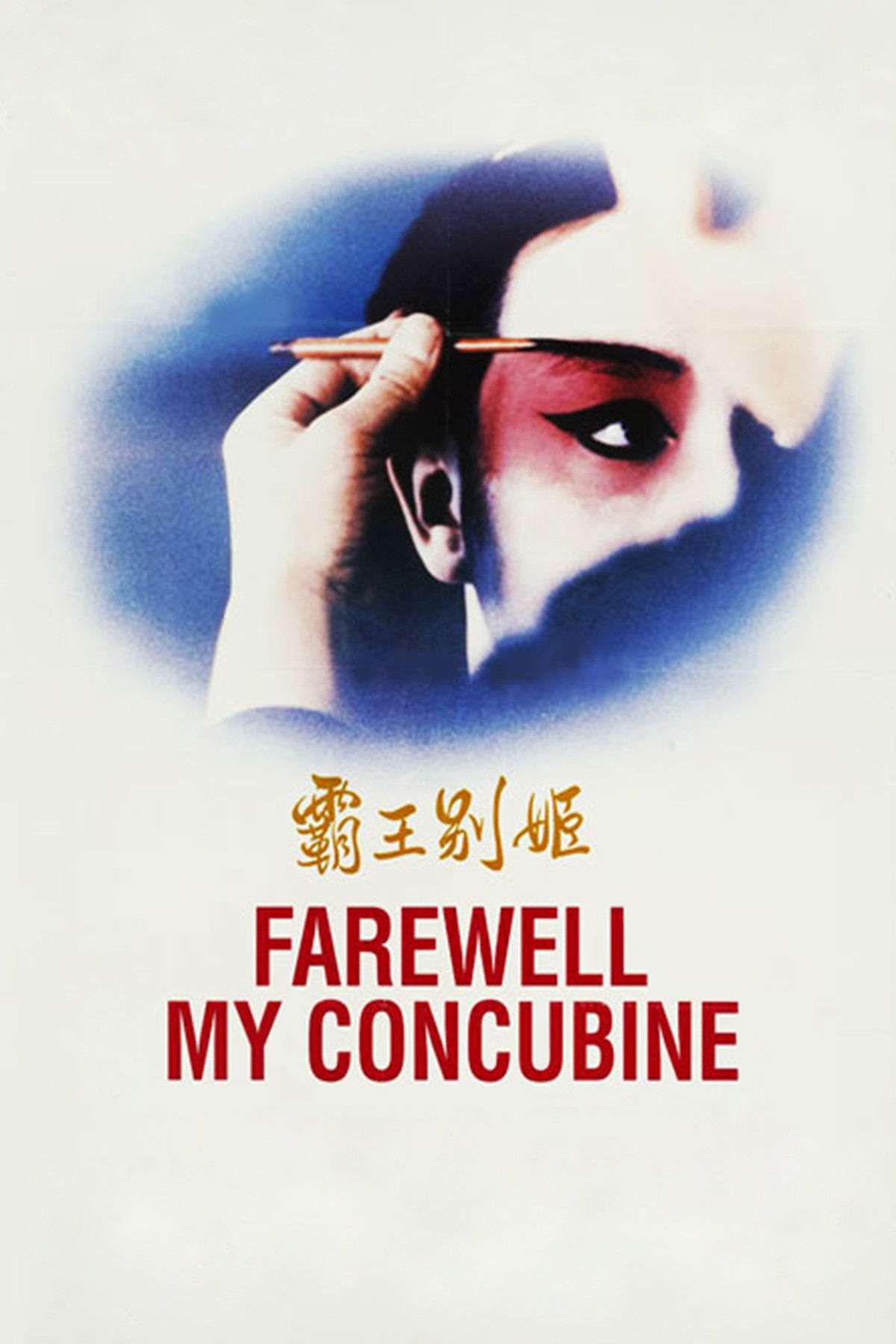
Haunted by the Stage: Where Performance Ends and Life Begins
There are few films that have ever made me question the very boundaries of identity the way Farewell My Concubine does. From its opening frames, I felt as if I was being drawn into a labyrinth where selfhood is performed, not possessed, and each mask is worn so long that flesh and artifice become indistinguishable. This is not a film about the theater; it is itself theater—alive, breathing, merciless. Watching Cheng Dieyi and Duan Xiaolou, I could never escape the sensation that to become what you must onstage is to risk losing who you are entirely when the curtain falls. The film’s narrative is a fevered meditation on the cost of devotion to art, but also an excavation of the trauma that devotion leaves in its wake.
The Weight of History in Every Gesture
Every time I revisit this film, I marvel at how the sweep of twentieth-century Chinese history is folded into every gesture, every painted eyelid, every blown note from the orchestra pit. It’s impossible to watch Dieyi’s transformation into the concubine without feeling that personal identity in this world is not merely shaped by history—it is crushed, sculpted, and remade by it. The Japanese occupation, the civil war, the Communist revolution: these are not mere backdrops but living forces that drive the characters’ fates. The opera itself is the only constant, but even it must warp under the tides of history. I often found myself wondering whether the real performance was onstage, or in the desperate survival acts characters must perform to navigate new realities.
Desire, Betrayal, and the Language No One Speaks
Desire in Farewell My Concubine is everywhere, but never articulated. I am struck by how longing becomes a kind of private code, one that the world punishes rather than understands. Dieyi’s love for Xiaolou is so deeply fused with the roles they play that for him, the boundary between concubine and man dissolves. This is not simply a matter of sexuality, though the film is subversively fearless in its implications; it is the pain of being devoted to someone or something that cannot love you back in the way you need. Betrayal, then, becomes inevitable—not just between people, but between one’s own hopes and the unyielding demands of society. Watching Juxian navigate this triangle, I saw a reflection of all the ways people become casualties when love is circumscribed by custom.
Broken Bodies, Broken Voices: The Cost of Perfection
I have always been disturbed by the film’s pitiless depiction of what it means to be shaped for greatness. Watching the young Dieyi suffer under the cruelty of Master Guan, I found myself recoiling—and yet, the camera lingers not simply to shock but to ask: What is left of a self that has been beaten into art? The relentless drill, the punishments, the denial of comfort: these are the building blocks of beauty in the opera but the raw materials of trauma in life. By the time Dieyi becomes the concubine, I realized that his pain has become indistinguishable from his artistry. There is no exit; there is only the demand to keep performing, even as the world outside the theater offers no sanctuary.
Mirrors and Masks: The Truth in Illusion
If there is one image that haunts me after every viewing, it is that of Dieyi gazing into a mirror, adorned in the regalia of Yu Ji, the fated concubine. The film seems obsessed with the ways people become trapped in the roles assigned to them—by history, society, or their own longing. The mask is not an escape but a prison. Yet, what fascinates me most is that, for Dieyi, the illusion is preferable to the truth of his life. There is a certain reverence in the way the film handles these moments—almost inviting me to ask whether authenticity is overrated if the only available truths are suffering and loneliness. Each mask, each gesture, is both a shield and a confession.
Love as Artifice, Survival as Performance
I find it impossible to think of the film without grappling with its vision of love—something that always exists at a remove, filtered through performance, sacrifice, and compromise. Juxian’s presence, so often dismissed in readings of the film as a mere obstacle, struck me as a devastating counterpoint to Dieyi’s operatic longing. She, too, is skilled in the art of survival, enacting femininity and loyalty as needed, yet her love for Xiaolou is no less real for being transactional. The film seems to argue that all love, in this world, must be performed as much as felt, and the tragedy lies in seeing how poorly performance protects the heart. Ultimately, love is not a refuge but another stage upon which suffering is played out for an indifferent audience.
Political Upheaval as Tragic Chorus
The film’s most devastating scenes are, for me, not always those of direct violence but of ideological betrayal: moments when the characters are forced to denounce each other, to rewrite their own identities under the gaze of the Cultural Revolution. Suddenly, the opera’s stylized betrayals become real, visceral, and permanent. To survive is to betray—one’s friends, one’s art, even oneself. In these moments, the film reaches its most brutal insight: there is no room for the sacred—be it friendship, art, or love—when the machinery of politics demands absolute loyalty. The opera house, once a sanctuary, becomes another arena of public spectacle, and the performers’ real agony is exposed for all to see and judge.
Farewell, or the Refusal to Say Goodbye
Every time the film circles back to the titular opera, I am reminded that its allure is not in the possibility of escape, but in the compulsion to repeat one’s suffering, to relive the moment of farewell ad infinitum. For Dieyi, the role of the concubine is both destiny and curse; he cannot let it go, because it is the only identity left to him. His final performance is not a gesture of acceptance, but a last, aching refusal to leave the stage. There is a profound ambivalence in the ending—a sense that the only true farewell is to the possibility of ever being whole, outside of art. For me, the film’s genius lies in how it refuses any easy catharsis, leaving me stranded on the edge of tragedy, longing, and a kind of dark, beautiful futility.
If You Are Still Searching: Two Echoes from Classic Cinema
After dwelling in the world of Farewell My Concubine, I am always hungry for films that dare to thread art, identity, and tragedy just as bravely. If you are still searching, I recommend you seek out All About Eve for its brutal elegance in examining the theater’s toll on the soul, and The Red Shoes for its mesmerizing, doomed passion between art and self-destruction.
If you’re curious about how this film was originally perceived or how it compares to similar works of its era, these resources may be helpful.
🎬 Check out today's best-selling movies on Amazon!
View Deals on Amazon