
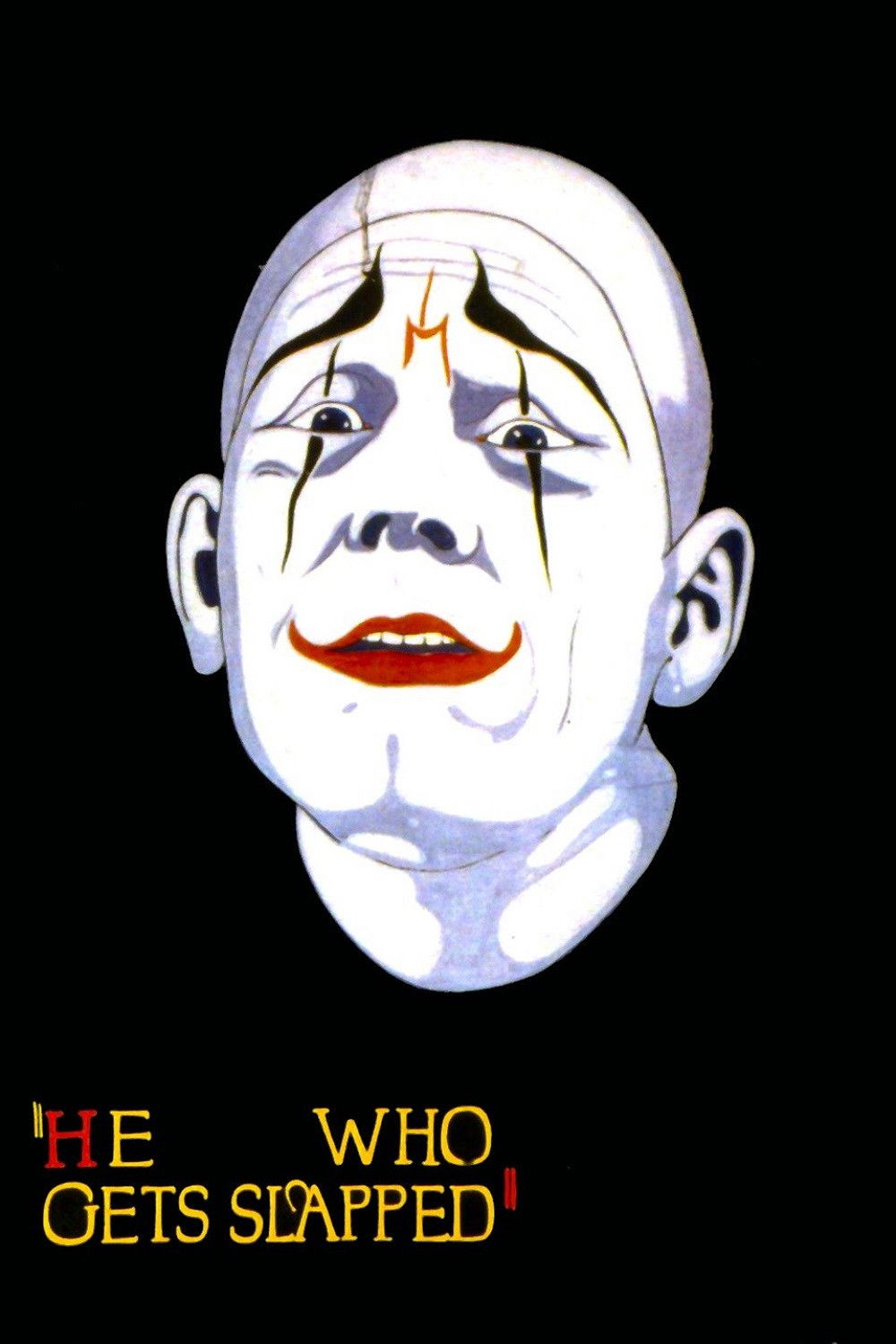
Wounds Beneath the Painted Smile
The very first time I saw He Who Gets Slapped, I was struck by the way a single gesture—a man being slapped—could echo so fiercely in my chest. I wasn’t expecting a silent film to feel so raw, so disturbingly intimate, but that’s the spell Victor Sjöström weaves in this 1924 masterpiece. There is a desperation in Paul Beaumont’s eyes, the scientist-turned-clown, that I don’t think I’ll ever forget. The violence he endures is not merely physical; it’s a violation of selfhood, witnessed by an audience both within and outside the screen, daring us to consider our own appetite for humiliation and spectacle.
The Cruelty of Masquerade
Clowns terrify me. Not in the jump-scare sense, but in the existential way—because their painted faces always seem to be suppressing something darker underneath. In Sjöström’s film, Lon Chaney’s portrayal of HE, the eponymous clown, taps into this discomfort with unnerving precision. His makeup is less a disguise than a bruise, a visible scar from a world that has made a spectacle of his suffering. Every time HE is slapped, the pain is ritualized for the crowd’s amusement, transforming his very identity into fodder for laughter. In this world, self-erasure becomes survival. The circus ring becomes a purgatory where HE repeats his degradation nightly, numbing himself and the audience alike to the horror of public humiliation.
Betrayal and the Anatomy of Shame
The betrayal that fractures Paul’s life—his friend stealing both his research and his wife—serves as the catalyst for the entire narrative. Yet what lingers isn’t just the event, but the way that betrayal metastasizes into shame. Sjöström seems obsessed with shame as a living, breathing force: not a private emotion, but a public spectacle, intensified by the gaze of others. HE’s shame is not allowed to be silent or dignified. It is dragged under the big top, repeated endlessly for applause. I see this as a meditation on what happens when one’s deepest pain is not just exposed, but commodified. The film’s silent nature amplifies this—there are no words for the wound, only the slap, again and again.
The Circus as a Judgment Chamber
Of all the cinematic circuses I’ve seen, none capture their allegorical weight quite like this one. The audience, both on screen and off, is complicit in HE’s suffering. They laugh, they jeer, they anticipate the humiliation. This is not entertainment, but a ceremony of judgment; it’s as if the circus itself is a microcosm of a society that thrives on hierarchy, cruelty, and the spectacle of downfall. The ringmaster’s whip, the roaring crowd, the sneering face of the rival clown—all have their parallels in the ‘respectable’ world Paul once inhabited. Both realms—science and circus—prove equally merciless, their difference only in costume. What unnerves me is how easily the veneer of civilization slips to reveal a hunger for punishment and submission.
The Muteness of Grief
Even in a silent film, there are silences within the silence. The love HE feels for Consuelo is never spoken; it’s etched in the way he shields her, the trembling of his hands. Unlike the spectacular violence of his public persona, these quiet moments resist performance. His grief—his yearning for dignity and connection—remains unspoken, a counterweight to the noisy derision he endures on stage. This muteness becomes its own language. I find it devastating that the only way HE can express himself fully is through self-sacrifice. The tragedy lies less in what is done to him, and more in what he cannot say or reclaim. It’s a heartbreak so complete it can only be communicated with a glance.
The Paradox of Redemption
There is a peculiar beauty in watching HE try to protect Consuelo from the same cruelty that destroyed him. I don’t see this as a simple arc of redemption. His acts of courage are fraught with futility; the world he inhabits has no room for heroic rescue, only for tragedy and repetition. The film’s final act—where HE tries to avenge his beloved and is again beaten down—underscores the impossibility of escape from systems of humiliation. Yet, in his willingness to endure suffering so another may be spared, there is a sliver of hope. Not just for HE, but for everyone who has ever wished love could undo a lifetime of wounds.
Reflections in the Applause
I can’t watch the final scene without feeling indicted. The applause that rains down after HE’s last, devastating performance feels like a damning verdict, not just for the characters but for the audience. The line between spectator and participant blurs until we must ask ourselves: Are we complicit in the suffering we consume? Sjöström doesn’t let us off the hook. He holds up a mirror, asking if our desire for entertainment is just a sanitized version of cruelty. With every slap, the film draws blood from our collective conscience.
Films Echoing the Pain of the Mask
For anyone who emerges from He Who Gets Slapped haunted by its themes of public humiliation, loss of identity, and the agony of suppressed emotion, I recommend seeking out The Man Who Laughs (1928) and La Strada (1954). Both films capture the ache of performance and the devastation of social cruelty with a tenderness and intensity that resonate long after the circling applause fades.
If you’re curious about how this film was originally perceived or how it compares to similar works of its era, these resources may be helpful.
🎬 Check out today's best-selling movies on Amazon!
View Deals on Amazon