
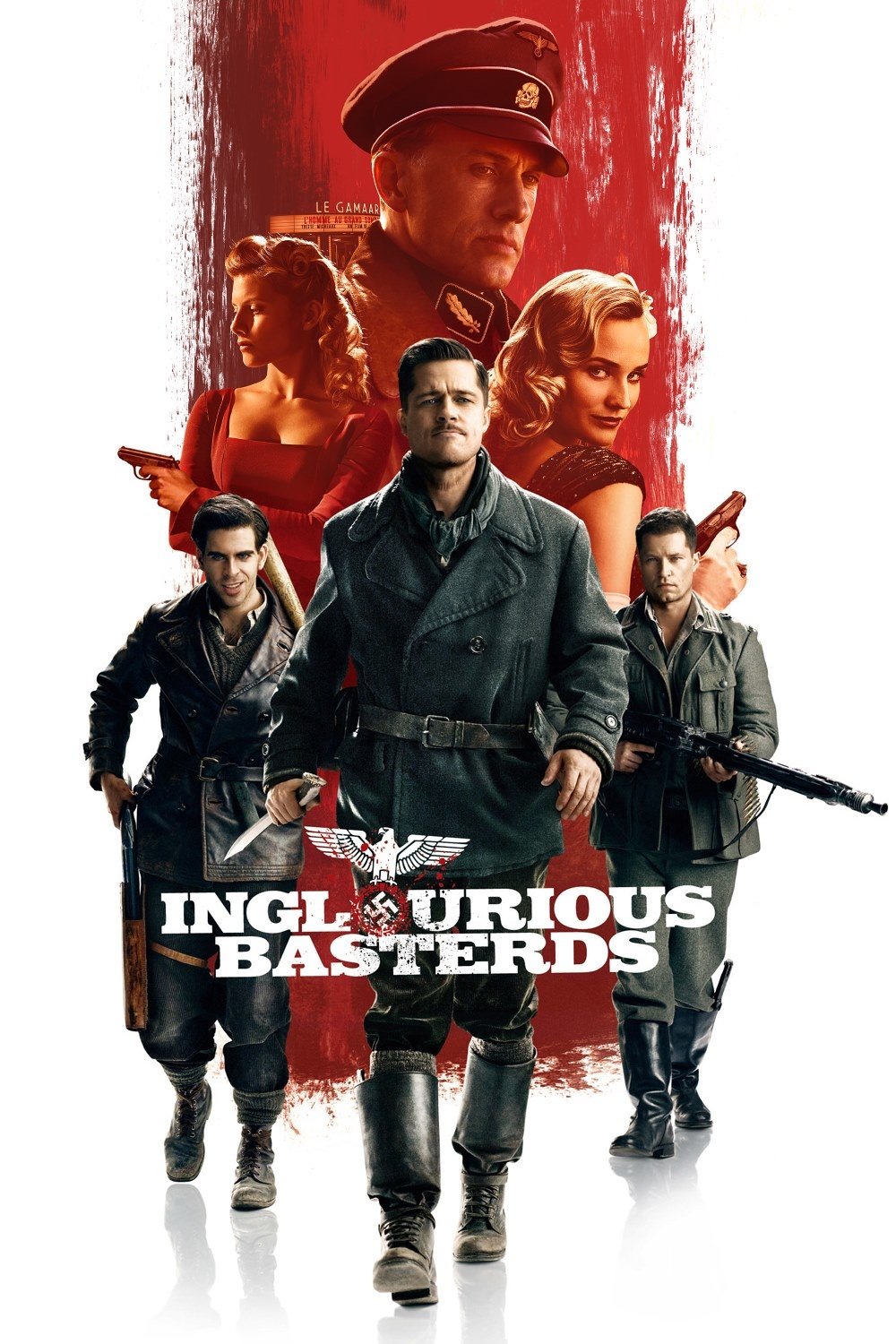
History Reconstructed: My Relationship with Tarantino’s Reimagined War
The first time I watched “Inglourious Basterds,” I felt almost disoriented by the audacity of its storytelling—like I’d suddenly stepped into a universe where celluloid was rewriting the very fabric of memory. Tarantino doesn’t just set a World War II story before us; he bends the past until it nearly cracks, urging me to confront how history becomes narrative and narrative becomes power. This isn’t a film that invites comfortable viewing. It’s one that demands a reckoning with our own desire to storytell, to mythologize, and, most provocatively, to rewrite what can’t be rewritten in life.
Language as a Weapon and a Mask
I find it impossible to watch the opening farmhouse scene without feeling my pulse spike at every pause. Here, language is no mere tool for communication; it’s a battlefield. Hans Landa’s gently predatory conversation with Perrier LaPadite exists in a delicate, terrifying dance of words, where language itself becomes both a weapon and a concealment, drawing out truth by feigning pleasantry. Every utterance is double-edged, every question a probe. Tarantino foregrounds the way language shapes power dynamics—Landa’s mastery of French, English, German, and Italian doesn’t just showcase his intellect, it stamps his authority, manipulates his victims, and ultimately, it is the instrument of life or death.
This recurring motif—who speaks what, who understands what, who pretends not to—becomes a running current, and for me, it’s almost dizzying to realize how many acts of violence in this film are prefaced by linguistics. Shoshanna’s ability (and refusal) to communicate in German, Hicox’s fatal slip of hand gesture during the tavern rendezvous, even Aldo’s mangled “Arrivederci”—these aren’t throwaway cultural flavor. They reflect the deeper idea that power operates not just through force, but through narrative control and gatekeeping access to understanding.
Storytelling as Resistance and Violence
In my view, “Inglourious Basterds” is as much about the act of storytelling as about World War II itself. Shoshanna’s cinema is the literal stage upon which mythic vengeance is projected, both figuratively and physically. When she plans to burn the theater with the Nazi high command inside, I see not just a plot of revenge, but a meta-commentary on how art—film especially—can become a weapon, capable of reshaping the emotional truth of history even as it destroys it.
There’s a staggering irony in the film’s climax: the Nazis, so assured in their propagandistic control of narrative (“Nation’s Pride”), are destroyed by the very medium they sought to dominate. The cinema, traditionally a site for illusion and escapism, transforms into a crucible for reckoning, where the stories we tell (and the ones we suppress) become inseparable from the violence we inflict or endure. Tarantino’s film raises, but never answers, a searing question: does righting old wrongs through narrative revision heal anything, or does it merely satisfy the audience’s thirst for catharsis?
The Seductive Promise of Revenge
I am never able to watch the scalping scenes, the baseball bat executions, or the explosive theater massacre without feeling a deep, complicated discomfort. Tarantino is not simply giving us the thrill of Nazi slaughter—he’s seducing us with it, ensnaring us in the morally murky allure of vengeance dressed as heroism. I find myself recoiling at my own responses: Am I cheering for Aldo and his Basterds, or cringing at their sadism? Is Shoshanna’s plan an act of justice, or just another cycle of brutality?
The film’s refusal to offer clean answers forces me to confront a profound question: Does the satisfaction of rewriting history through violence redeem the violence itself, or does it implicate the viewer even further? Tarantino’s greatest subversion may be how he weaponizes our instinct to root for the underdog, then flips the lens to expose our complicity in the spectacle. It’s unsettling, and I suspect it’s meant to be.
Performance, Identity, and the Masks We Wear
“Inglourious Basterds” is obsessed with identity as performance, and nowhere does this come through more clearly for me than in the scenes of deception—Hicox’s assumed German identity, Bridget von Hammersmark’s dual roles, Shoshanna’s masquerade as “Emmanuelle.” Each character, in their own way, is forced to perform survival, to improvise the self required by their audience. Tarantino constructs a world where authenticity and performance become indistinguishable in matters of life and death.
The film-within-a-film structure, with “Nation’s Pride,” doubles down on this thesis. The Nazis’ gory propaganda is not so different from the Basterds’ own cinematic violence. Both are fantasies performed for an audience, both serve to construct national or personal mythologies. I always leave this film thinking about how history is less a record of objective truth and more a series of staged narratives—some comforting, some monstrous, all incomplete.
Cinema’s Redemptive and Destructive Power
There’s a darkly exhilarating thrill when the theater burns, the swastika banners igniting as Shoshanna’s face fills the screen, declaring vengeance from beyond the grave. In that moment, I feel an ecstatic collision of joy and grief. The film’s most essential meaning, for me, lies in the recognition that cinema wields both the potential to heal and to harm, to memorialize pain and to conjure impossible victories.
Tarantino doesn’t pretend that mythic justice is clean; instead, he immerses us in its intoxicating possibility, then drags us through its aftermath. The very act of watching becomes charged with ambivalence—can we ever consume the violence of history innocently, or are we always, to some degree, complicit in its mythology? “Inglourious Basterds” makes me question the ethics of spectatorship, especially when the line between reality and performance blurs so thoroughly.
Subverting the War Film—And My Expectations
Every time I revisit “Inglourious Basterds,” I’m struck by how gleefully it upends the war film genre. There is no singular hero, no traditional battlefields, no simple good-versus-evil dichotomy. The film’s fractured structure and interlocking stories create a kaleidoscopic effect, one that suggests the past is always a site of competing narratives, none of which have exclusive claim to truth.
By the end, I’m left with the uneasy sense that the most radical way to honor the victims of history is not by retelling their stories exactly as they happened, but by interrogating the motives and consequences of how we choose to remember. Tarantino’s willingness to let fantasy and farce commingle with atrocity isn’t flippant—it’s a provocation, a demand that I grapple with why I long to see history rewritten, and what it says about the wounds that remain unhealed.
Impossible Justice and the Ethics of Fantasy
Sometimes, I find myself yearning for the catharsis this film delivers—a world in which the architects of slaughter are incinerated by resistance fighters, where the oppressed seize the means of destruction. Yet I always come back to the uncomfortable truth that this victory is only possible because it’s fantasy. The ethical question stings: Are we more honest about evil when we show its defeat as wish-fulfillment, or does this comfort blunt the real horror and legacy of what actually happened?
“Inglourious Basterds” refuses to settle for easy answers. It’s both a celebration of cinematic invention and a meditation on its dangers. When Aldo carves a swastika into Landa’s forehead, I’m reminded that some marks—of trauma, of history—can never be erased, not even by the wildest imaginations of art. The film asks me to stare into the face of what I want from history, and to accept the limits of what stories can do for the wounded, the lost, or the vengeful.
If These Tales Haunt You: Two Films Worth Seeking Out
For those drawn to the provocative blend of history, performance, and the power of cinema itself, I recommend two classic films that continue to haunt me:
- The Great Dictator (1940) – Charlie Chaplin’s daring satire, which weaponizes comedy and performance against totalitarianism, interrogating the boundaries of art and resistance in the shadow of real-world horror.
- The Conformist (1970) – Bernardo Bertolucci’s psychological masterpiece, exploring complicity, identity, and the seductions of ideology in fascist Italy, where style and substance are as intertwined as truth and myth.
If you’re curious about how this film was originally perceived or how it compares to similar works of its era, these resources may be helpful.
🎬 Check out today's best-selling movies on Amazon!
View Deals on Amazon