
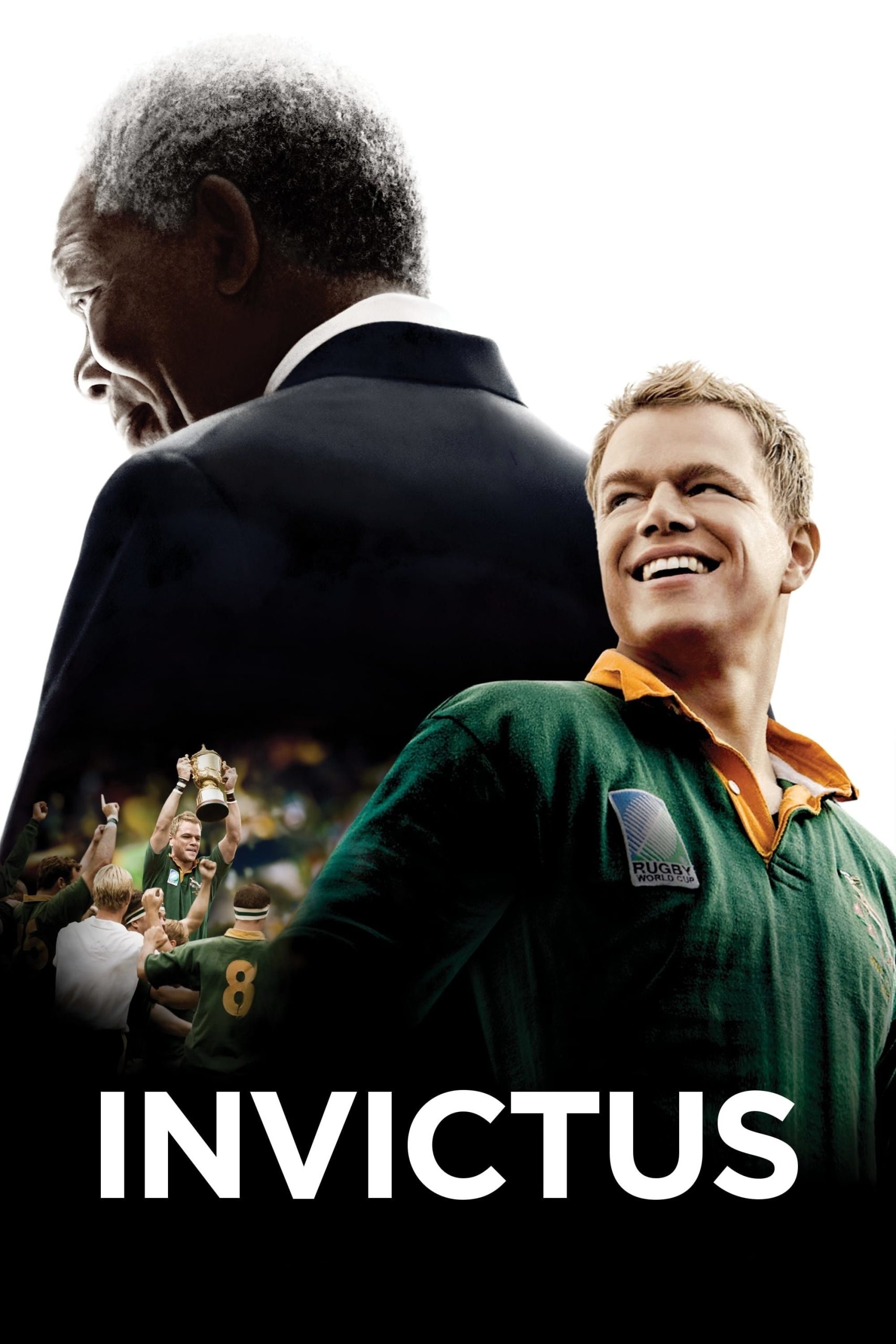
When I think back to the first time I watched “Invictus,” I remember being struck not just by its depiction of historical events, but by how it captures the palpable tension and hope of a nation in transition. As someone who grew up keenly aware of the world’s fractures and dreams of reconciliation, I found myself completely pulled in by Clint Eastwood’s restrained direction and the quiet charisma of Morgan Freeman’s Nelson Mandela. There’s something deeply personal for me in witnessing a tale where sport becomes both battlefield and sanctuary—a space where cultural wounds are both laid bare and, however tentatively, mended.
What the Film Is About
At its core, “Invictus” isn’t just about South Africa’s journey as it emerges from the shadow of apartheid—it is about the simultaneous vulnerability and possibility that comes with forging a new identity. The film follows Nelson Mandela’s first years as President as he tries to unite a bitterly divided country, seizing upon the 1995 Rugby World Cup as a crucible through which old enmities might be confronted and, he hopes, transcended. The genius of Eastwood’s take is his focus on the psychological battleground: the subtle exchanges of mistrust and hope, embodied by both Mandela and Matt Damon’s Francois Pienaar, as they shoulder the weight of representation not just for themselves, but for entire communities.
What has always fascinated me is how “Invictus” uses interpersonal moments to illuminate the larger emotional journey—a hesitant dance of forgiveness, the uneasy alliances, the quietly mounting pressure weighing on each character. The central conflict isn’t between opposing rugby teams, but rather between a nation’s desire to heal and its lingering, raw wounds. Through my eyes, this is a story about learning to imagine a future together not by ignoring history, but by actively negotiating with its pain. Mandela’s optimism is never naive; it is a form of courage that asks for more than words—it is about seeing the humanity in those who once were one’s captors or enemies.
Core Themes
The tension between power and empathy reverberates across every frame of “Invictus.” For me, this is perhaps the most intriguing aspect: at a pivotal moment in world history, we observe a leader who wields authority not by domination, but by conscious, sometimes costly, inclusivity. The film’s meditation on identity—national, cultural, individual—feels timeless. In 2009, audiences were grappling with their own fractured political landscapes, economic anxiety, and calls for change; the film’s release served as both through-line and mirror, reflecting society’s ongoing struggle to look beyond easy binaries of ‘us’ and ‘them’.
Another theme that resonates profoundly is forgiveness as active resistance. Here, forgiveness isn’t portrayed as passive forgetting, but as the most radical tool for transformation and reconciliation. Watching Mandela invite his former jailers to the table, or seeing black and white South African children rally around the same jersey, is a testament to the film’s insistence that change is slow, often uncomfortable, and always deeply personal.
Symbolism & Motifs
Through my lens, the rugby field in “Invictus” is not just a sporting arena—it is a metaphor for national identity under scrutiny. The green-and-gold Springboks jersey, so long associated with apartheid’s legacy, becomes a canvas on which new meaning is painfully and defiantly painted. Every time the camera lingers on the jersey, it feels like an invitation to imagine what it means to claim, subvert, or reinvent symbols of the past.
The film also makes exceptional use of physical barriers and open spaces: the walls of Mandela’s former prison, the security checkpoints, the crowded stadiums all remind me of how invisible divisions can shape and shadow public life long after formal structures have fallen. There’s also the recurring motif of hands—hands shaking, passing the ball, shielding eyes from the sun—which, to me, underscores the fragility and hope embedded in human connection.
Key Scenes
The Gift of the Poem: Mandela’s Personal Anchor
The moment Mandela gives Francois Pienaar a handwritten copy of the eponymous poem “Invictus” is emotionally charged and deceptively simple. To my mind, it lays bare how personal fortitude can be a nation’s torch in dark times. It’s a crucial exchange, not just because it establishes Mandela’s own spiritual resilience, but because it signals an act of trust: the passing of wisdom and hope from one generation to another.
The Stadium Unites—A Sea of Flags
The climactic World Cup final is, for me, the film’s beating heart. Watching the crowd—a tapestry of South African faces, black and white—singing the new anthem and waving the reimagined national flag stirs in me a sense of both exhilaration and unease. These moments remind me how fragile unity can be, but also how, in rare instances, sport and ritual can kindle the possibility of shared purpose on a grand scale.
Security Guards’ Slow Transformation
I am always drawn to the quieter subplot involving Mandela’s black and white security detail gradually softening towards each other. Their guarded exchanges, small acts of mutual aid, and growing camaraderie capture the painstaking, everyday labor required for reconciliation. These moments anchor the film’s larger themes and remind me that real change is as much about private negotiations as it is about grand gestures.
Common Interpretations
Many critics have lauded “Invictus” for its uplifting narrative and showcase of political leadership, often viewing it as a rousing tribute to Mandela’s mythic status as a statesman and healer. Some see it as a sports film with historical flavor—an inspirational crowd-pleaser that perhaps leverages sentimentality at the expense of depth. I understand these assessments, but my own experience skews more toward appreciating the film’s silences and ambiguities—the ways it allows discomfort, suspicion, and vulnerability to simmer beneath the surface.
Where some see heavy-handed optimism, I see a meditation on the limits and costs of real transformation. The narrative does not sidestep the realities of post-apartheid trauma, nor does it offer easy catharsis. Its emotional restraint—and the imperfect, withholding performances—draw me closer rather than push me away. In that sense, I read “Invictus” less as a manifesto than as an invitation to dwell in the messy, necessary work of mending a tattered social contract.
Films with Similar Themes
- “Cry Freedom” – Like “Invictus,” this film explores South Africa’s turbulent history and the costs of resistance, focusing on personal and political transformation under an oppressive regime.
- “Remember the Titans” – The story of a racially integrated American football team mirrors “Invictus” in its use of sport to examine themes of unity and reconciliation within a divided community.
- “Hotel Rwanda” – While centered on the Rwandan genocide, this film also examines leadership, courage, and the moral complexities of forgiveness amidst social upheaval.
- “The Power of One” – Set in apartheid-era South Africa, it tackles personal growth, resistance, and the potential for individual action to inspire collective change.
Conclusion
Watching “Invictus” in today’s context, I am reminded how stories of reconciliation and courage remain essential touchstones for any era wrestling with difference and division. The film’s relevance endures not because it offers easy solutions, but because it points unflinchingly toward the work required to truly heal—a process that is never complete. Engaging deeply with its themes, and questioning our own comfort along the way, brings added light (and perhaps, humility) to any viewing experience.
Related Reviews
If you found value in my perspective, you might also enjoy exploring my thoughts on other cinematic landmarks such as “Gandhi” and “Remember the Titans”.
To broaden this interpretation, you may also explore how critics and audiences responded over time.
🎬 Check out today's best-selling movies on Amazon!
View Deals on Amazon