
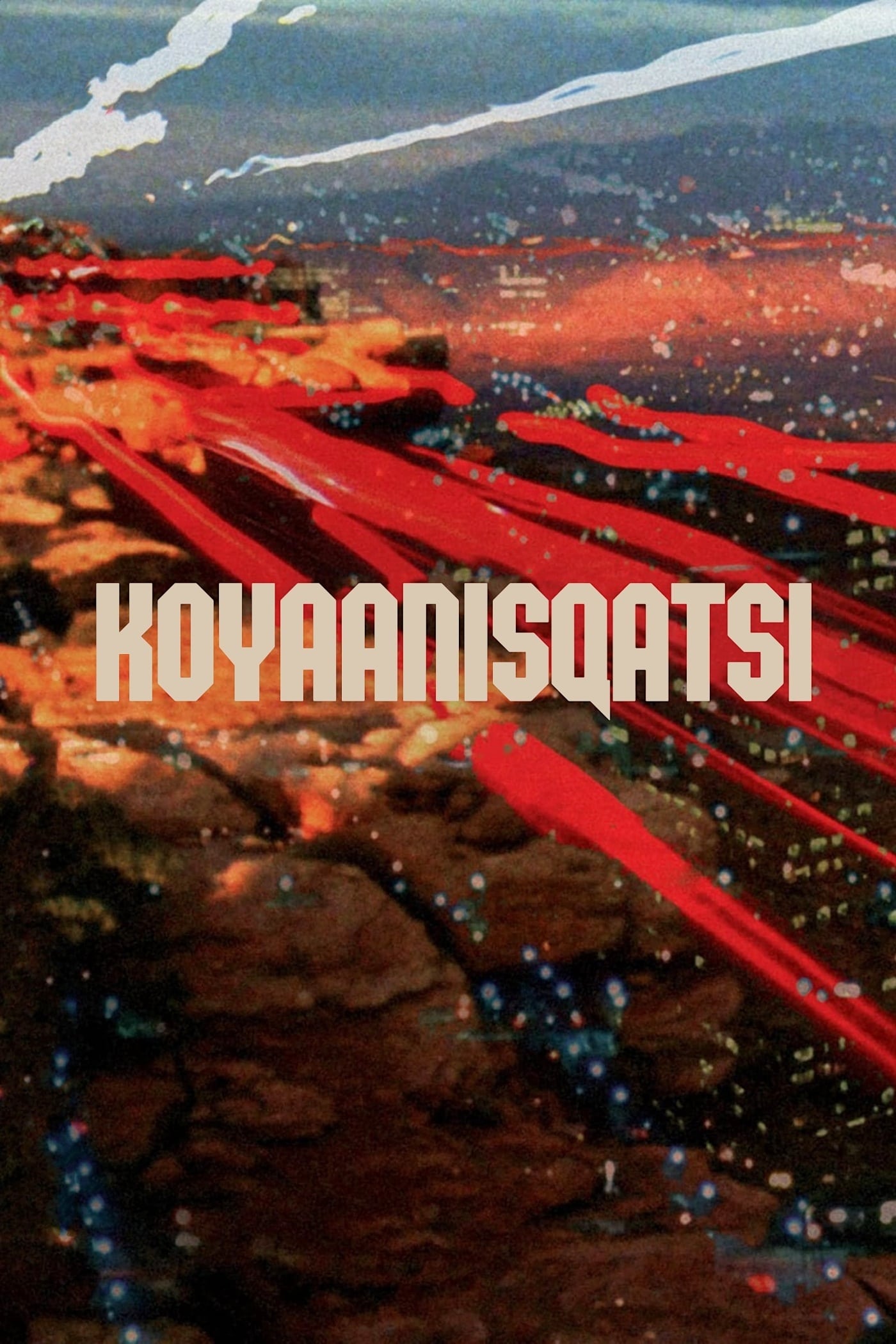
My first encounter with “Koyaanisqatsi” remains clear in my memory, not because of plot points, but the way it pulled me somewhere wordless—like stepping into a cathedral where language isn’t required. As the cityscapes stretched and time twisted, I couldn’t help but feel exposed by what I was seeing; it was as if the film was showing me a mirror, one that reflected not just people, but the entire modern condition. Watching this film for the first time alone, in total darkness, I realized I hadn’t seen anything quite like it. It wasn’t just a movie; it was more like a head-on collision with the tempo of my own daily existence.
What the Film Is About
Describing “Koyaanisqatsi” poses a challenge because it simply refuses traditional storytelling. There’s no dialogue, no named characters, and not a whisper of a conventional narrative arc. Instead, the film unfolds as a spellbinding visual symphony—a journey through a collision of nature, machine, urban sprawl, and the relentless beat of accelerated living. In my experience, it’s a meditation on imbalance, captured in the film’s Hopi subtitle: “life out of balance.” That phrase isn’t a gentle suggestion; it feels like a warning bell.
From my perspective, the central conflict is not between people or nations but between two forces: the organic and the industrial, the timeless world of deserts and skies against the mechanized tick of urban habit. As I watched, I felt dragged along a river of imagery—soot-stained smokestacks, ants that turn out to be humans on city streets, the choreography of assembly lines. This isn’t simply an environmentalist lament or a condemnation of technology; it’s more profound, a deep questioning of whether the life we have created is still, in any way, humane or sustainable. The emotional journey here oscillates between awe and anxiety, building a cumulative discomfort that lingers long after the film flickers to black.
Core Themes
The first and most urgent theme is modern alienation. The film traps us within the unyielding tempo of city life, where people pulse through subway gates and highways like blood cells in a body that’s forgotten its own purpose. In the early 1980s, when “Koyaanisqatsi” was released, this critique carried a new potency; the world was rushing headlong into a future dominated by computers, satellite imagery, and consumer culture. Today, when technology is even more omnipresent, the film’s anxiety feels eerily prophetic.
A second major theme is the relentless exploitation of the natural world. The movie is at its most haunting when it frames untouched landscapes—canyons, cloudbanks, the slow drift of nature—directly against the trembling sprawl of freeways, apartment blocks, and billowing smokestacks. I find this dichotomy essential: it’s not just showing loss, it’s showing desecration, drawing a stark and sometimes mournful contrast between possibility and reality. There’s a melancholic awe to it that makes the message land not as lecture, but lament.
Third—and perhaps most subtle—is the question of meaning in a mechanized civilization. The relentless cycles in the film, both industrial and human, pose the question: does our modernity enrich us, or has it made us more expendable? I believe Reggio, and by extension, the film, asks us to reconcile progress with spirit—to search for humanity even as it seems to get smothered by efficiency and speed.
Symbolism & Motifs
What stays with me most are the recurring motifs of movement and paralysis. The camera drones through landscapes, then freezes on faces locked in states of boredom or fatigue—an unstated, visual argument about what we lose when life is reduced to a grind. City life becomes a biological process—the subway turnstiles, escalators, cars pouring down freeways—all edited in time to Philip Glass’s hypnotic score until individual actions seem absorbed by the system itself. Each visual cycle underscores the fundamental theme of disconnection from the natural world and from ourselves.
Another dominant symbol is the image of destruction, be it controlled demolition or the relentless churning of factories. For me, these scenes are not simply about physical annihilation, but a loss of what is elemental and irreplaceable. To lay bare a skyscraper as it topples, or to show landscapes carved up for power lines, is to create a visual requiem for what might have been and a warning about what we risk in the future.
Finally, I cannot ignore the motif of the human face. In a film with no spoken lines, the choice to periodically linger on faces in crowds or in repose is a direct challenge to abstraction. It’s as if the movie is reminding us: these processes—industrial, economic, technological—always come to rest, finally, on individual lives. Those faces, framed between flows of traffic and collapsing buildings, became for me the film’s true center.
Key Scenes
Symphony of Acceleration—Urban Time-Lapse
The time-lapse sequences of traffic snaking through city arteries are, in my opinion, among the most vital sequences in the film. Here, you can feel the mechanical rhythm of urban life as both mesmerizing and terrifying: there’s a beauty to the efficiency, but an unmistakable sense of people trapped in patterns they cannot escape. The city becomes an organism, pulsing but somehow soulless. This moment crystalizes for me the sense that we are both creators and captives of our world.
The Collapse—Building Demolition
I remain haunted by the slow-motion shots of buildings imploding. Each blast seems almost graceful, tragic in its inevitability, and in a way, oddly beautiful. This is a turning point in the film—a moment when progress literally devours itself. For me, the destruction is both physical and symbolic: modernity requires sacrifice, and sometimes the victim is its own achievement.
Human Close-Ups—Faces in the Crowd
Later in the film, the camera’s gaze lingers on ordinary people drifting through their routines. There’s no narration, just the quiet accumulation of faces, each carrying their own invisible story. In these frames, I feel the full weight of the film’s empathy. We aren’t just spectators; we are implicated. It’s an assertion that beneath the abstraction, the consequences of imbalance are deeply personal.
Common Interpretations
Most critics agree that “Koyaanisqatsi” is a polemic against industrial civilization and technology’s impact on nature. Some have gone further, branding it as thoroughly anti-progress, a protest against modernity itself. While I acknowledge those interpretations, I find them a touch reductionist. For me, the film is not an outright condemnation but a very particular lament. It’s less about rejecting technology and more about questioning its role as our new religion. I see it as a plea to reexamine our choices—not to abandon the machine, but to recover what might be lost along the way.
There’s also a common tendency to read the film as environmental warning, almost a cinematic sermon. Though compelling, I think that simplifies the complexity of Reggio’s vision. The great anxiety of “Koyaanisqatsi” isn’t simply that we are polluters, but that we may have engineered our own irrelevance. The real tragedy is institutionalized apathy—a spiritual malaise beneath the architecture of progress. That’s the reading that lingers with me; it is more existential than ecological.
Films with Similar Themes
- Baraka (1992) – Like “Koyaanisqatsi”, “Baraka” uses wordless visual montage and music to explore the interplay between humanity, nature, and spirituality, inviting reflection on global patterns and modern alienation.
- Samsara (2011) – This companion piece to “Baraka” continues the exploration of humanity’s footprint on the planet, focusing on the cyclical patterns of industrialization, ritual, and natural beauty.
- Man with a Movie Camera (1929) – Vertov’s silent classic offers a similarly kaleidoscopic view of city life and machine-age modernity, inventively blurring boundaries between human and mechanism.
- Modern Times (1936) – Chaplin’s satirical masterpiece addresses the dehumanizing effects of industrial labor and the search for dignity in a mechanized world—key concerns that resonate throughout “Koyaanisqatsi”.
Final Reflections—A Guide for New Audiences
The best way to approach “Koyaanisqatsi” today is to abandon any expectation of conventional storytelling. Let the images and music wash over you—try to resist the urge to intellectualize, at least at first. I believe the film gains strength as a shared meditation: the experience is cumulative, rewarding your patience with moments of beauty, grief, and revelation.
Understanding its themes is not just academic; it’s a way to see our world, and ourselves, more honestly. The film becomes a lens on the present—a still-urgent challenge to observe how we live, what we create, and what we inevitably destroy.
Related Reviews
If you found value in my perspective, you might also enjoy exploring my thoughts on other cinematic landmarks such as Baraka and Modern Times.
To broaden this interpretation, you may also explore how critics and audiences responded over time.
🎬 Check out today's best-selling movies on Amazon!
View Deals on Amazon