
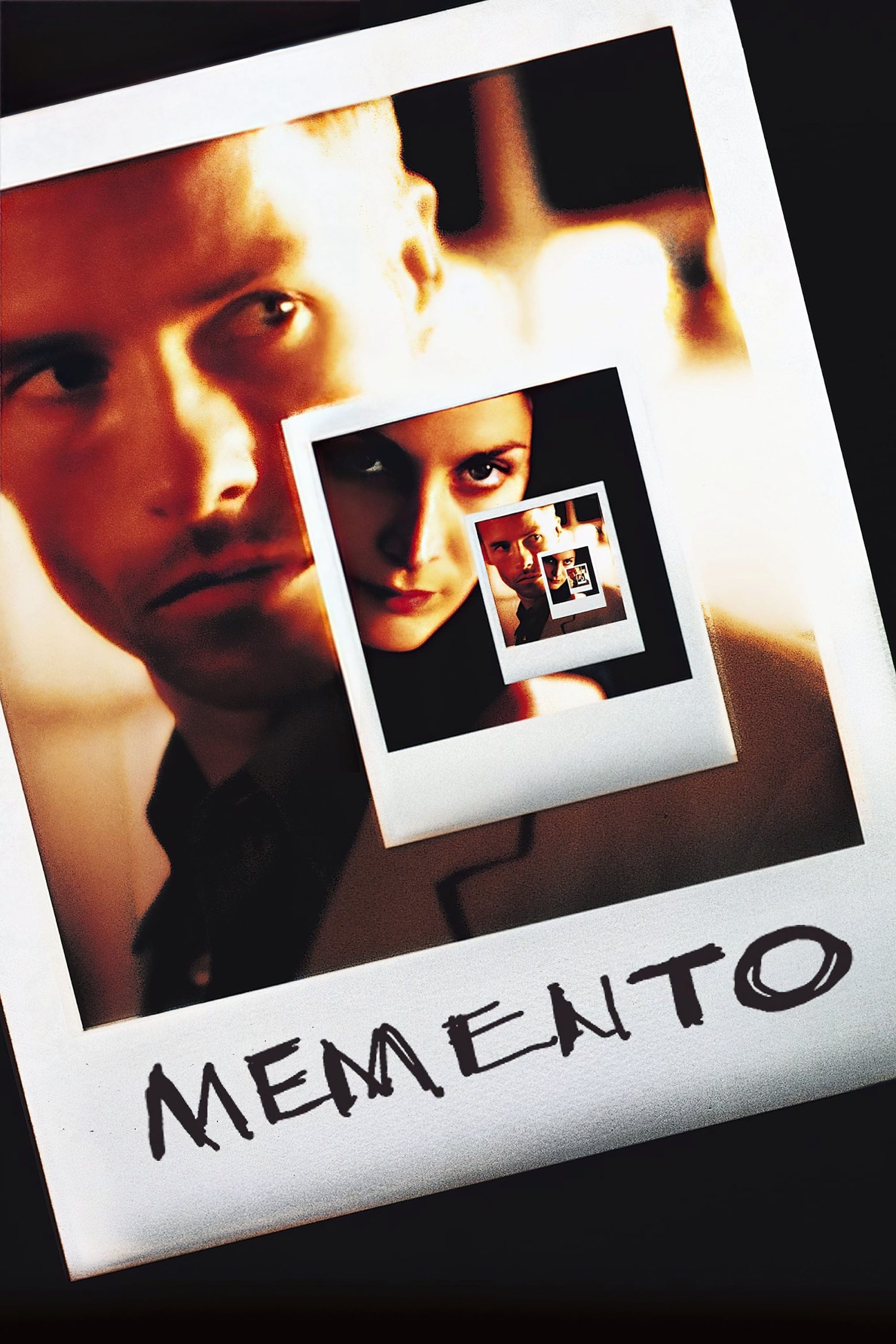
Memory as a Distorted Mirror
I remember the first time I saw “Memento”—not so much the story itself, but the experience, the feeling of being tangled in a riddle I could feel but not quite solve. This is a film that doesn’t simply use memory as a plot device; it turns memory into a splintered mirror, forcing me to question not just the truth of what I see, but the nature of perception itself. What struck me most is the film’s relentless suggestion that memory is not a reliable vessel for truth, but rather a tool we wield, sometimes maliciously, sometimes desperately, to construct the version of reality we need.
The Cage of Self-Delusion
As I watched Leonard Shelby piece together his identity with Polaroids, tattoos, and trembling urgency, I couldn’t escape the creeping feeling that his search was a performance—one he put on for himself, because the alternative was unbearable. This film isn’t about a man chasing his wife’s killer; it’s about a man manufacturing purpose to stave off the abyss. The structure—scenes running in reverse—parallels the emotional disorientation at the heart of Leonard’s character. The story’s fragmentation mirrors the self-deceptions we all indulge in: the half-truths we cling to because they’re easier than facing the whole story.
Notes, Tattoos, and the Illusion of Certainty
Every scrap of Leonard’s self is externalized—his “facts” are written on his body and objects, as if the act of inscribing them could render them unassailable. Yet, as I followed him, I couldn’t help but sense the futility in this ritual. There’s a tragic irony in Leonard’s attempts to create permanence out of ink and snapshots; he’s trying to stabilize a world that resists stability, to create certainty where there is only shifting sand. The film challenges me to consider how much of our own sense of truth is external, performative, and ultimately fragile.
The Seduction of Narrative
I became acutely aware of how much I wanted to believe Leonard—how much the very structure of cinema encourages me to root for the protagonist, to build a narrative around their journey. But “Memento” refuses to grant me that comfort. The film is a meditation on how stories, whether personal or cinematic, are seductive lies we tell to make sense of chaos. When Leonard chooses to tattoo a lie onto his body, I felt a pang of complicity; I too was choosing, for a time, to accept the story he needed over the messier, more painful reality. Nolan’s film forced me to confront my own yearning for order, for closure, and the lengths I’ll go to maintain that illusion.
Empathy Twisted by Perspective
One of the more unsettling aspects was how my sympathy for Leonard shifted as the puzzle assembled itself in reverse. I initially pitied him—his vulnerability, his confusion—but as the film revealed his self-delusion, my empathy became tainted with suspicion. By aligning me with Leonard’s fractured perspective, the film implicates me in his choices; it demands that I recognize myself in his attempts to rewrite reality. Every viewer becomes a participant in the web of manipulation, making the experience intensely personal and disorienting.
The Tyranny of the Present Moment
Every scene in “Memento” is a crisis of now. Leonard’s condition means he cannot maintain a sense of continuity, and so he is trapped in an eternal present, always reacting, never truly learning. The film makes a profound statement about the dangers of living disconnected from our own pasts, of being unmoored from the broader arcs that give our lives meaning. As I watched him, I felt the horror of what it means to lose the context that makes suffering bearable, joy resonant, and identity coherent. In that sense, Leonard’s predicament is a metaphor for a modern existence—fragmented, urgent, and perpetually unanchored.
Trust and Treachery in Human Connection
The relationships in “Memento” are fraught with ambiguity; every gesture of kindness harbors a threat, every offer of help masks self-interest. The film’s world is one in which trust is weaponized, a currency to be spent carefully, if at all. Watching Natalie and Teddy maneuver around Leonard, I was reminded of how easily good intentions splinter into manipulation, especially when communication falters. Nolan doesn’t let me indulge in easy villains or saints; his characters orbit each other, driven by need, revenge, and survival, constantly redrawing the boundaries of intimacy and betrayal.
The Final Mercy of Forgetting
For all its bleakness, there’s an unexpected mercy at the heart of “Memento”: the possibility that forgetting might sometimes be a kindness. As Leonard chooses to deceive himself—erasing the chance for closure in favor of endless pursuit—I felt a pang of recognition. The film invites me to consider whether some truths are too destructive to bear, and whether the act of forgetting, as much as remembering, can be an act of self-preservation. There is a paradoxical hope in Leonard’s condition: while he is doomed to repeat his quest, he is also spared its consequences, living always just before the moment of reckoning.
From Dissonance to Reflection: Where “Memento” Led Me
When the credits rolled, I wasn’t left with answers but with a lingering unease—a sense that the film had exposed something about the stories we tell ourselves and the dangers of trusting our memories. “Memento” left me with the unsettling realization that certainty is often just well-disguised doubt, and that sometimes, in our desperation for purpose, we become the authors of our own confusion.
If This Film Resonated With You
If you were haunted by the psychological puzzles and existential questions of “Memento”, you might find similar echoes in the following classic works:
- Vertigo (1958)
- Rashomon (1950)
If you’re curious about how this film was originally perceived or how it compares to similar works of its era, these resources may be helpful.
🎬 Check out today's best-selling movies on Amazon!
View Deals on Amazon