
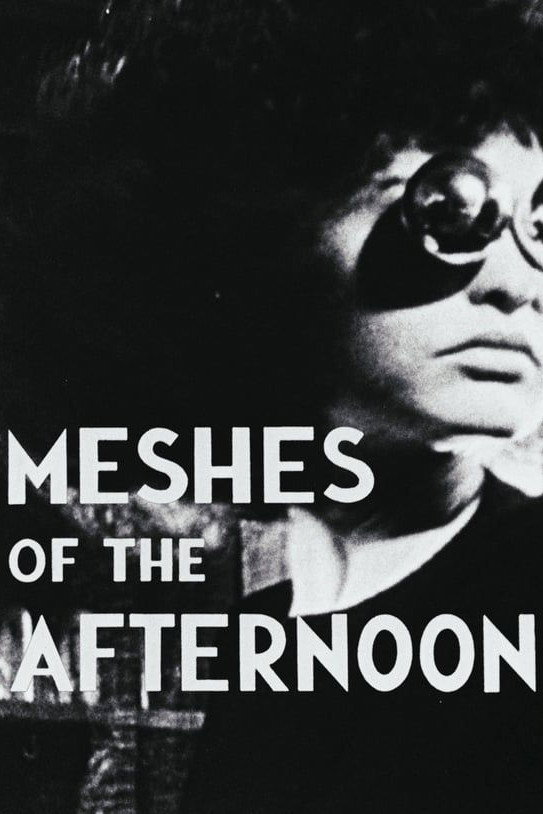
Walking Through the Mirror: My First Encounter with Maya Deren’s Labyrinth
I remember the first time I watched “Meshes of the Afternoon,” the world outside seemed to fade as the film’s dream logic took hold of my senses. The sunlit room where I sat became indistinguishable from the murky interiors on screen. There was no gentle invitation—Deren’s images grabbed me with their elliptical rhythms and cyclical descent into the self. From the outset, I felt an uncanny recognition, as if Maya Deren was mapping the hidden corridors of my own mind. This film isn’t merely a story told through images; it’s an invitation to tumble headlong into the spirals of subconscious experience.
The Endless Loop of Needles and Keys: Objects as Portals
What immediately arrested my attention in “Meshes of the Afternoon” was the way everyday objects—keys, knives, a flower, that half-glimpsed cloaked figure—are rendered with totemic significance. In my experience watching experimental cinema, props often blur into the background, yet here, the objects are magnetic; they pulse with unresolved longing, fear, or violence. The key unlocks, the knife threatens, the bread retains domestic weight. Nothing is neutral. When Deren’s protagonist clutches a key or stares at her own face behind glass, I sense an interrogation of femininity, autonomy, and dread. These household items become portals, opening and closing on the subconscious, as if every repetition brings us closer—and yet farther—from understanding the protagonist’s psychic state.
The Shadow Self: Multiplicity and the Problem of Identity
The image that most haunts me from “Meshes of the Afternoon” is not the enigmatic figure with the mirrored face, but the recurrence of the protagonist herself—splintered, multiplied, watching and being watched. Each version of herself seems both familiar and foreign, a doppelgänger gently stalking the rooms of her own psyche. This is a film about encountering the multiplicity within the self, about that moment when identity fractures under the strain of desire and anxiety. As I watch Deren’s character split, observe, and sometimes attempt to destroy her other selves, I recognize the movement of an internal struggle—one that doesn’t resolve, but loops endlessly. There’s an honesty here about our inability to reconcile all the fragments of our own identity, especially as we attempt to fit ourselves into prescribed roles, especially those prescribed to women.
Dream Logic and the Tyranny of Time
Traditional narrative films lull me with their causal logic and temporal clarity. “Meshes of the Afternoon,” on the other hand, shatters chronology into shards. The cyclical repetition of events—walking up the same steps, encountering the same objects, returning to the same window—leaves me suspended in a time outside of time. The film’s structure mimics the stubbornness of recurring dreams, the sensation of being trapped in a sequence that promises revelation but delivers only further enigma. For me, this is less about narrative ambiguity than about emotional truth: life’s most powerful moments, whether fear or desire or despair, rarely unfold in straight lines. Deren’s manipulation of time onscreen reflects the lived experience of trauma, obsession, and the desire to break free from the circuits of thought that can so easily become prisons.
The Face Beneath the Veil: Confronting the Unknowable
Every time the cloaked figure with the mirrored face glides into the frame, I feel a jolt of recognition and dread. The figure’s presence is both personal and universal. I’ve come to believe the mirrored face is the film’s most potent metaphor—confronting us with the impossibility of seeing our own inner truth directly. Every attempt to unmask or approach this figure is met with disappointment, apprehension, or violence. When I watch Deren chase her own reflection, or recoil from the gleaming void, I see the agony of self-inquiry, the pain of looking for answers in places that refuse to yield clarity. The mask’s reflection is both a void and a challenge: what do I see when I look inside? What do I refuse to see?
Domestic Spaces as Psychic Arenas
The setting of “Meshes of the Afternoon”—that modest house, the staircase, the windows looking out at the sunny world beyond—resonates deeply with me as a stage for psychic drama. On its surface, the home is a place of safety, light, and routine, yet Deren’s camera recasts it as a site of looping tension and entrapment. The domestic becomes the uncanny; the familiar, a terrain of threat and fragmentation. Each room is re-entered as if for the first time, yet with the weight of all previous entries. The motif of circling, both literally and figuratively, hints at the claustrophobia of prescribed gender roles, as well as the anxiety of self-examination. I feel the walls closing in, yet the windows always promise a world outside, unreachable but tantalizing.
Silent Collaborations: The Gendered Dynamics of Power
Though often described as Deren’s film, Alexander Hammid’s presence—both as co-director and as the man in the film—cannot be ignored. Their creative partnership manifests onscreen as an ambiguous duet. The man is alternately savior, interloper, and threat; their silent interactions are laden with meanings that shift from one viewing to the next. What strikes me most is the way Deren’s protagonist is alternately empowered and erased by the presence of the male figure. I find the silent, unresolved push and pull between them to be a comment on the shifting sands of gender and agency within both art and private life. The film refuses to resolve these tensions, choosing instead to envelop us in their reverberations. The silent gestures, the hands offering or withholding, feel as much like power struggles as like expressions of care.
Breaking the Surface: The Underwater Sensation
There’s a sensation I get watching “Meshes of the Afternoon”—a feeling not unlike floating underwater, where sounds are muffled and movements are dreamlike. The film’s rhythm, with its sudden cuts and slow builds, is hypnotic. For me, this isn’t an accident of Deren’s editing technique, but a deliberate invocation of the subconscious’s ebb and flow. It’s as if the film drags me beneath the surface of waking life, asking me not to analyze, but to feel the undertow of its meanings. I watch, understanding that some images are meant to be experienced rather than deciphered. The ambiguity becomes a kind of freedom, a release from the tyranny of clear answers.
Notes on Escape and Unraveling
By the final moments, escape becomes the dominant obsession. The drive to break the cycle—to open the door, to smash the mirror, to wake up—feels achingly familiar. Yet the house, the key, the mirrored figure all persist, suggesting that true escape may be impossible. Here, repetition is both a curse and a comfort; the endless return to the same starting point invites despair, but also hints at the possibility of transformation. Each circuit through the house is a rehearsal for liberation, even if that liberation never arrives. I find the film’s ending less bleak than honest. Deren isn’t promising resolution; she offers instead a mirror held up to the relentless rhythms of the psyche, where meaning is never fixed and every escape is provisional.
Two Kindred Journeys Worth Taking
I’ve often looked for other films that evoke the same immersive, poetic unease as “Meshes of the Afternoon.” While nothing quite replicates its singular pulse, two classics come close in spirit and vision: “Persona” by Ingmar Bergman and “Last Year at Marienbad” by Alain Resnais.
If you’re curious about how this film was originally perceived or how it compares to similar works of its era, these resources may be helpful.
🎬 Check out today's best-selling movies on Amazon!
View Deals on Amazon