
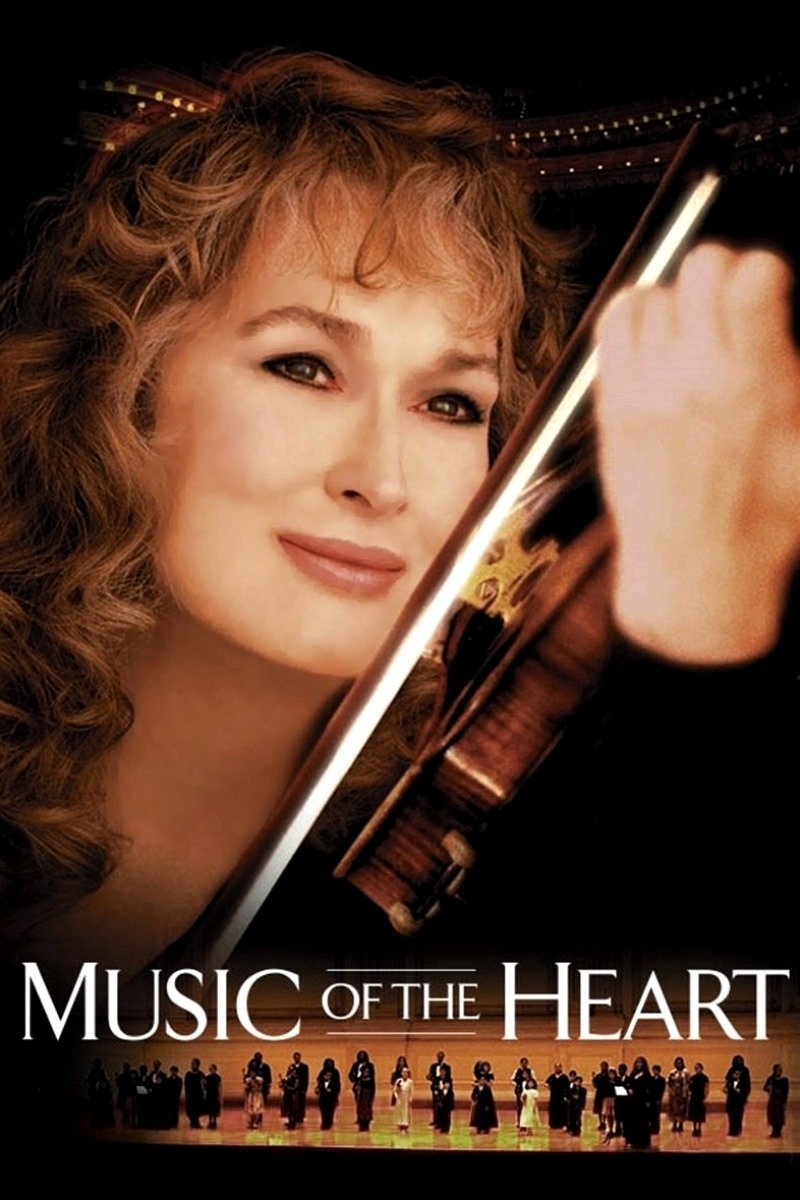
For me, “Music of the Heart” has always conjured the scent of resin and the distant echo of strings in a drafty schoolroom. It pulls me back to my own childhood—when the power of a teacher’s belief could reshape the fabric of a day, or even a future. There’s an earnestness to this film, a kind of tenderness woven through its storytelling, that sneaks up on me each time I revisit it. The sight of Meryl Streep, hunched protectively over a battered violin case, never fails to remind me why stories about the transformative power of art matter—especially when they’re crafted with vulnerability and grit beneath their surface warmth.
What the Film Is About
On its surface, “Music of the Heart” follows Roberta Guaspari’s struggle to plant the seeds of classical music in Harlem—a community historically underserved by the arts. Yet, to me, what unfolds is so much more than a simple “uplifting teacher” narrative. The film challenges the viewer to consider what it means to cling to purpose in the face of urban neglect and bureaucratic indifference. It’s about fighting for something intangible, something that society often deems expendable.
At the heart of the film lies a profound emotional journey—not just for Roberta, but for the children she teaches and, even more poignantly, for their families. Her struggle isn’t against a singular villain, but against a climate of apathy and resignation. Each violin lesson becomes a battle for dignity; each child’s first hesitant notes are tiny victories over neglect. The central conflict is less about funding and more about respect—the belief that every child is worthy of beauty, discipline, and inspiration.
Core Themes
What keeps pulling me back to “Music of the Heart” in the years since its release is its exploration of resilience through education and the democratization of classical arts. The film’s insistence that music is not a luxury reserved for the privileged feels even more urgent against the backdrop of today’s chronic arts funding crises.
In 1999, as debates about the value of public schooling and extracurriculars raged, the film’s message landed like a rallying cry. It’s not mere nostalgia—the themes of equity, empowerment, and personal tenacity resonate fiercely in a world where arts programs are still the first to face the chopping block. Watching students reclaim their voices through their instruments, I am reminded of how access to creativity shapes identity, especially for children navigating poverty or adversity. The film seems to ask: What do we lose as a society when we neglect that part of ourselves?
Symbolism & Motifs
The violin serves as far more than a prop in this story—it is the ultimate metaphor for discipline, beauty, and hope in unlikely places. There’s a tactile intimacy to the instrument: delicate, easily broken, yet capable of a soaring voice if handled with care. The recurring motif of children tuning their violins, learning to coax sweet sounds from the discordant, echoes the laborious process of finding harmony in a chaotic world.
For me, the film’s use of light and shadow in the schoolroom scenes is particularly telling. Sunbeams piercing through dusty windows illuminate both the students’ faces and the floating motes—suggesting that magic is possible even when the setting is humble. Another motif that resonates is the communal act of performance: recitals morph into rituals of belonging, where nervous glances and uncertain notes coalesce into genuine pride. These moments reinforce the transformation of both teacher and students—from isolated individuals into a resilient, joyful collective.
Key Scenes
A Difficult First Rehearsal
The scene that cements my investment in Roberta’s crusade is her first rehearsal with the children—most unable to hold their bows, some rolling their eyes with skepticism. It’s a masterclass in understated tension: Roberta’s nerves are barely concealed by her determined facade, while the students test both her patience and the boundaries of their own skepticism. What makes this moment so crucial is its honesty. No genius reveals themselves here, just the first flickers of trust and possibility—reminding me how rarely progress is immediate or glamorous.
The Recital That Changes Everything
When the children finally take the stage for their debut performance, I find myself breathless, not because of technical perfection, but due to the visible transformation in their confidence. This public affirmation of their worth, witnessed by parents and neighbors, feels nothing short of radical. In this moment, the story’s message crystallizes: art, when made accessible, can electrify those willing to risk vulnerability—and it can galvanize whole communities into advocacy and pride.
Confrontation in the Principal’s Office
Another linchpin is the confrontation when the school administration considers cutting the violin program. Roberta’s impassioned defense is less a plea and more an act of defiance. Here, the film foregrounds the necessity of anger as a catalyst for activism; Streep’s gravitas invites the viewer to take her cause seriously. For me, this scene shifts the film from a personal journey to a collective one, emphasizing that the struggle for arts education requires both individual resolve and public outcry.
Common Interpretations
Critics have often framed “Music of the Heart” as a feel-good, formulaic entry in the genre of teacher-hero films—a sentimental crowd-pleaser that hits predictable inspirational beats. I understand why: the underdog narrative, the gradual transformation, the climactic fundraising concert—none are new tropes. But where I diverge is in how I assess its emotional authenticity.
While some reviewers see the film as emotionally manipulative or lightweight, for me, its strength lies in its unwavering belief in the value of tenacity and incremental change. The sincerity of its protagonist’s mission, buoyed by Streep’s nuanced performance, shields it from slipping into cliché. Where others find the film simplistic, I see it as refreshingly earnest—and the moments of messiness, frustration, and small-scale triumph feel earned, not manufactured.
Films with Similar Themes
- Mr. Holland’s Opus – Like “Music of the Heart,” this film explores how a dedicated music teacher shapes students’ lives over decades, emphasizing the transformative and redemptive power of the arts.
- Dead Poets Society – Although centered on literature rather than music, both films portray charismatic educators who inspire marginalized students to transcend limitations through self-expression.
- Stand and Deliver – The story of a math teacher in East LA echoes the theme of battling institutional obstacles to give disadvantaged kids a shot at excellence and self-respect.
- Freedom Writers – This film mirrors Roberta’s journey in its focus on an unconventional educator’s fight to bring hope and voice to urban youth, using the classroom as a battleground for empowerment.
Conclusion
Approaching “Music of the Heart” now, it’s easy to fixate on the sentimentality, or to dismiss it as another entry in the pantheon of inspirational teacher films. Yet if we allow ourselves to look beyond those trappings, the film offers a potent meditation on the sustaining value of art—and the moral imperative to fight for access to it, no matter the odds. For today’s viewers, especially those witnessing the erosion of arts education, Guaspari’s crusade is no distant fairy tale. Understanding the film’s core themes deepens our appreciation of both its artistry and its activism—and reminds us why such stories are still urgently needed.
Related Reviews
If you found value in my perspective, you might also enjoy exploring my thoughts on other cinematic landmarks such as “Mr. Holland’s Opus” and “Dead Poets Society.”
To broaden this interpretation, you may also explore how critics and audiences responded over time.
🎬 Check out today's best-selling movies on Amazon!
View Deals on Amazon