
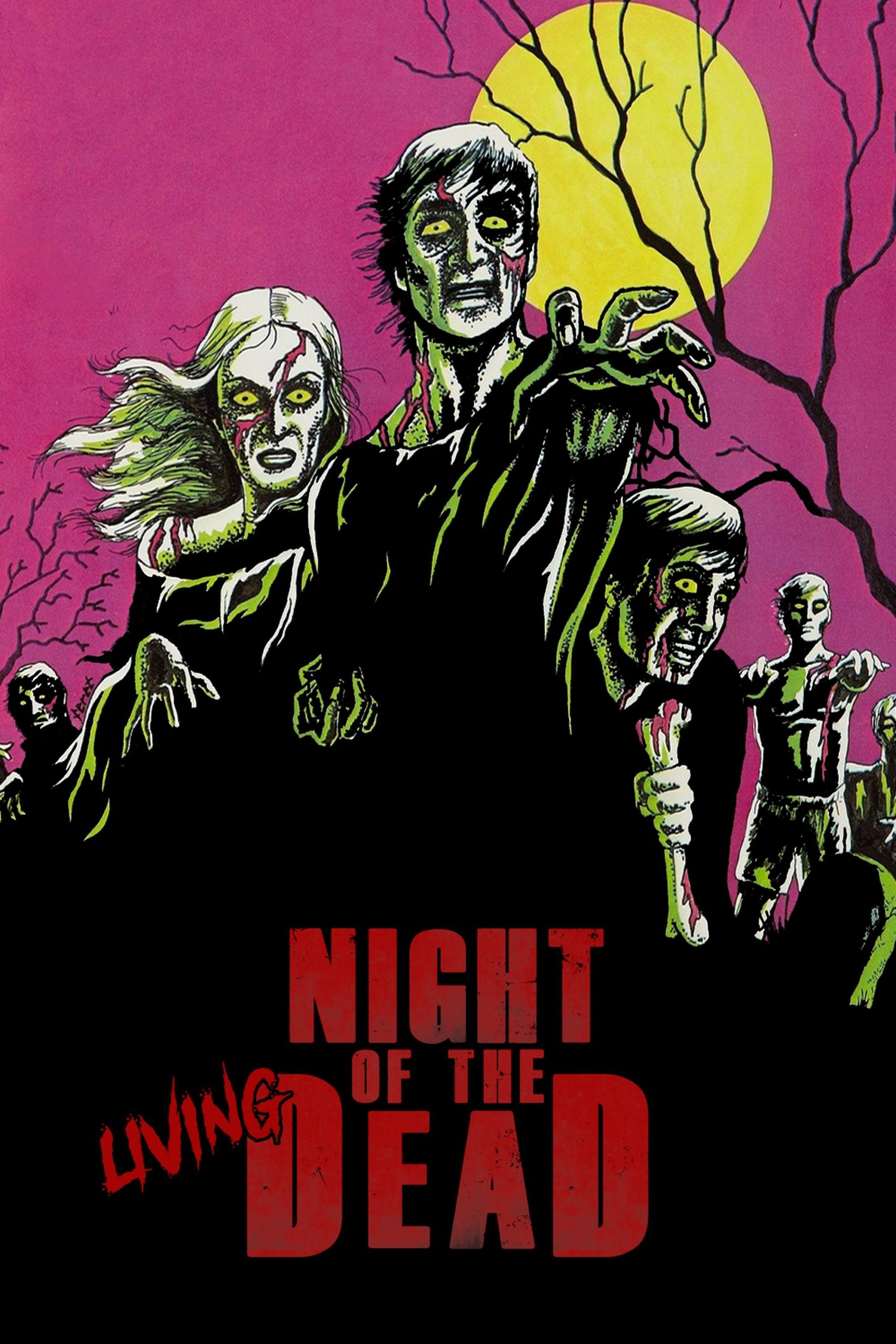
Shuffling through late-night TV as a teenager, I stumbled upon a grainy black-and-white image: a woman running through a cemetery, terror etched across her face, the world suddenly upended by unimaginable horror. “Night of the Living Dead” was never just a movie to me—it was a rite of passage into a world where cinema didn’t need to reassure or resolve, but instead held up a mirror to the most basic terrors fermenting beneath the surface of polite society. The uncanny anxiety that seized me during that first viewing never really dissipated. Instead, every subsequent experience with the film felt like peeling back another layer of cultural malaise that, decades on, hasn’t lost an ounce of its potency.
What the Film Is About
Fundamentally, “Night of the Living Dead” is, on its surface, a movie about survivors barricaded in a rural farmhouse, besieged by undead assailants. But the film’s actual core lies deeper: it chronicles the gradual disintegration of human dignity and reason under the twin pressures of external horror and internal fracturing. The plot’s relentless drive—zombies pressuring the windows, survivors debating, emotions fraying—rings as much as a psychological autopsy as a horror scenario.
What I find most unique in the film’s emotional journey isn’t just the fear itself, but the pacing with which hope is constantly suffocated. There are moments, particularly in the uneasy truces amongst the survivors, where it seems collaboration might prevail, only for suspicion, arrogance, and selfishness to create ever-deepening rifts. The narrative, in my reading, is less an action of survival and more a meditation on communal failure; these characters aren’t just fighting the dead outside, but their inability to trust or understand one another. George Romero creates a sense of claustrophobia that lingers far longer than any zombie bite could.
Core Themes
The most striking aspect, for me, is how Romero’s landmark film is less concerned with literal monsters than with the breakdown of social order. The seemingly straightforward setup—a handful beset by encroaching horror—becomes a reflection on American society’s barely concealed fissures. Authority, race, gender roles, and generational mistrust all crash into each other, creating tension that’s harder to resolve than any physical threat.
Given its 1968 release, the film feels like a fever dream of its time: civil rights unrest, anti-war protests, domestic upheaval. Through Ben’s story especially, I sense a resonance with the turbulent racial politics of America. Here is a Black protagonist unseating the audience’s expectations at every turn, yet still ultimately falling victim to the same underlying social violence he’s so desperate to escape. Today, these explorations remain painfully germane—how quickly order dissolves under strain, and who is ultimately abandoned or blamed. That’s what cements the film as uncompromisingly modern to me.
Symbolism & Motifs
The farmhouse itself, with its boarded windows and creaking floors, stands as a microcosm of a society desperately trying to keep chaos at bay with fragile, makeshift institutions. Each failed barricade feels emblematic: hope is patchwork, safety an illusion. Romero shoots from below, giving the interior space a sense of confinement bordering on the suffocating.
Another recurring motif is the television and radio broadcasts crackling in the background—a motif that speaks to the era’s growing distrust of official narratives and mass media. These updates, both informative and distant, serve to anchor the apocalypse in a recognizable world while underlining the characters’ profound isolation.
Perhaps most chilling is the recurring motif of familial breakdown: a daughter kills her mother, brother turns on sister, and the home—meant to be a sanctuary—becomes a tomb. The breakdown of normative bonds is as terrifying as the zombies, if not more so. For me, these visual and narrative choices reinforce the idea that the “real” horror is within, not without.
Key Scenes
Descent in the Cemetery: Setting a Tone of Dread
The first five minutes—the quiet drive, the uneasy sibling dialogue, the sudden monstrous assault—set the tone for everything to follow. I find the sequence masterful in its understatement and pacing. The sense of normalcy abruptly shattered is a motif that recurs both in the film’s structure and themes, signaling that safety is always illusory. It’s not just about a zombie attack; it’s about the uncanniness of a familiar world turning hostile without warning.
Televised Authority: False Promises of Order
Halfway through the siege, when the survivors huddle around the glow of the flickering TV, the film wields an almost documentary realism. The televised experts, calm and bureaucratic, offer an illusion of control that the characters inside the house can never grasp. This scene always strikes me as quintessentially American—clinging to institutions, to the idea that rescue or salvation is simply a matter of “official orders.” The contrast between media “order” and lived chaos is one of the most pointed critiques Romero weaves into his horror.
The Final Fatal Tableau: Shattering False Hope
The denouement—Ben, lone survivor, emerging cautiously from the basement, only to be mistaken for a ghoul and shot by the militia—delivers a gut punch that defines the entire film. Here, Romero merges social metaphor and horror: even survival does not guarantee justice or empathy. The callous disposal of Ben’s body, intercut with grainy, documentary-style images, strips away the last vestige of hope. For me, this is the scene that cements the film’s reputation as not only bleak, but ferociously honest in its vision.
Common Interpretations
Many critics have focused on the film as an allegory about race relations in America, with Duane Jones’ role as Ben being both groundbreaking and deeply symbolic. I agree that this reading is not only plausible but vital—especially in the context of 1968. Others point to echoes of Vietnam War-era dread or see the zombies as avatars of mindless consumerism, a reading Romero himself leaned on in later works.
Yet, I find those interpretations, while compelling, sometimes overlook what I see as the film’s most enduring achievement: its depiction of civilizational decay at the micro-level. For me, “Night of the Living Dead” is less a treatise about external monsters and more a withering look at how quickly neighbors, family, and fellow travelers turn on each other when faced with the unknown. The zombies are frightening not because they are inhuman, but because they allow everyone else’s inhumanity to rise unchecked.
Films with Similar Themes
- Invasion of the Body Snatchers (1956): Both films use horror to explore paranoia and the threat of societal breakdown, focusing on how identity and community dissolve under stress.
- The Last Man on Earth (1964): Here, isolation and survival against the “infected” share thematic DNA with Romero’s nightmare, raising questions about what it means to be human in the end times.
- The Texas Chain Saw Massacre (1974): Like Romero’s work, this film uses a confined setting and relentless threats to dissect familial and cultural anxieties, drawing its terror not only from gore but from social ruptures.
- Dawn of the Dead (1978): Romero’s own sequel takes the social critique further, wielding zombies as a metaphor for consumer society and the emptiness at its heart, expanding on themes present in “Night of the Living Dead.”
Conclusion
Viewing “Night of the Living Dead” today, I’m struck not simply by its legacy as a cult classic, but by its persisting relevance. It’s a film that sees through cultural facades, daring viewers to confront uncomfortable truths about who we become in crisis. I think modern audiences benefit most when they approach it not as nostalgia or mere genre entertainment, but as a living document—one that still asks, unflinchingly, what binds us, and what tears us apart.
Related Reviews
If you found value in my perspective, you might also enjoy exploring my thoughts on other cinematic landmarks such as The Texas Chain Saw Massacre and Invasion of the Body Snatchers.
To broaden this interpretation, you may also explore how critics and audiences responded over time.
🎬 Check out today's best-selling movies on Amazon!
View Deals on Amazon