
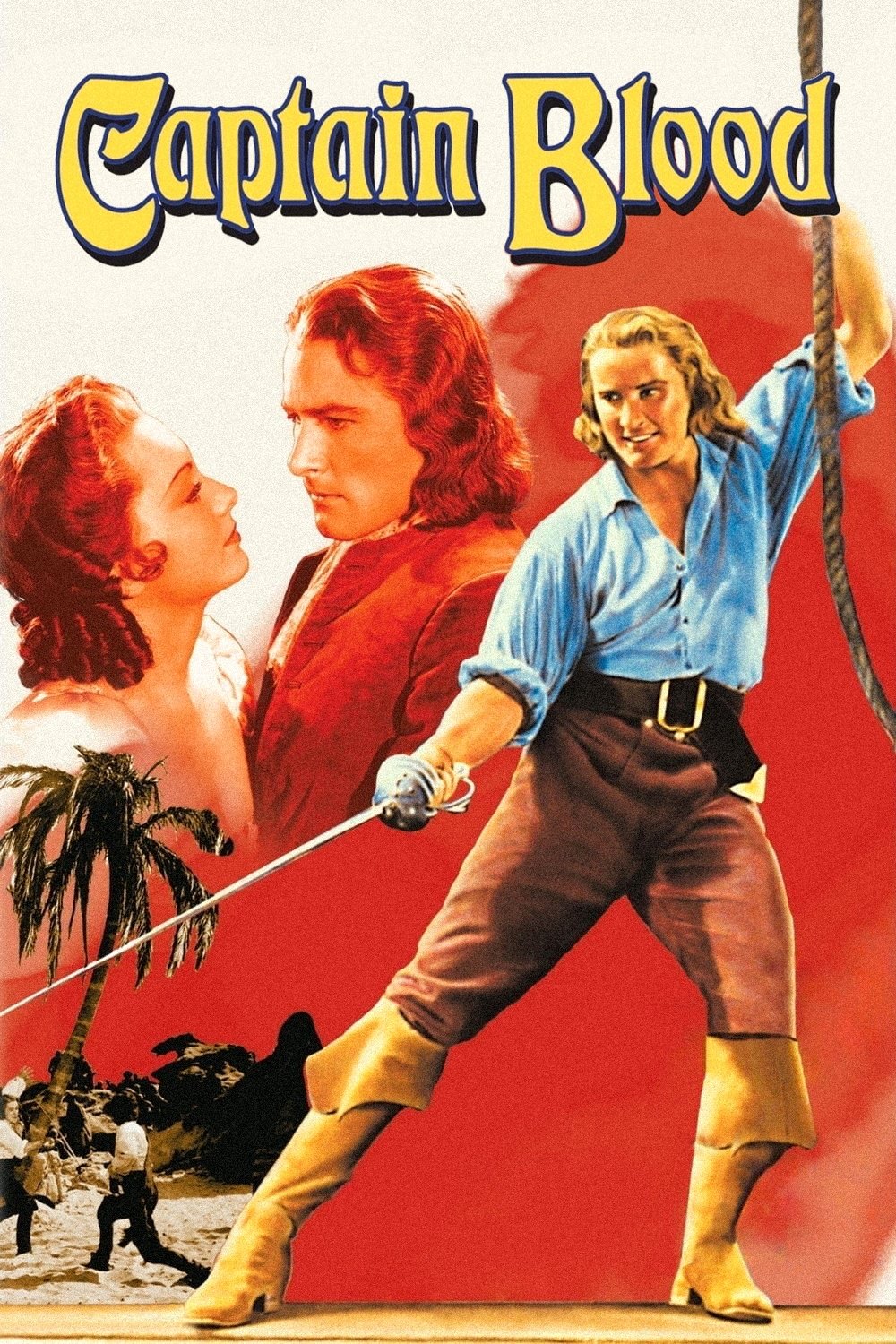
It’s difficult to recall the first time I watched “Captain Blood,” but I remember the sense of wonder vividly. There was a pulse in the air the moment Errol Flynn’s Peter Blood stepped into frame, an electricity I hadn’t expected from a 1935 swashbuckler. I found myself drawn not just by the spectacle, but by something stirring beneath—the rebellion, the risk, and, perhaps most unexpectedly, the tenderness at its core. My relationship with this film has always felt like a secret handshake between old Hollywood adventure and a deeper, more defiant undercurrent that still resonates in today’s cynical world.
What the Film Is About
At its heart, “Captain Blood” is the odyssey of a good man outlawed by a corrupt system, a story where principles are ground down by power but refuse to be eradicated. The film follows Dr. Peter Blood, a physician whose refusal to turn a blind eye—who chooses mercy over indifference—results in his branding as a traitor and ultimate transportation into slavery. The emotional trajectory here is one of battered hope: Blood’s initial idealism is tempered by the bitter taste of betrayal, yet never fully extinguished. The ensuing transformation into a reluctant pirate is rendered with the gravitas of someone forced to redefine himself in the face of cruelty, not because he seeks heroism, but because survival demands it.
What strikes me most is the undercurrent of longing that saturates every frame—not merely the romantic longing between Blood and Arabella Bishop, but the longing for justice, for home, and for dignity in a world that offers precious little of any. The central conflict—man against empire, conscience against authority—is dramatized with a sharp awareness of the price of both resistance and resignation. The film, for me, asks how much of one’s truest self survives beneath the mask society insists you wear, and whether decency can endure in the cutthroat theater of survival.
Core Themes
The elixir that gives “Captain Blood” its enduring charge is its probing of justice, personal agency, and the corruption of institutional power. The 1930s, with their scars of economic depression and the looming storm of totalitarianism, were a hothouse for stories like this. Viewers then saw in Blood’s ordeal a reflection of their own fears about societies that could betray citizens overnight.
But the film’s relevance isn’t locked in its own era. Watching it now, I’m struck by how the search for identity—forced reinvention in the face of unjust systems—remains a defining conflict. Blood’s journey is the blueprint for countless outcasts who refuse to surrender their principles to expedience. The story demands we reckon with our relationship to power, be it political, personal, or romantic. In a time when questions about justice and authority have rarely felt more urgent, the film’s central struggle is as fresh as a shot across the bow.
Symbolism & Motifs
To my eye, the ocean that frames “Captain Blood” is far more than a backlot set dressing—it’s a living metaphor. Water in this narrative is both the cage and the key: the very element Blood is shackled by and, paradoxically, the one that allows his escape. The restless sea encapsulates the possibility of reinvention, danger, and freedom, echoing the turbulent path of the main character’s psyche.
Another motif that recurs with striking clarity is the mask, both literal and figurative. Throughout his journey, Blood is compelled to adopt new identities—doctor, slave, pirate, lover—all in defiant opposition to the labels imposed upon him. This dance between outward role and inward truth is one of the most enduring pleasures of the film. Even the sword, wielded with fluency by Flynn, becomes more than a weapon; it’s a line of demarcation between violence for survival and violence for subjugation, a delicate, double-edged tool for carving out dignity in a brutal world.
Key Scenes
The Courtroom’s Unjust Decree
The early courtroom sequence where Peter Blood is sentenced to slavery always pierces me with its chilling matter-of-factness. The farce of legal authority here is laid bare: principle is reduced to a crime; mercy, to sedition. For me, this moment sets the emotional stakes and exposes the ferocity of institutional betrayal that will haunt the rest of Blood’s journey. Without this cold injustice, the romance and adventure that follows would feel unearned.
The Ship’s Rebellion: Shackles Shattered
Equally unforgettable is the mutiny that transforms Blood and his fellow captives into pirates rather than victims. The blossoming of agency—violent and desperate, yet exhilarating—captures the paradox at the movie’s core: freedom can bloom from captivity, but only at immense cost. This is the moment when survival compels the birth of a new identity, and Flynn’s performance embodies both the thrill and the terror of this transformation.
A Duel of Words and Wills: Blood and Arabella
For all the film’s high-seas spectacle, it is the quieter scenes between Blood and Arabella Bishop that resonate just as clearly for me. These encounters strip away the veneer of swashbuckling bravado, revealing a vulnerability that reminds us the price of defiance is not merely physical, but emotional. Their attraction is tinged with risk—class, loyalty, the memory of shared humiliation—and it is in their uncertain silences and sidelong glances that the film’s humanity is most deeply felt.
Common Interpretations
Many critics, then and now, interpret “Captain Blood” first and foremost as a defining template of the Hollywood adventure genre. They often emphasize the technical polish, the reinvention of Errol Flynn as the archetypal swashbuckling hero, and the rousing spectacle of Michael Curtiz’s direction. These readings are not wrong—the film’s sense of pace and flair remains intoxicating—but I find they sometimes downplay what’s most subversive about the narrative.
To me, it’s less a celebration of derring-do and more an elegy for those forced to remake themselves in unjust times. Where the mainstream gaze sees escape and entertainment, I see critique—a film that lures you in with adventure, then quietly leaves you questioning the costs of both rebellion and acquiescence. The romance, wit, and athleticism are undeniable, yet it’s the mournful awareness of what’s lost—home, innocence—that lingers long after the credits roll.
Films with Similar Themes
- The Sea Hawk (1940) — Like “Captain Blood,” this Errol Flynn vehicle charts a renegade outlaw’s resistance against tyranny on the high seas, using the pirate’s journey to interrogate the ethics of rebellion and loyalty.
- Mutiny on the Bounty (1935) — Released the same year, this film delves into the clash between institutional authority and personal conscience, foregrounding the moral gray zone of mutiny against oppression.
- Spartacus (1960) — Stanley Kubrick’s epic considers the slave uprising not merely as spectacle, but as an existential quest for dignity in the face of absolute power, a theme central to “Captain Blood.”
- The Adventures of Robin Hood (1938) — Another Curtiz-Flynn collaboration, this film explores social injustice and the power of principled rebellion, mapping similar emotional terrain as “Captain Blood.”
Conclusion
“Captain Blood” remains, in my experience, not just a period piece, but a work that pulses with contemporary disquiet. Modern viewers willing to look past the film’s genre trappings will find a meditation on resistance and the self that is startlingly relevant. To understand it is to grapple not only with adventure, but with the costs of integrity when justice is out of reach. This, I believe, is what gives the film its staying power: its ability to entertain, unsettle, and provoke in equal measure.
Related Reviews
If you found value in my perspective, you might also enjoy exploring my thoughts on other cinematic landmarks such as “The Adventures of Robin Hood” and “Mutiny on the Bounty.”
To broaden this interpretation, you may also explore how critics and audiences responded over time.
🎬 Check out today's best-selling movies on Amazon!
View Deals on Amazon