
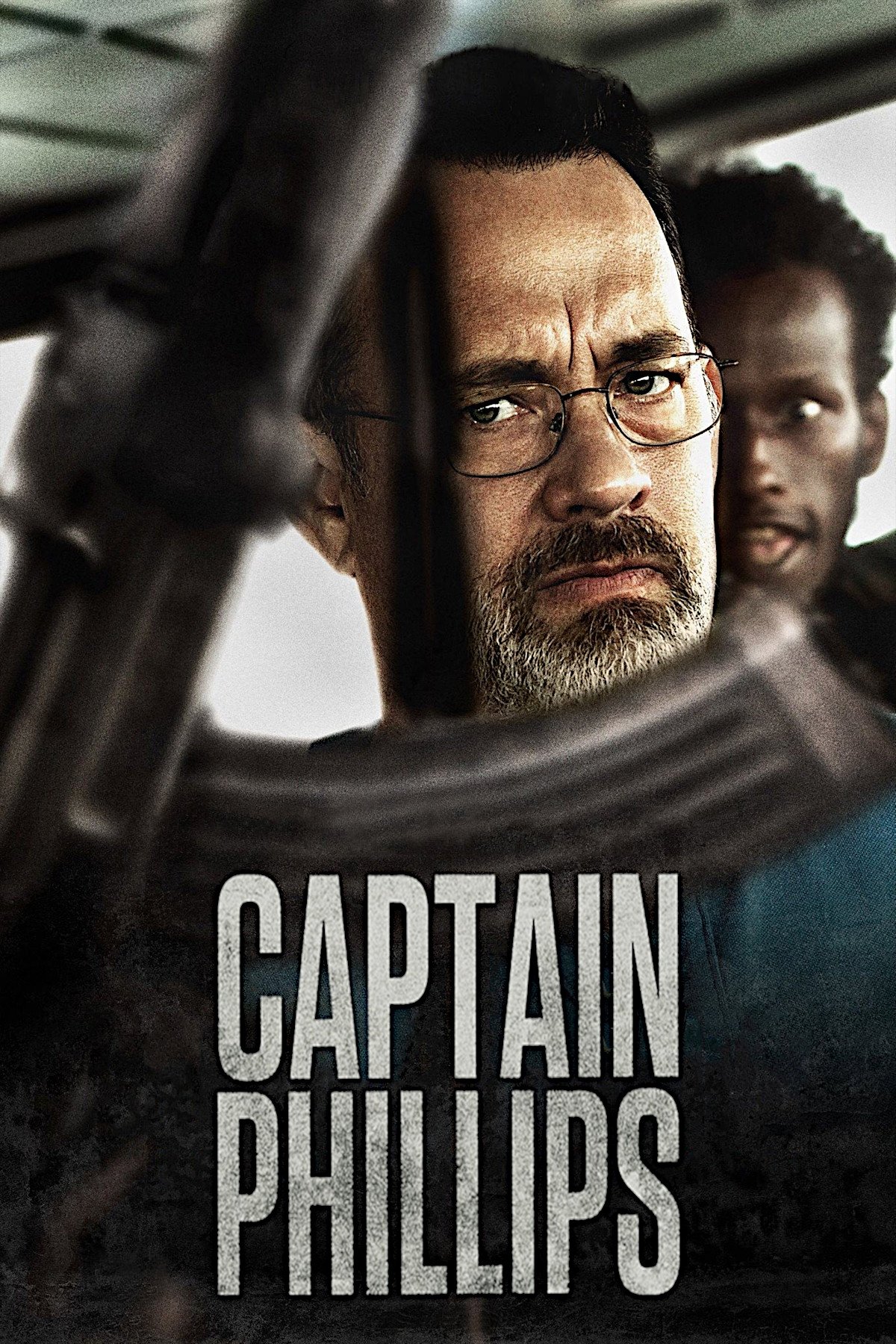
Thrown Into Hostile Waters: My Immediate Reaction to Captain Phillips
The first time I watched Captain Phillips, I couldn’t shake the rising tension that infected my chest. What struck me wasn’t just the spectacle of modern piracy, or the high-strung bravado of Tom Hanks, but a deeper, lingering discomfort—a sense that the film was quietly interrogating the boundaries of safety, privilege, and power on a global stage. It’s a movie that refuses to let me separate myself from its characters, even as it unfolds in the middle of the Indian Ocean, miles away from my own ordinary world.
The Mirage of Control on Open Seas
As I followed Richard Phillips navigating his American cargo ship, the idea of control—what it is, who truly has it—kept swirling in my mind. The film is obsessed with the illusion of mastery, both personal and institutional, and how quickly it unravels. Phillips’ insistence on protocol and his calm authority in the face of the threat seem admirable at first, but the ocean is a great equalizer. The Somali pirates’ approach exposes the vulnerabilities beneath Phillips’ collected exterior and, by extension, the vulnerabilities of the global systems we assume are unshakeable. Watching those tense radio calls and locked doors, I realized how thin the membrane is between order and chaos.
Humanizing Fear: The Cost of Survival
One of the most powerful aspects for me is how the film refuses to paint its antagonists with broad strokes. Captain Phillips challenges us to see fear and desperation from both sides of the gun. Muse, the pirate leader, is not a mere villain; he’s a man drowning in his own set of impossibilities, mirroring Phillips’ fight for survival. The close-ups on Muse’s face, the haunted resolve in his eyes, shattered my expectations. The “other” is not so distant here. This duality forces a recognition that survival for one side often means tragedy for the other.
The Ship as America: A Floating Microcosm
I can’t help but read the Maersk Alabama as more than just a ship. It becomes a floating stand-in for American commerce, privilege, and the idea of invulnerability. The containers stacked on deck, bound for distant markets, evoke the reach and fragility of global capitalism—goods moving freely, yet vulnerable to those shut out from the system’s rewards. The incursion by the pirates is, on one level, a literal hijacking, but on another, a symbolic breach: a moment when the “outside world” forcibly enters the insulated space of the West. The film is asking what happens when invisible lines of power and prosperity are suddenly, violently redrawn.
Isolation in the Modern Age
Modern technology permeates every scene—radios, radar, GPS—a mesh of systems designed to make us feel less alone. But as the ship drifts farther from the coast, each tool seems inadequate against the mounting threat. Captain Phillips posits that in an interconnected world, isolation can be both literal and psychological. Phillips’ isolation is physical in the lifeboat’s cramped, airless hull, but it’s also existential: the terrifying realization that no system, no policy, can guarantee safety. The film lingers on the breakdown of these supports, suggesting that, for all our progress, vulnerability is inescapable.
Negotiating Humanity at Gunpoint
Throughout the standoff, I am drawn to the constant, shifting negotiations: not just for freedom or for money, but for dignity and recognition. The dialogue between Phillips and Muse becomes a crucible, compressing wide global inequalities into intensely personal exchanges. These moments force me to consider how empathy and enmity can coexist. Even as both men cling to their respective authority, their interactions strip them down to something rawer—a mutual acknowledgment of fear, pride, and longing.
I found myself unsettled by the moments when language fails—when gestures and glances carry more weight than words. The film suggests that true understanding is often impossible under duress, but that the attempt itself reveals our shared humanity. Watching Phillips try to convince Muse to end the standoff, I saw each man’s desperation reflected in the other, echoing the inescapable tragedy of their encounter.
Aftermath and the Cost of Survival
The film’s climax—a storm of violence and precision—left me breathless, but it’s the aftermath that truly lingers. Captain Phillips is less interested in heroism than in the emotional wreckage left behind. The vulnerability Hanks brings to his final moments—shattered, weeping, disoriented—cut through the myth of calm, stoic leadership. For me, this scene was not just about trauma, but about the weight of survival. To live through terror is to be forever changed, and the film does not shy from this cost. When rescue finally comes, it doesn’t feel triumphant, but fraught with loss.
What Captain Phillips Is Really Asking Us
As I return to this film, I realize its power lies in its refusal to offer easy answers. Captain Phillips is ultimately an interrogation of borders—literal, economic, moral—and the illusions we build to keep ourselves comfortable. It asks, with quiet insistence, what responsibilities come with power, and what fates await those pushed to the edge. By dramatizing a collision between two desperate worlds, it forces me to reckon with uncomfortable truths about justice, empathy, and the structures that shape our lives.
More than a thriller about piracy, the film becomes a meditation on the limits of safety and the cost of being seen as “the other.” It is a call to examine whose stories we value, and how easily the lines between hero and adversary can blur when survival is at stake.
For Viewers Drawn to Moral and Emotional Complexity
If the haunting moral ambiguities and visceral tension of Captain Phillips resonated with you, two classic films immediately come to mind. The Wages of Fear delivers a nerve-wracking exploration of human desperation and the cost of survival. A Man Escaped, meanwhile, strips escape and captivity to their essence, probing the quiet drama of determination and empathy under extreme pressure.
If you’re curious about how this film was originally perceived or how it compares to similar works of its era, these resources may be helpful.
🎬 Check out today's best-selling movies on Amazon!
View Deals on Amazon