
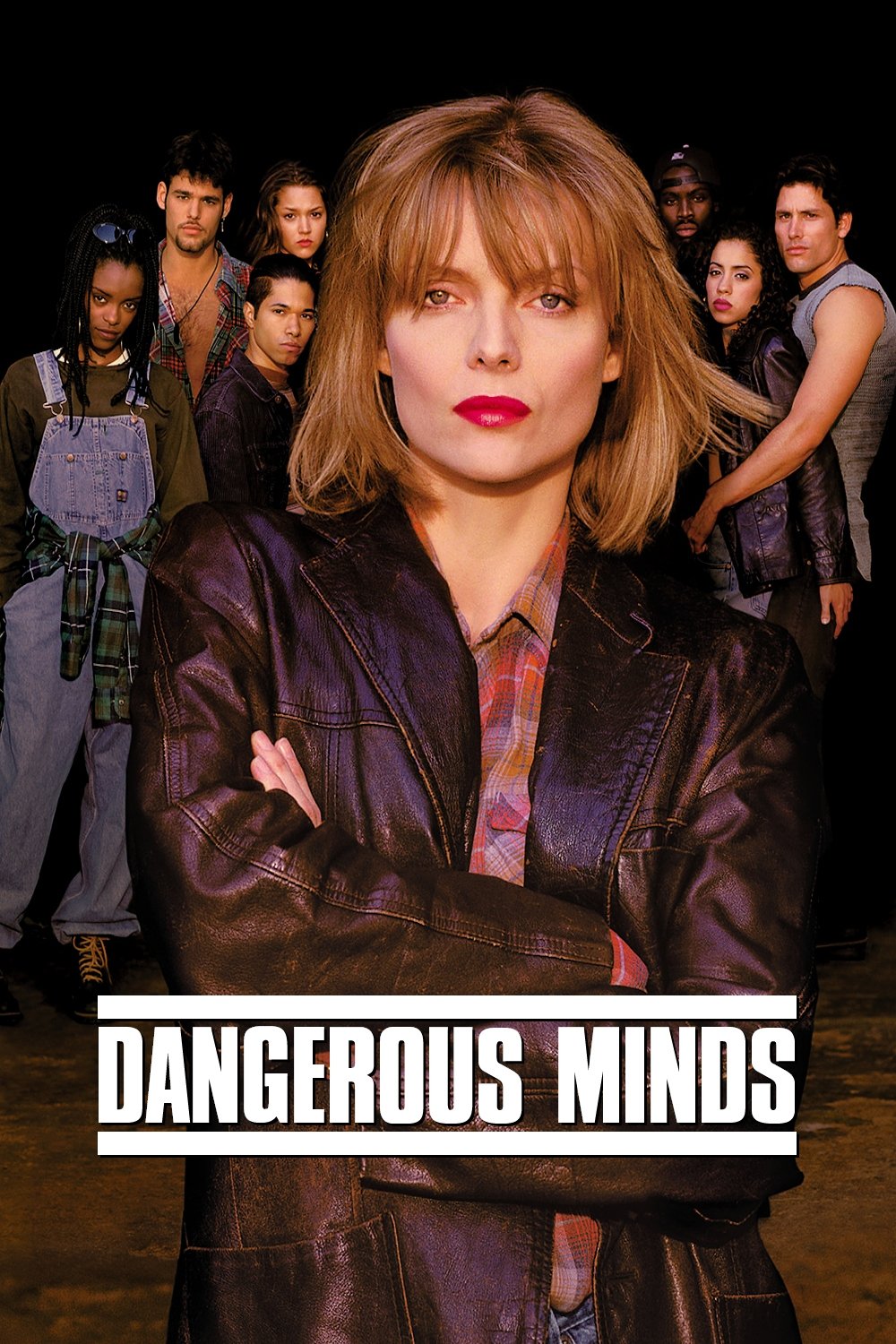
There’s a palpable electricity that courses through “Dangerous Minds,” a current I sensed the first time I encountered the film in a nearly empty late-night theater. The experience felt less like passive entertainment and more like a challenge—one that kept me thinking long after the final credits rolled. Having grown up somewhere between the stories of those inner-city kids and the ambitions of their teacher, I recognize the world the film attempts to render: messy, complicated, and full of imperfect choices. For me, “Dangerous Minds” is fascinating not only because it tackles hot-button issues but because it dares to put idealism to the test in the crucible of reality. That tension still draws me back decades later—it’s both a product of its time and a mirror for today.
What the Film Is About
At its most visceral, “Dangerous Minds” tracks the emotional collision between LouAnne Johnson—ex-Marine turned rookie teacher—and the students she’s tasked with guiding through the minefields of a California high school. The heart of the film lies in the battle between hardened skepticism and flickering hope, fought in a classroom where neither side fully trusts the other. I’m struck by how the emotional journey pivots less on educational process and more on survival, dignity, and incremental connection.
From my perspective, the film tries to articulate something about the limits of one person’s ability to effect change against a system loaded with disadvantages. It isn’t simply an account of a white teacher “saving” marginalized students—it’s more about navigating the gray areas where empathy, frustration, and compromise become daily realities. There are no easy victories here. The central conflict isn’t only between teacher and student, but between the world both characters had to leave behind to meet each other, tentatively, in the middle. “Dangerous Minds” wants us to feel the jagged edges of that meeting, and it succeeds.
Core Themes
The most persistent theme, in my eyes, is the struggle for self-determination amid suffocating circumstance. Every character—LouAnne included—wrestles with a system that tells them their efforts are futile. The film is acutely aware of economic and social disparities, and keeps circling back to the ways institutional neglect shapes aspirations and erodes confidence. The specter of lost potential is everywhere; it’s what haunts me about the story and what elevates it beyond standard inspirational fare.
There’s also a thorny examination of power and privilege. I appreciate that “Dangerous Minds” rarely presents LouAnne’s authority as unalloyed good. Her presence complicates matters, not just solves them. The 1990s, a time marked by national conversations about education, race, and urban policy, felt especially receptive to these questions. Today, the film’s themes—about agency, the meaning of “help,” and the endurance of hope—are, in some ways, even more resonant as debates around equity and education have only grown sharper.
Symbolism & Motifs
Visual motifs do a tremendous amount of work in “Dangerous Minds.” The blackboard, scrawled with poetry or blank with silence, functions as a battleground—a space where ideas and identities either clash or coalesce. Each lesson LouAnne tries to teach becomes a negotiation, with the blackboard as their shifting common ground. The recurring use of Dylan Thomas’s “Do Not Go Gentle Into That Good Night” underscores the desire to rage against the fate society seems ready to assign these students.
I see the recurring motif of gates—literal school fences, locked doors—used to reinforce both isolation and opportunity. The barriers aren’t just physical but social, representing the separation between “inside” and “outside.” When a student passes through, I sense the ambiguity: are they escaping or being excluded? The film also makes heavy use of military imagery, not simply as LouAnne’s background but as a metaphor for discipline, order, and the battles of daily existence. Through my eyes, these motifs challenge us to see the classroom as both a sanctuary and a contested territory.
Key Scenes
The “Poetry as Life Raft” Lesson
This scene, where LouAnne connects Dylan Thomas’s poem to her students’ lived realities, is undeniably the film’s emotional core. It transforms the stilted exercise of reading poetry into a matter of survival—a desperate reminder that words can matter, especially in the face of apathy and despair. When the students recognize themselves in the struggle against fate, I cannot help but feel the weight and hope the moment tries to conjure. This is teaching not as the transference of knowledge but the forging of a human connection.
The Risk of Reward—the Candy Bar Scene
The much-parodied, often misunderstood candy bar scene reveals so much about the ethical tension underlying the film. LouAnne’s attempt to “buy” effort with treats exposes the awkward transaction between a system that offers so little and a teacher desperate to give something—anything—tangible. For me, this moment is a reminder of the programmatic failures of the school but also of LouAnne’s own naivete and resourcefulness. It’s uncomfortable, and it’s supposed to be.
The Stairwell Showdown
The confrontation in the stairwell involving Emilio is one of those moments where all the film’s themes converge. The stakes become heartbreakingly real: institutional indifference, violence lurking on the periphery, and one teacher forced to confront the reality that care is not always enough. The helplessness and anger I feel watching this unfold are proof that the film refuses to tie everything up with a ribbon. It stays messy, which makes it linger in my thoughts.
Common Interpretations
Most critics have, fairly or not, labeled “Dangerous Minds” as both a “white savior” narrative and a sanitized look at systemic decline. The consensus, especially since its release, tends to diminish the complexity by focusing on LouAnne’s role as the central catalyst for change, ignoring the agency of her students. While I understand these critiques—they are not baseless—I think they sometimes undervalue what the film tries to do in its fumbling way: shed light on the cycles of neglect that trap students and teachers alike.
Contrary to a purely cynical reading, I don’t see “Dangerous Minds” as textbook savior drama. Rather, it’s a film about the awkward, uneven, and often unsatisfying process of human connection within a broken institution. My frustration rests as much with the system as with LouAnne. To me, it’s this ambiguous, unheroic struggle that feels the most honest—and most relevant—in the story “Dangerous Minds” tries to tell.
Films with Similar Themes
- To Sir, with Love (1967) – Another story of a teacher entering a tough classroom, sharing thematic DNA of mentorship, systemic barriers, and finding dignity amidst adversity.
- Freedom Writers (2007) – Explores how journaling provides students with agency and voice, echoing the classroom-as-lifeline motif from “Dangerous Minds.”
- Lean on Me (1989) – Focuses on an educator grappling with the tension between compassion and discipline within a failing system, paralleling LouAnne’s approach and compromise.
- Stand and Deliver (1988) – Centers on educational empowerment against low expectations—another narrative built around perseverance and the fight for personal agency.
A Lasting Message for Modern Audiences
I believe “Dangerous Minds” can still speak to today’s viewers—if approached without expecting tidy resolutions. Its great value lies in demanding that we sit with discomfort and acknowledge the stubborn persistence of inequality, even in the face of tireless good intentions. For anyone willing to look closely, the film offers an unvarnished glance at both the promise and the peril of believing one person can make a difference. Understanding these themes, and the ways in which they collide rather than resolve, enriches the experience immeasurably.
Related Reviews
If you found value in my perspective, you might also enjoy exploring my thoughts on other cinematic landmarks such as Stand and Deliver and Lean on Me.
To broaden this interpretation, you may also explore how critics and audiences responded over time.
🎬 Check out today's best-selling movies on Amazon!
View Deals on Amazon