
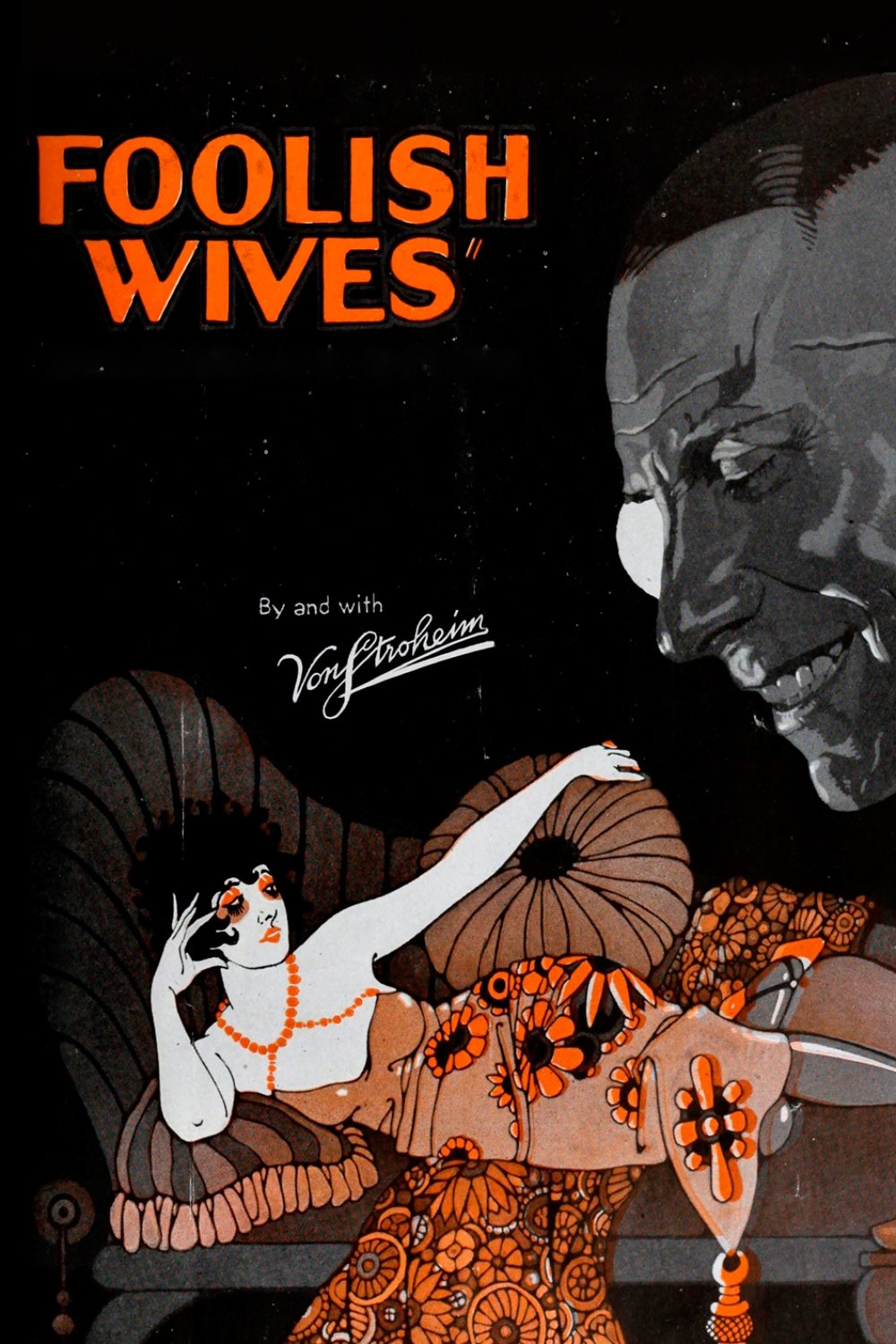
I first encountered “Foolish Wives” on a scratchy 16mm print projected in a half-empty art house on a gray afternoon, and the chilled, grandiose emptiness of that screening hall felt like an echo of the film’s own haunted world. What immediately fascinated me was not merely the seemingly exotic European setting or the stories of its troubled production but the sense of irrepressible artifice and danger that pulsed through every frame. Watching Erich von Stroheim simultaneously direct and star as the notorious Count Karamzin—an imposter on screen and a control-obsessed visionary off screen—I felt a strange kinship with that mix of performance and vulnerability. “Foolish Wives” didn’t pull me in gently; it thrust me into a masquerade of decadent surfaces and moral rot, and I have never fully escaped that initial shiver.
The Web of Deceit: An Emotional Inquest
What sustains my obsession with “Foolish Wives” is the way it transforms the so-called romantic melodrama into a slow-motion act of psychological vivisection. To me, the film isn’t simply about a confidence man’s predations on wealthy innocents but about the inescapable anxiety and longing that arise when desire is shaped by pretense. Count Karamzin—von Stroheim’s lizard-eyed creation—is less a seducer than he is a mirror for everyone’s repressed yearnings: the American ambassador’s wife, Ellie, who seeks adventure but fears its cost; the ambassador himself, an emblem of anxious masculinity and foreignness; and even the Count’s own “cousins,” whose complicity cloaks desperation.
At its heart, the film stages a battle between surface and substance, between the seductions of identity and the bitter truth underneath. Every interaction simmers with suspicion; every smile feels weighted by ulterior motives. As the plot snakes through counterfeit currency, blackmail, and sexual gamble, I find myself fascinated by how little any character truly understands themselves—or one another. Far from delivering easy catharsis or moral clarity, “Foolish Wives” makes uncertainty the point: the tantalizing, terrifying ambiguity of who we might become when masks become inextricable from our faces.
Threads of Vice and Illusion: Thematic Dissection
Power and exploitation form the bones of Stroheim’s narrative. Every character seeks, bargains for, or is manipulated by power—social, sexual, financial. What I find most compelling is that these forms of power are always entangled with illusion: the fraudulent Count is a parasite precisely because the world he preys upon is so hungry for performance. In 1922, a newly postwar America, flush with cash but morally adrift, looked to Europe for glamour; the film stages this transatlantic fantasy, then exposes its rot. For me, “Foolish Wives” is a fable of how privilege engenders vulnerability—strength erodes into folly when it is rooted in self-regard and artifice.
Equally central is the exploration of feminine desire and its dangers. While society expects women to be innocent and ornamental, the film suggests—more daringly than most of its contemporaries—that women’s longings are both perilous and authentic. Ellie’s journey is not just a cautionary tale but a genuine exploration of interiority, risk, and self-discovery. More than a warning against male predators, the story is a lament for the emotional claustrophobia that results from social hypocrisy.
Today, these themes remain cruelly relevant. We still crave idols and imposters; we still beat our wings against the iron bars of respectability and longing. The film’s bleak vision feels surprisingly modern, anticipating later treatments of self-invention, consumerism, and the politics of desire.
Veils and Shadows: Symbolism in Stroheim’s Vision
Nothing in “Foolish Wives” is ever quite what it seems, and this is made manifest through visual motifs that obsessively mark difference between appearance and reality. The recurring presence of mirrors and reflections fascinates me most—almost every important encounter is refracted through glass or glistening water, reinforcing the idea that every identity is provisional and double-edged. Stroheim’s use of doorways, screens, and threshold spaces further underscores the transitional, unstable quality of every relationship and intention.
Another symbol that lingers is the duplicitous currency at the heart of the Count’s schemes. These counterfeit bills are more than criminal tools—they’re totems of a world where every value can be faked, every intimacy bought or sold. To me, the film’s most effective device is the slow way it reveals the banality of evil: sumptuous costumes mask neurotic ambition, and the most beautiful vistas (Monte Carlo’s gleaming coastline) frame acts of quiet despair or cold calculation.
I’m haunted by the omnipresence of water—at once cleansing, threatening, and seductive. Water marks both the boundaries of safety and danger for Ellie and suggests the psychic forces lurking just beneath composure. If I’ve learned anything from “Foolish Wives,” it’s that surface beauty almost always conceals churning, unspoken chaos.
Moments That Echo: Three Crucial Episodes
The Gambling Den—A Stage for Seduction
The gambling scene is where the film’s glittering promises and spiritual bankruptcy collide. Watching Stroheim manipulate the roulette wheel—and by extension, everyone in attendance—I was struck by how this moment embodies the transactional quality of every relationship in the film. Here, masks are briefly dropped, and pure appetite (for risk and for each other) surges into view. It’s both an erotic encounter and a ritual humiliation. The camera lingers on faces straining with hope and dread—a tableau of modern alienation that feels shockingly current.
The Balcony Confrontation—The Limits of Fantasy
The midnight scene between Karamzin and Ellie on the windswept balcony is, to me, the film’s emotional epicenter. For the first time, Ellie’s curiosity and fear are made excruciatingly palpable; the Count, sensing weakness, overreaches. The intimacy here is laced with threat, and what could have been a moment of liberation becomes instead a reminder of danger. The physical boundary of the balcony itself enacts the chasm between yearning and prudence, and I am always moved by the way this encounter leaves both participants smaller, exposed, and fundamentally unsatisfied.
The Flooded Chamber—Illusions Drowned
The culminating scene, where Karamzin’s web of lies collapses amidst literal rising water, is one of the most grandiose and tragic visual metaphors in early cinema. I am fixated by how this sequence encapsulates the entire arc from glamour to ruin. Water surges into private chambers like the return of the repressed, mercilessly stripping away artifice and privilege. In that moment, the Count is laid bare—not as a tragic Byronic hero, but as a pitiable, floundering man. It’s a vision of poetic justice, but not a triumph: everyone loses something, and no restorative order arises from the wreckage.
Looking Past Consensus: Critical and Personal Refractions
Many film historians have described “Foolish Wives” as a lurid spectacle or a moralistic exposé of decadence—a cautionary tale for its era’s “new woman” and a technical marvel for its elaborate sets and undiluted excess. While I acknowledge the groundbreaking scale and ambition of Stroheim’s work (legendary for its budget and detail), I often find these readings too tidy. In their view, the film’s purpose is to shame or instruct; I see it as something riskier: a study of how obsession, desire, and deceit flow through every social vein, untouched by clear answers.
Some critics reduce Stroheim’s Count to a mere symbol of European corruption—or, more personally, a monstrous ego reflected in the director himself. While there is a degree of self-parody, I prefer to see the Count as an emblem of the spiky, unresolved contradictions in all of us: the longing to be loved, the impulse to exploit, the fear of being unmasked. If this makes “Foolish Wives” more unsettling than satisfying, then that is precisely why I return to it again and again.
Echoes in Other Shadows: Comparable Cinema Journeys
- Sunrise: A Song of Two Humans (1927) – Like “Foolish Wives,” this silent classic plumbs the threat and promise lurking within desire and marriage, exploring moral ambiguity and emotional risk with painterly intensity.
- La Dolce Vita (1960) – Fellini’s masterpiece of satiric excess shares this film’s fascination with surface pleasures, spiritual emptiness, and the cruelties beneath high society’s glittering veneer.
- The Great Gatsby (1974, 2013) – Both cinematic interpretations of Fitzgerald’s novel touch on fraudulence, privilege, and yearning, evoking the same fever-dream tone and critique of hollow aspiration.
- The Rules of the Game (1939) – Renoir’s destabilizing social satire, like Stroheim’s work, exposes the rot beneath a glossy, aristocratic world and the precariousness of social roles.
Stepping Back: The Modern Gaze and Its Rewards
There is no comfortable distance from “Foolish Wives.” Rather than offering nostalgia or easy moralizing, it always drags me into fresh confrontations with the costs of role-playing, desire, and self-delusion. For contemporary audiences, immersing oneself in Stroheim’s feverish vision means accepting ambiguity and embracing discomfort. It is precisely by tracing the film’s jagged lines of power, identity, and longing that we can glean an enduring, if uneasy, wisdom—one that remains as vital now as in the year of its riotous debut.
If you found value in my perspective, you might also enjoy exploring my thoughts on other cinematic landmarks such as “Sunrise: A Song of Two Humans” and “The Rules of the Game.”
To broaden this interpretation, you may also explore how critics and audiences responded over time.
🎬 Check out today's best-selling movies on Amazon!
View Deals on Amazon