
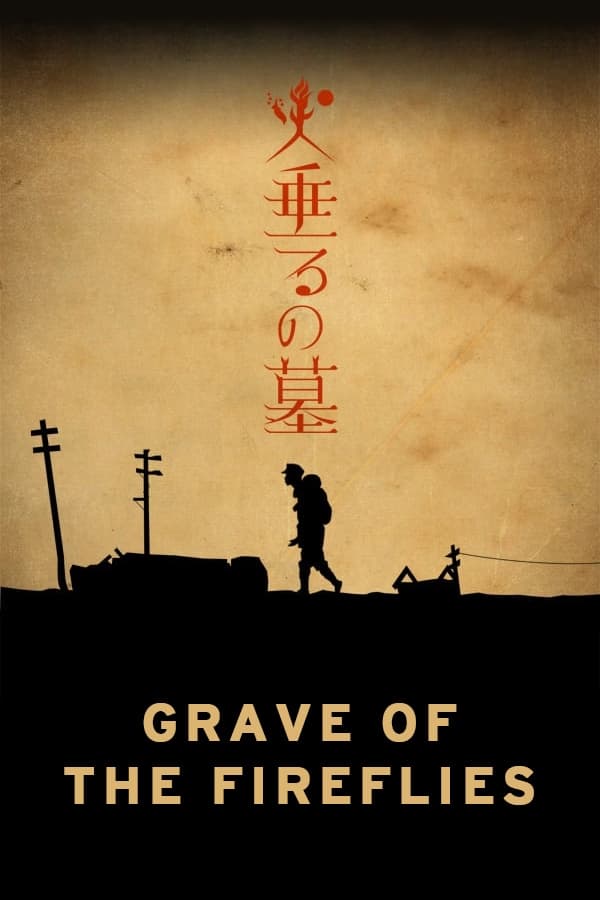
When Survival Means More Than Staying Alive
Nothing prepared me for the emotional terrain of “Grave of the Fireflies”. The first time I watched it, I realized quickly this wasn’t a tale about distant history—it was about the pain of childhood lost in the belly of a war machine. This film doesn’t just want me to witness tragedy; it wants me to sit with it, sweat inside it, and understand how war renders survival a hollow, even mocking victory. Survival in this film is not simply about dodging bombs or finding scraps of food, but about what happens to the heart and the soul when everything familiar is stripped away.
Fireflies as the Flicker of Memory
I’ve never seen a symbol work as hard as the fireflies do here. Their light is beautiful, almost miraculous, but heartbreakingly brief. When Setsuko and Seita watch them swirl above their heads, I couldn’t help but see those insects as everything ephemeral: safety, innocence, family. The fireflies pulse with a desperate hope that’s gone by morning, just as the siblings’ fleeting moments of peace are always undercut by reality’s darkness. Fireflies aren’t just creatures in the night—they become tiny lanterns of memory, flickering reminders of the unendurable beauty that war snuffs out too soon.
A Sibling Bond in the Ashes
If the film reduces me to tears, it’s not from spectacle or melodrama, but from the way it captures the stubborn, fierce tenderness between Seita and Setsuko. What cuts deepest is how love becomes both a lifeline and a weight, as Seita tries to be both brother and father, protector and playmate. Their relationship is so fragile yet so essential, filling the silence left by absent adults and broken systems. Every gesture, from sharing a rice ball to telling a bedtime story, becomes an act of resistance against the void that war creates. The film doesn’t flatter us with easy heroism; it shows love as something nearly impossible to sustain when the world has come apart.
The Unspoken Grief of the Everyday
The devastation in “Grave of the Fireflies” isn’t just in its high-stake moments—air raids, death, starvation—but in the mundane: a lost tin of drops, a wilted piece of fruit. I find the lingering tragedy in how the film lingers on small, almost routine pains that accumulate until they overwhelm. Each scene of Setsuko playing in the shelter or Seita scavenging for food is a reminder that suffering is unremarkable when it becomes the shape of ordinary life. This normalization of grief is perhaps the film’s most devastating indictment—not of individuals, but of societal failures that let children bear the unbearable because adults have looked away.
The Cruelty of Indifference
What keeps me haunted isn’t just the bombs or the hunger. It’s the coldness that seeps in from others, the way the children are treated as inconveniences. The real antagonist here isn’t merely war, but the indifference of neighbors, relatives, authority—the collective shrug that seals the siblings’ fate. There’s a chilling emptiness in how adults justify their inaction, and the film exposes this as the true rot at the heart of a society under siege. I watch, and I’m forced to wonder how many tragedies are made inevitable by this refusal to see others’ pain as our responsibility.
War as an Absence, Not a Spectacle
What strikes me is how the film refuses the spectacle of war. Explosions are brief, the enemy unseen. Instead, the focus is on absence: missing parents, vanished homes, empty bellies. This narrative strategy makes the devastation feel intimate and real—war isn’t something “out there,” it’s the empty room, the echo of laughter now silenced. This is a war story stripped of glory, leaving only exhaustion, confusion, and the insistent question: what is left of a person, or a culture, when all the scaffolding of normal life collapses?
The Unforgiving Economy of Guilt
Every time I rewatch, I’m struck by the film’s ruthless interrogation of guilt. Seita’s choices—small, desperate, human—are presented without judgment, yet I feel the weight of consequence in every frame. The film refuses to offer clear villains or scapegoats, forcing me to confront the uneasy truth that guilt in war attaches itself to everyone, especially the innocent. In the way Seita shields Setsuko, I see both profound love and a kind of tragic arrogance: his refusal to return to their aunt, his pride, his hope that he can build something from nothing. The film’s power is in how it makes me ache for the impossible choices forced by impossible circumstances.
Childhood as a Lost Country
What devastates me most is the way “Grave of the Fireflies” is, at heart, a lament for childhood itself. The film preserves fleeting moments of wonder and play, only to show how war transforms these into sources of sorrow—playgrounds become graveyards, and even sweetness turns bitter. Watching Setsuko dig for pebbles in a rice field or chase after insects is to be reminded of everything war takes that can never be restored. The film is honest enough to show that, even after the bombs stop, the landscape of childhood has been permanently altered.
Why These Stories Still Matter
For me, “Grave of the Fireflies” is more than a war movie or an animated tragedy; it’s a searing meditation on the cost of looking away, the daily heroism of care, and the fragility of hope. It demands that I bear witness, not just to the extraordinary suffering of its characters, but to the quiet, everyday ways in which societies fail their most vulnerable. I finish the film knowing I’ve seen something essential not just about war, but about humanity itself—the way we survive, the bonds we form, and the ease with which they can be erased.
Films That Echo in Similar Shadows
If the shimmering sadness of “Grave of the Fireflies” moved you, and you’re seeking more films that burrow into grief, survival, and the resilience of the human spirit amid devastation, I recommend:
- Pather Panchali
- The Spirit of the Beehive
If you’re curious about how this film was originally perceived or how it compares to similar works of its era, these resources may be helpful.
🎬 Check out today's best-selling movies on Amazon!
View Deals on Amazon