
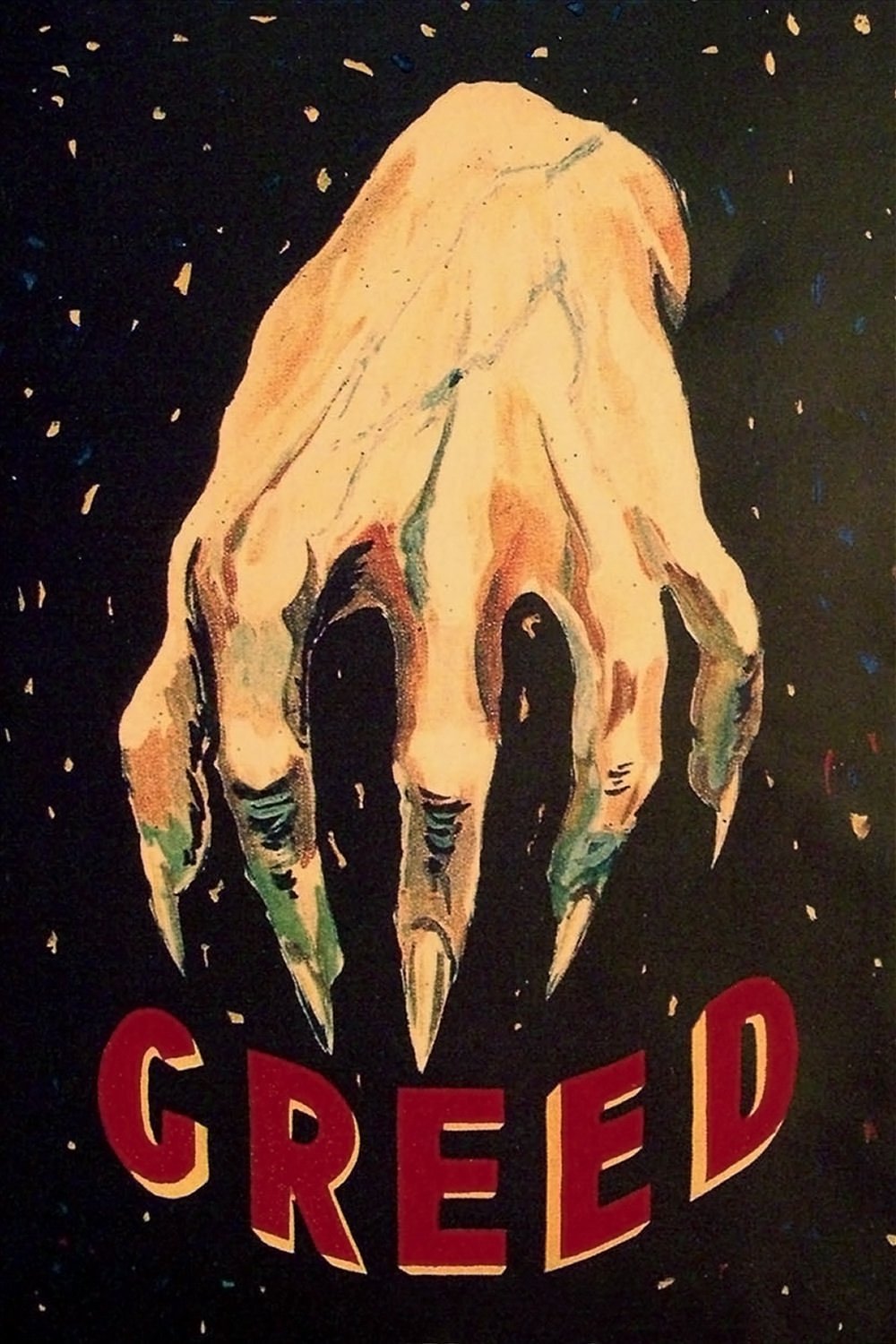
Obsession Uncoiled: My Gaze into the Abyss of “Greed”
I have never encountered a film that gnaws quite so mercilessly at the bones of human nature as Erich von Stroheim’s “Greed.” Watching it, I felt as if I were peering through a magnifying glass directly at the rawest nerves of desire. Every frame seems to pulse with a kind of feverish hunger—a hunger not just for gold, but for happiness, validation, and the illusion of control. This is not merely a story about avarice, but a relentless autopsy of the soul’s darkest corners, and as I watched, I found myself both repelled and mesmerized by the way it refuses to let anyone, least of all the audience, off the hook.
Gold Veins and Broken Dreams: The Currency of the Human Heart
From almost the first moment, I was struck by how “Greed” makes money feel less like a prop and more like a living, breathing antagonist. The infamous lottery money—so meager and yet so massively consequential—transforms every relationship it touches. The characters become less people and more conduits for elemental forces: possession, fear, resentment, and longing fuse together until nothing else can survive in their wake. I found myself aching for McTeague’s innocence, for Trina’s early warmth, but the film makes it clear—they never really had a chance. In the world of “Greed,” even hope feels contaminated, a coin handled by too many desperate fingers.
The Everyday Apocalypse: When Life Shrinks to a Single Desire
What haunts me most about “Greed” is the way it depicts ordinary life unraveling, not with melodrama, but with a slow, grinding inevitability. There is no villain here, only people who ache and fail in all-too-recognizable ways. The film’s tragedy is not in its sensational moments, but in its depiction of the ordinary—how easily love curdles when trust is poisoned by suspicion, how marriage morphs from comfort to combat, and how dreams, so fragile, are smothered by the very hands that cradle them. The drab San Francisco apartments, the faded touches of domesticity, become battlefields where the lines between victim and perpetrator are always blurred.
Von Stroheim’s Unforgiving Eye: Realism with Razor Edges
There’s a cruelty to the way von Stroheim lays out his narrative, and I felt both awed and unsettled by his honesty. Unlike so many films of its era, “Greed” refuses sentimentality altogether. Faces are often shown in harsh, unflattering closeup, and I couldn’t escape the feeling that the camera was stripping the characters down to their most ignoble selves. What emerges is a vision of humanity that is shockingly modern: there are no heroes here, only people battered by circumstances and their own impulses, each driving the knife a bit deeper out of panic or pride. The “realism” here is not just visual—it’s emotional, even existential. I found myself wondering if that’s why the film still feels so dangerous, so alive nearly a century later.
Money as Metamorphosis: How Wealth Consumes the Self
I was particularly fascinated by the way “Greed” uses the motif of gold to mark transformation—not in the fairy tale sense, but as a force that hollows out identity itself. Trina’s ecstatic, almost religious caresses of her winnings are not about luxury at all; they’re about possession as self-definition. The more she clings to her gold, the more she vanishes, becoming a ghost haunted by her own fortune. McTeague, too, becomes a shell of himself, his dreams calcified into a single, mindless pursuit. The more the characters chase security, the more they lose themselves, until even language and affection are reduced to bitter calculation or silence. I felt, watching, that this was a parable not just about greed, but about the terror of emptiness that lurks behind all obsessive accumulation.
The Language of Silence: What Is Lost Between the Words
Since “Greed” is a silent film, its emotional power relies on gesture, expression, and the charged spaces between characters. What surprised me was how much is said by what goes unsaid. I was struck by how glances, hands reaching or recoiling, and even the set dressing—the gnawed bread crusts, the battered furniture—become a kind of syntax for despair. The film’s infamous length in its original cut is no accident; it insists on dwelling in the ordinary moments, letting discomfort and longing accrue until they become unbearable. What is tragic is not just the violence that erupts, but the hundreds of small withdrawals, the kindnesses left unoffered, the apologies that never emerge. I left the film feeling like I had eavesdropped on a marriage coming apart thread by thread, undone by silence as much as by anger.
Desert Finale: Nature’s Indifference and the Ultimate Reckoning
The film’s climax in Death Valley has always felt to me like a waking nightmare—not just because of its brutality, but because of the way nature becomes the final, uncaring witness. This landscape, stripped of all human comfort, mirrors what the characters have become: barren, scorched, emptied of empathy. There is no rescue, no deus ex machina, only the slow, grinding acknowledgment that whatever we think we possess—be it gold or love or dignity—can be wrenched away by fate or folly. The sand that chokes the boots, the pitiless sun, feel like the true endgame of all that came before. I see in this finale not just a warning, but a bitter kind of cosmic joke: nature doesn’t care about our appetites, and the richest man in the world still dies thirsty in the desert.
The Corrosion of Intimacy: Love as Transaction
One of the most devastating elements for me is how “Greed” depicts intimacy eroding under the weight of need. The film doesn’t just show people fighting over money; it shows them using money as a substitute for trust, tenderness, and mutual recognition. The love McTeague and Trina once shared disintegrates not because of a single betrayal, but because affection itself is commodified—every gesture comes with strings attached, every kindness is a down payment. I can’t watch their marriage fall apart without thinking of how easy it is, in moments of stress, to measure worth in what someone gives rather than who they are. “Greed” makes the case, with brutal honesty, that the real price of obsession is the loss of our capacity for love itself.
Everyman and the Mirror: Why I Can’t Look Away
What keeps “Greed” from slipping into pure despair, for me, is its relentless honesty about how universal these impulses are. It’s not just that McTeague, Trina, and Marcus are flawed—it’s that they are recognizably, even uncomfortably, like us. Their struggles are not melodramatic exceptions, but the logical conclusion of pressures we all feel: the urge to protect what we have, the suspicion that someone else is coming for our piece, the fear that there is never enough. Every time I revisit “Greed,” I find myself interrogating my own habits, my own jealousies and cravings. The film’s mirror is unkind, but necessary. It asks me—asks all of us—what we are willing to sacrifice for the illusion of security, and whether, in guarding what we think is ours, we are really building happiness or digging our own graves.
If Greed Haunts You, These Films Might Too
If you walk away from “Greed” with a lingering ache, a sense of how desire can warp the soul, I’d suggest seeking out these films:
- The Treasure of the Sierra Madre – for its searing portrayal of paranoia and the breakdown of trust among those chasing fortune.
- The Asphalt Jungle – for its similarly bleak, unsparing look at human ambition and the cost of criminal dreams.
If you’re curious about how this film was originally perceived or how it compares to similar works of its era, these resources may be helpful.
🎬 Check out today's best-selling movies on Amazon!
View Deals on Amazon