
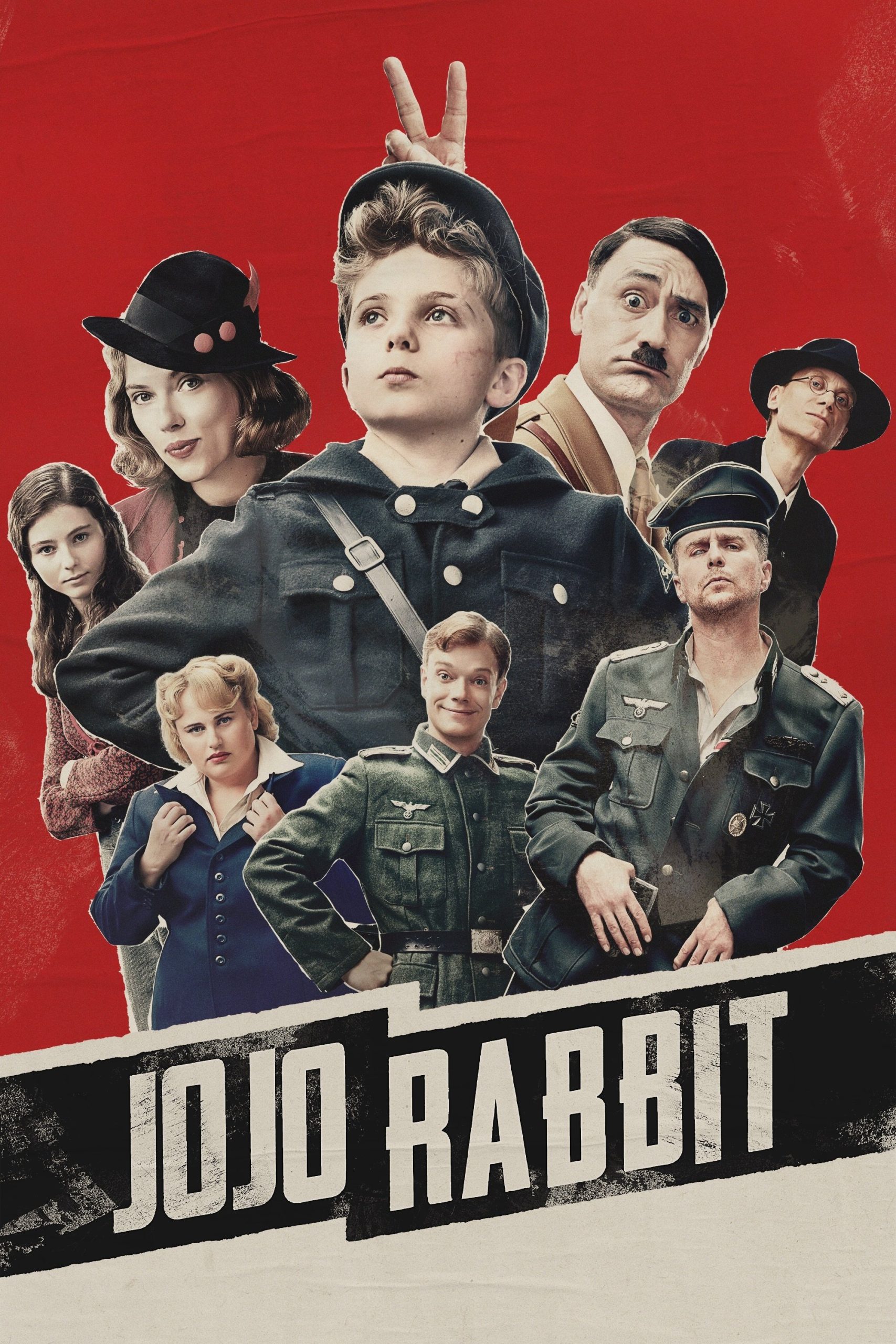
Growing up, I remember once hearing my grandmother describe the disorienting absurdity of her childhood during wartime—how, as a child, she was both terrified and endlessly distracted by propaganda that turned fear into a game. When I first watched “Jojo Rabbit,” that memory arrested me. What fascinated me wasn’t just Taika Waititi’s audacity in crafting a comedy set in Nazi Germany, but his refusal to offer a sanitized look at indoctrination and innocence lost. Instead, the film attacks the toxic heart of fanaticism through a child’s eyes, without flinching from its cruelty or its capacity for accidental tenderness. That deeply personal connection colors every frame for me, as if Waititi mined not just history or satire, but the haunted laughter of childhood itself.
What the Film Is About
At its surface, “Jojo Rabbit” is the story of Johannes “Jojo” Betzler—a sweet, if fiercely indoctrinated ten-year-old boy living in the crumbling twilight of Nazi Germany. The premise is provocatively absurd: Jojo’s imaginary companion is none other than an exuberant, parodically encouraging version of Adolf Hitler (played by Waititi himself). Yet beneath this eccentric conceit lies a profound emotional journey from blind adoration and fear to the birth of independent thought and empathy.
Jojo’s crisis ignites when he discovers Elsa, a Jewish girl hidden by his mother within their home. What unfolds is not just a dangerous secret, but the slow disintegration of every comfortable certainty Jojo has built his world upon. The film grapples with how love and hate, childishness and horror, can coexist within a society—and within a single heart. For me, the film isn’t mocking historical tragedy, but instead using irreverence and humor as scalpels to carve away the mythic shell of fascism, exposing its banality and its ability to seduce the vulnerable. “Jojo Rabbit” is about the terror of realizing your heroes are monsters, but also about the radical power and risk of learning to question everything you’ve been taught.
Core Themes
The theme that most powerfully struck me is indoctrination—the ease with which hate can take root in the naive soil of youth. Jojo’s transformation, painfully gradual and never entirely complete, is anchored in the distortions of a world that teaches children to rally around evil dressed up as virtue. In an age of rising nationalism and resurgent bigotry, the relevance of this theme is almost painfully on the nose. Watching Jojo traverse the chasm between myth and truth, I was reminded how important it is, now and always, to teach skepticism and love instead of dogma.
Running in parallel is the theme of compassion as resistance. Jojo’s mother, Rosie (played with breathtaking vibrance by Scarlett Johansson), quietly defies the Nazi regime—not with a gun, but with dance, humor, and self-sacrifice. For me, her presence is the moral backbone of the film, a subtle argument that the most insidious evil is the loss of empathy. Elsa, too, embodies the survival of spirit amid devastation; her relationship with Jojo is a living proof that understanding and kindness are the antitheses of hate.
In 2019, when the film premiered, discussions of “the other,” rampant misinformation, and the dangers of hero-worship were undeniably contemporary. Yet “Jojo Rabbit” never feels preachy. Instead, it weaponizes humor and stylized innocence to make its message about human decency nearly unassailable. That balance between playfulness and deadly seriousness is what, for me, makes its examination of identity and ideology timeless.
Symbolism & Motifs
Few films in recent memory use symbolism as deftly as “Jojo Rabbit.” The motif of shoes recurs throughout, and for me, it is an unavoidable emblem of vulnerability and loss. The care with which Waititi’s camera lingers on Rosie’s feet is no accident. When her shoes become the site of one of the film’s most shattering reveals, I felt as if all artifice fell away, exposing the full cost of hate and resistance in a single devastating shot.
Rosie’s bicycle is another motif that captures my imagination—the recurring image of her cycling through a ruined town, graceful and free despite all danger, casting shadows of what hope looks like in hopeless times. Butterflies, too, are quietly significant: Jojo draws them for Elsa, a fragile beauty pressed under the weight of war. To me, the butterfly becomes a symbol of metamorphosis, alluding both to Elsa’s survival and Jojo’s awakening. The recurring images of swastika banners and Nazi decor, rendered almost cartoonishly, serve as an indictment of the seductive absurdity of fascist spectacle, highlighting the chasm between its theatrical bravado and its moral vacuum.
Key Scenes
A Boy and His Imaginary Friend
The opening sequence—Jojo staring into the mirror, psyching himself up with visions of Aryan valor as Waititi’s Hitler cheers him on—is equal parts hilarious and alarming. It’s a shot of adrenaline that immerses me instantly in Jojo’s indoctrinated worldview while never letting me forget that this is still just a scared child emulating monsters. The reckless energy of this introduction is crucial: it invites laughter, then nearly suffocates it when we grasp the stakes of Jojo’s delusions.
The Shoes Beneath the Gallows
The moment when Jojo unconsciously ties his mother’s shoes in an earlier, tender scene only becomes searingly, horrifically relevant later, when those same shoes are glimpsed again—lifeless, hanging. This visual callback weaponizes our memory and shatters Jojo’s world altogether, rendering the cost of political resistance heartbreakingly intimate. For me, no dialogue could ever communicate loss so economically; this is cinema’s power distilled to its essence.
Reaching Past the Past
The closing scene, with Jojo and Elsa hesitantly dancing in the liberated street, brings me to tears every time. There are no triumphant speeches—only the suggestion that survival can breed joy, that life will stagger back even from atrocity, and that connection, however tentative, is always an act of defiance. This moment pulls me out of the nightmare and into something resembling hope, without ever letting me forget the cost it took to arrive there.
Common Interpretations
Many critics read “Jojo Rabbit” as a subversive anti-hate satire—one that mocks the ridiculosity of Nazi ideology while tenderizing even its most misguided adherents. There’s both admiration and discomfort in these readings; some fear that laughter in the face of evil risks trivializing it. I’ve always disagreed with this uneasiness. For me, laughter is ammunition—an act of resistance, not erasure. Waititi isn’t letting history off the hook; instead, he’s searching for the glimmers of humanity buried in even the most corrupted soil and using humor to drag them into the daylight where they must be reckoned with.
Others suggest the film is a gentle parenting tale or a coming-of-age fable first, history second. While that’s not entirely wrong, my feeling is that the heart of the film beats in its willingness to let innocence and horror collide, refusing to offer false solace or easy redemption. Jojo’s journey is messy, incomplete, fraught with guilt and fear—which is precisely why it feels so necessary. The danger, I think, is not in laughing, but in ever thinking that hatred is something that could never take hold again.
Films with Similar Themes
- Life Is Beautiful – Like “Jojo Rabbit,” this film uses humor and a child’s perspective to grapple with the Holocaust, transforming tragedy into a tale of parental love and resilience.
- The Boy in the Striped Pajamas – This film’s exploration of innocence amidst horror echoes Jojo’s journey, exposing how children are shaped and betrayed by adult ideology.
- Pan’s Labyrinth – Guillermo del Toro’s fantasy similarly blends the terrors of war with magical realism, interrogating complicity and innocence under fascism.
- The Great Dictator – Charlie Chaplin’s fearless satire laid the groundwork for anti-fascist comedy, using parody to gut totalitarian cruelty.
Final Thoughts—A Dance Out of Darkness
Today, I believe “Jojo Rabbit” resonates even more forcefully, precisely because it sidesteps solemnity without giving up an ounce of moral seriousness. For modern viewers, the film is less a lesson in history and more a mirror held uncomfortably close—challenging us to ask what prejudices we’ve inherited, what fictions we’re still clinging to, and where we might find the courage to outgrow them. Understanding these themes doesn’t just deepen the experience; it’s a nudge to keep dancing long after the credits roll, battered but newly awake.
Related Reviews
If you found value in my perspective, you might also enjoy exploring my thoughts on other cinematic landmarks such as “Pan’s Labyrinth” and “Life Is Beautiful”.
To broaden this interpretation, you may also explore how critics and audiences responded over time.
🎬 Check out today's best-selling movies on Amazon!
View Deals on Amazon